by Tim Evans, Emily Hopkins and Tony Cook
For more than nine months, Indiana officials reassured the public that
nursing homes were receiving the help they needed to handle the pandemic
and protect vulnerable residents.
But the state never really got it under control.
The weekly death toll inside nursing homes is as
bad as it has ever been. In all, more than 3,100 nursing home residents
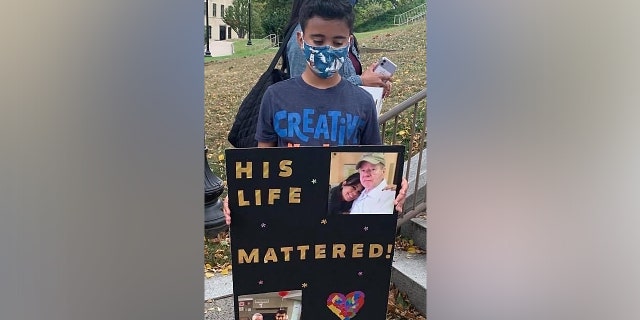
have died from COVID-19. Many died alone, their families unable to offer
comfort or even say goodbye.
It didn’t have to be that way.
An IndyStar investigation has found longstanding,
systemic problems left thousands of Hoosiers in nursing homes that are
among the most poorly staffed in the nation. In some, even the simplest
aspects of care are too often ignored. Now, Indiana’s long-term care
residents are dying of COVID-19 at a rate that is among the highest in
the U.S.
We'll never know how many lives could have been
saved if the nursing homes had been better staffed, but preliminary
research suggests it could be in the hundreds.
For more than a decade, efforts to reform the system have been ignored
or knocked down by state leaders who have benefited from millions of
dollars in campaign contributions from the industry. Instead, state
officials endorsed a loosely regulated program, shrouded in secrecy,
where money meant for nursing home care is instead used to bankroll
county hospitals that own more than 90% of the state’s nursing homes.
The state's failure to reform the system has left
Indiana with bare-minimum staffing standards and limited home care
options. Meanwhile, county hospitals collect millions of taxpayer
dollars with virtually no ties to care or quality in their nursing
homes.
“It was like a catastrophe waiting to happen
already before we had this horrible epidemic,” said Erica Reichert with
the Center for At-Risk Elders, a nonprofit that represents more than
100 elderly and disabled Hoosiers in nursing homes.
With the virus racing across Indiana, Gov. Eric Holcomb and other state
leaders failed to take aggressive action to protect the population most
vulnerable to the virus. Other states were quick to send in the National
Guard, mandate testing and publicly disclose outbreaks. Holcomb’s
administration was slow to take those critical steps, acting only after
federal mandates and a second surge of cases and deaths this fall.
Holcomb has defended his administration’s
response. He and his top health officials point to the deployment of
strike teams to assist nursing homes with outbreaks. They also tapped
into a network of retired health care workers to help fill nursing home
staffing gaps, and in October announced a limited pilot program to speed
up approvals for home care.
But the governor has never directly addressed the
state’s reliance on federal nursing home money to help fund county
hospitals, or whether that money should be used to improve staffing at
nursing homes. He declined multiple interview requests from IndyStar
since March.
“We know COVID-19 disproportionately affects
older Hoosiers and even more so those with underlying health
conditions,” Holcomb said in an August email response to questions about
issues in the nursing homes. “Now more than ever Hoosiers should expect
increased quality and value in nursing homes and more readily
accessible options in home and community based settings.”
Four months later, amid a resurgence of the
virus, many of the problems that plagued nursing homes before the
pandemic remain. And the number of deaths continues to climb.
“We knew from public health experts that
something was coming. It was an eventuality, whether it was COVID, or a
really horrible flu or something. We knew that it would adversely impact
our elderly population,” said Reichert, whose organization served as a
legal advocate for 16 long-term care residents killed by the virus.
“But we did virtually nothing to prepare for it.”
Poor staffing, then a pandemic
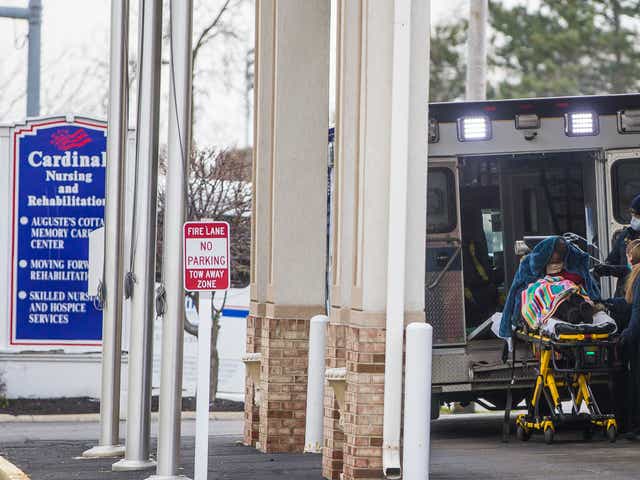
That lack of preparation was evident at Cardinal
Nursing and Rehabilitation, a nursing home in South Bend owned by the
Health & Hospital Corp. of Marion County.
Like a majority of Indiana’s nursing homes,
Cardinal ranked in the bottom third of all nursing homes in America for
the amount of time nurses and aides spent with residents before the
pandemic, according to data from the federal Centers for Medicare and
Medicaid Services.
So when the virus hit Cardinal in early April,
officials admitted they were basically helpless. A local hospital
official who suspected an outbreak rushed 60 swabs and urged the
facility to immediately test each resident, a state inspection report said.
But the home didn’t have enough staff to swab the
residents and couldn’t isolate those who were infected, an official
told inspectors. Nineteen Cardinal residents have died of COVID-19,
according to state data.
A spokesman for Health & Hospital did not directly respond
to questions about Cardinal, but defended the quality of the agency’s
nursing homes, noting they are above average compared to other Indiana
nursing homes.
That's little comfort to Kristin Billings. She
said she had to call the police to check on her mother because the staff
was stretched so thin that they stopped responding to her calls. After
her mother recovered from COVID-19, Billings moved her out of Cardinal.
“I was fighting like crazy for my mom,” she said. “Never again would I put anybody in that place.”
The tragedy at Cardinal highlights how Indiana’s
nursing home system fails its vulnerable residents. HHC, which operates
the Sidney & Lois Eskenazi Hospital in Indianapolis, is the state’s
largest nursing home owner. In 2019 alone, the public agency received
$182 million in extra federal funds for its 78 nursing homes. But the
hospital spent $117 million on other uses instead of on improving care
at the homes.
The same scenario has played out at hundreds of
nursing homes owned by HHC and other county hospitals. More than $1
billion in nursing home money has been used to prop up hospital
projects, such as the construction of the $754 million Eskenazi
hospital.
The hospitals have defended the funding
arrangement, arguing it benefits both nursing home residents and
hospital patients. But as the pandemic has played out, it has become
clear that Indiana’s nursing homes lacked the staff and resources to
protect residents from COVID-19.
Indiana has had among the highest number of
deaths per 1,000 nursing home residents. More than 20% of long-term
care residents who have contracted COVID-19 in Indiana have died. The
national rate is 13%.
About 39% of COVID-19 deaths across the country
have been linked to long-term care facilities. In Indiana, long-term
care residents account for more than 52% of the deaths, but less than 1%
of the population.
And almost no facility has been spared: 484 of
the 534 facilities in Indiana have had at least one case. More than 393
have had at least one COVID-19 death.
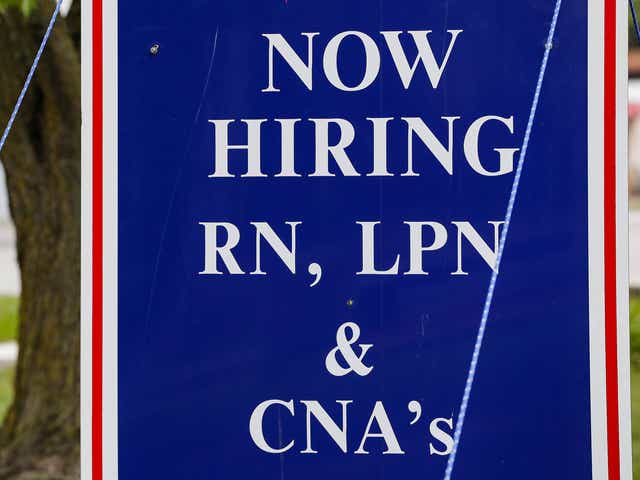
The pandemic further overwhelmed a workforce that
was already among the thinnest in America. Going into the pandemic,
Indiana ranked 48th for the amount of time nursing staff spent with
residents after adjusting for their needs, according an IndyStar
analysis of federal data.
Zach Cattell, president of the Indiana Health
Care Association, which represents the nursing home
industry, acknowledged the staffing issues in an emailed statement, but blamed them on "hiring challenges" outside of the industry's control. He did
not, however, provide an explanation for how those hiring challenges
are unique to Indiana or why 47 other states have done a better job of
staffing positions.
A months-long IndyStar investigation published in
March found scores of inspection reports and malpractice claims
involving injuries or deaths that may have been prevented with adequate
staffing: bed sores allowed to fester until limbs had to be amputated,
repeated falls that left residents with broken bones or fatal head
injuries, and violent attacks among unsupervised residents.
That was before the pandemic presented an
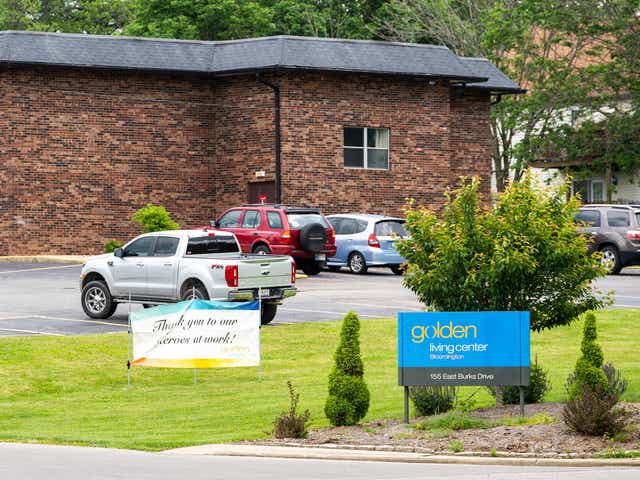
unprecedented public health crisis. As signs touting “heroes work here”
sprouted up in front of nursing home facilities, a workforce already
stretched thin was pushed to the brink.
Employees who spoke to IndyStar describe being
pressured to work with symptoms or without proper protective equipment.
They watched their teams shrink as staff became sick and were sent home,
with little hope for reinforcements.
“We were short and overworked,” an aide told
IndyStar of her experience working at Golden LivingCenter in Bloomington
this spring. “We had nurses that sat at the desk and was in tears,
crying because either one of their co-workers or another nurse had
tested positive and had been sent home.”
Wesley Rogers, president of Golden LivingCenters, dismissed such complaints in a statement, saying they “inaccurately or incompletely report events.”
Carmela Canale, who had been a licensed practical
nurse for 27 years, quit her job at another nursing home in March when
the management company introduced new coronavirus measures but did not
bring in additional staff.
“I was already so overwhelmed by what needed to
be done,” Canale said. When additional duties were added, such as
changing protective equipment between residents, she said to herself: “I
just can’t, I can’t do everything that you want and put something else
on top.”
Preliminary research has shown that facilities
with poor staffing before the pandemic were more likely to have more
coronavirus deaths.
While the presence of the virus in the community
surrounding a nursing home was the most important factor, having more
nurses and aides prior to the pandemic was associated with fewer deaths
in facilities with outbreaks, according to a national study by Tamara
Konetzka, a professor of public health sciences at the University of
Chicago.
A handful of other studies focused on specific
states have also found associations between higher nursing staff levels
and fewer COVID-19 cases or deaths.
The human reality of those trends is documented
in recent inspection reports. Even though the availability of testing,
protective equipment and infection control training has improved since
the early months of the pandemic, staffing shortages and the problems
they cause have continued to put vulnerable nursing home residents in
danger.
At Countryside Manor in Anderson, where 14 residents have died, inspectors found
employees caring for COVID-positive and negative residents alike in
September, potentially exposing residents to the virus. An employee told inspectors the facility could have prevented a recent increase in falls if they’d had more staff.
At Southwood Healthcare Center in Terre Haute, where six residents have died, inspectors found
“a systemic failure” in infection control practices in October.
“Residents were not closely monitored for symptoms of COVID-19 during
the outbreak,” a report said, adding some with unknown COVID-19 status
were observed smoking with healthy residents. “No staff were observed in
the area to redirect residents to social distance at this time,” the
inspection found.
Southwood, owned by Hancock Regional Hospital, was also cited for insufficient staffing in August and again in September.
Employees told inspectors “they did not feel there were enough staff to
take care of the residents.” Call lights were not answered, residents
were not groomed and some did not receive their medicines. One man was
found on the ground calling out for help, having soiled his pants.
Southwood was in the bottom 6% in the nation for total nursing staff
hours as of Oct. 1.
A spokeswoman for Southwood acknowledged staffing
has been challenging "given the high infection rates" in the area, and
the facility has used temporary workers to care for residents during the
pandemic.
How we got here
The lack of staffing is a product of the way Indiana funds nursing homes.
For years, county hospitals have been gaming the
Medicaid system with the permission of state and federal officials. An
arcane federal law allows government-owned nursing homes to draw extra
funds. The intent was to provide extra financial assistance to homes
that often serve as the last resort for poor and medically needy
residents.
But Indiana has exploited the program,
effectively turning it into a major revenue stream for 22 county
hospitals that have snatched up — at least on paper — more than 500 of
the state’s nursing homes in recent years. Indiana now receives more of
the extra money than any other state. More than California and New York —
combined. The haul was more than $679 million last year alone.
Much of it never reaches the nursing homes.
County hospitals have diverted more than $1 billion to their own
operations. Neither the state nor federal government require an
accounting of how the money is spent. The loose oversight has allowed
rampant fraud, with allegations of roughly $65 million in losses at just
two county-owned systems since 2008.
As a result, Indiana has had one of the most
expensive, least efficient nursing home systems in the nation. In sheer
dollars, Indiana ranked fourth in 2019 for Medicaid spending on nursing
home care. The price tag: A whopping $2.6 billion. That’s more per
resident than every state but West Virginia. Yet staffing, widely
regarded as the most important factor in quality care, has consistently
been among the worst in America.
David Grabowski, a professor of healthcare policy
at Harvard Medical School, compared Indiana hospitals to private equity
firms that extract money with little concern about care outcomes or
long term viability.
“This just really gives me pause,” he said. “I
wonder how these county hospitals are viewing ownership of these nursing
homes other than this is a way to pull down more money and not actually
invest in patient care.”
The irresistible funding source has kept
Indiana’s eldercare system skewed in favor of institutionalized care. As
of 2016, the most recent data available, 48 other states devoted a
larger share of their long-term care Medicaid funds to home and
community-based care. That not only allows residents to age at home
where they are more comfortable, but it is also less expensive for
taxpayers.
Nationally, states spend an average of about 57%
of their long-term care funds on home and community-based care. Indiana
spends just 32%.
“Right now, if someone is hospitalized and
they're about to be discharged from the hospital and they need care, the
default in too many cases is institutional care,” said state Rep. Ed
Clere, a New Albany Republican who is chairman of the House Ways &
Means subcommittee on health and Medicaid. “They could have a high
quality of life in their home. But that is not the way the system is
designed.”
The imbalance has become even more consequential
amid the pandemic. If fewer Hoosiers were trapped in Indiana’s nursing
homes where the virus can spread so easily, more may have survived.
Edward Nave, a General Motors retiree, was a
Vietnam veteran and longtime deacon at Second Missionary Baptist Church
in Anderson.
Nave, 72, died April 6 at Bethany Pointe Health
Campus in Anderson where he had gone in February for a 30-day rehab
stint following surgery.
Nave was ready to leave Bethany Pointe and return
home, but a home care assistant his wife hired needed proof he had been
tested for COVID-19. His family frantically fought to get him tested,
but said they got a runaround from county and state health departments
and the nursing home.
"I talked to him Wednesday and he told me he was
doing okay, but he was ready to come home. And I said, 'Ed, I'm getting
you home.' I said, 'give me to Friday, and I'm going to come and get
you,'" Nave's wife, Hazel, promised her husband five days before he
died.
The shortcomings of Indiana’s nursing home system
have been well-known to state officials and lawmakers for years. They
have repeatedly studied the problems, but proposals to improve the
system have consistently failed.
A 2015 report
by the state’s Family and Social Services Administration said a surplus
of nursing home beds and low occupancy rates at Indiana nursing homes
were expensive, inefficient and contributed to a decrease in the quality
of care for thousands of vulnerable Hoosiers.
Indiana’s long-term care system “must transform, and soon,” the report warned.
But reforms have failed to materialize, in part
due to pushback from the nursing home industry. Lawmakers instead
cloaked the program in secrecy by granting county hospitals unusual
exemptions to public records laws.
Members of both parties have tried to establish minimum staffing requirements for Indiana nursing homes, which the industry has said won't help. Five bills have been filed since 2009. None of them even received a committee hearing.
Former state Rep. Clyde Kersey, a Democrat from
Terre Haute who filed four of the bills, said the industry has a lot of
clout at the Statehouse. “I couldn't get any traction,” he said. “I
couldn't even get people from my own side to support it.”
Under then-Gov. Mike Pence, FSSA officials tried
another approach. After years of negotiations, they reached a tentative
deal with the nursing home industry that would have shifted more funds
to home care, incentivized the closure of some nursing homes, and tied
25% of the extra nursing home funds to quality standards. The goal was
to improve care for older Hoosiers, including those in nursing homes,
while reducing costs.
But when Gov. Eric Holcomb took office, the deal
was scrapped. Holcomb has not explained why. IHCA's Cattell said his
organization supports "appropriate steps" to rebalance Indiana's
long-term care sector, tie supplemental funds to quality and
right-size nursing home capacity. He did not explain what happened to
the deal with the state that would have done just that.
While reform efforts fell flat, lawmakers had no
problem granting unparalleled levels of financial secrecy to the county
hospitals that own the homes.
In 2006, they passed a law that allows county
hospitals to keep “proprietary and competitive” information
confidential. Most are now using the exemption to hide their deals with
private management companies and the amount of nursing home money they
divert to other uses.
Lawmakers again singled out county hospitals in
2016, allowing them to withhold employee pay information, including
executive compensation. No other government agency in Indiana is granted
such an exemption and even private hospitals must typically disclose
the earnings of their highest paid employees.
As a result, it’s impossible for the public to
know how county hospitals have spent the more than $4.4 billion in extra
Medicaid funds their nursing homes have generated since 2003.
Money and power
One reason Indiana’s broken nursing home system persists is because it is extremely profitable for those involved.
County hospitals now technically own most of
Indiana’s nursing homes, but their former private owners have not gone
away. Instead, they continue to run the nursing homes in exchange for
lucrative management fees — and in turn, spend large amounts of money on
state campaign contributions.
The arrangements helped make many of those
operators wildly rich. Take, for example, American Senior Communities,
which is owned by the Jackson family of Indianapolis. During the past 10
years, Marion County’s HHC has paid the company and related entities
nearly $550 million in fees and lease payments. That doesn’t include
millions more in revenue from other businesses, also owned by the
Jacksons, that provide products and services to HHC’s nursing home
system.
Flush with the extra cash, the nursing home
industry has poured nearly $3 million into Indiana political campaigns
since 2009, according to an IndyStar analysis of campaign finance data.
The vast majority of the money — more than $2
million — can be traced to just five nursing home operators and their
various homes, companies, and executives. At least $437,000 came from
the Jacksons, their affiliated companies and ASC executives.
The owner of Magnolia Health Systems, which
operates about 30 homes, and his companies spent about $565,000. And it
wasn’t just cash. Stuart Reed, who lives in a $4 million Zionsville
mansion, also provided an additional $10,000 in event catering and
travel services for Pence during his initial run for governor, campaign
finance records show.
The biggest beneficiaries include Pence’s
campaigns for governor, which received $739,000, and Gov. Holcomb’s
campaign committees, which received $250,000 from the industry. Another
$458,000 went to the Republican House and Senate campaign committees.
Those sums give the operators and their trade
group, the Indiana Health Care Association, tremendous sway at the
Indiana Statehouse, according to former lawmakers and state officials.
The industry’s ties run even deeper. Many state
officials have personal financial relationships with the industry. Some
lawmakers find jobs at nursing home chains or owners while serving.
Others worked in the industry before getting elected. One lawmaker,
former Rep. Eric Turner, stepped down after privately lobbying against a measure that would have hurt his family’s nursing home investments.
The deep connections allow the industry to push back against perceived threats. In 2015, existing nursing home operators successfully lobbied for a three-year moratorium
on new nursing home construction, effectively blocking potential
competition. Pence, who was governor at the time, expressed reservations
about the measure, but in a rare move allowed it to become law without
his signature.
Five years later, and amid a pandemic, Indiana is
barely any closer to fixing its nursing home troubles. During the
pandemic, residents have died of the virus at a rate of one every two
hours. Yet state officials routinely have chosen to defer to the
industry — often keeping important information from the public.
'Immediate jeopardy'
Early in the pandemic, state health commissioner
Dr. Kristina Box praised nursing home operator Magnolia for creating a
dedicated COVID unit.
“What they're doing is amazing,” Box said on
March 31. “These folks have stepped up, saying this is who I am and this
is what I do, so that we can take good care of residents and their
communities by simply doing the right thing.”
That’s not how things played out at Magnolia's
Brooke Knoll Village in Avon. Just days after Box hailed Magnolia’s
COVID-19 response, her own inspectors discovered
staff at the facility didn’t have enough PPE and failed to isolate
symptomatic residents. Instead, they would run a battery of tests to
rule out everything but COVID-19 before taking precautions. State
inspectors said the situation amounted to “immediate jeopardy” for
failing to protect residents during a COVID-19 outbreak.
Staff at the facility hid information about the
outbreak from families, according to Tammy Bowman, whose sister resided
at Brooke Knoll. In interviews with IndyStar, Bowman said staff
repeatedly claimed they had no coronavirus cases — even after her sister
was taken to the hospital and tested positive.
“I'm just flabbergasted,” Bowman said. “I will never wrap my head around it.”
Abby Gray of Magnolia Health Systems, which
operates Brooke Knoll on behalf of Daviess Community Hospital, said she
could not specifically speak to Bowman’s situation because of privacy
laws, but said proper notification had been made.
If the state had been more forthcoming about
outbreaks, families like Bowman’s could have made life-saving decisions
about whether to remove their loved ones. But they were never given that
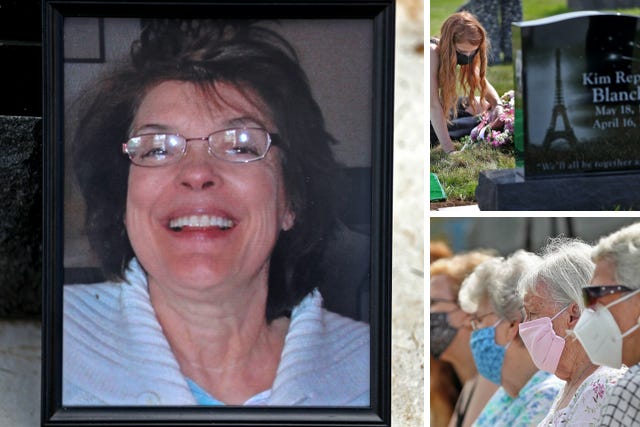
choice. Bowman’s sister, Kim Blanchar, died April 16.
Kim Blanchar, a former French teacher at Brebeuf high school, suffered from multiple sclerosis.
She was a resident of Brooke Knoll Village in Avon. She died from COVID-19 on April 16.
State health inspectors discovered the facility didn't have enough PPE and failed to isolate symptomatic residents.
"She had a big heart," her sister, Tammy Bowman, said. "She was a very generous person."
Despite outcry from families, the Holcomb
administration rejected records requests from IndyStar and other media
outlets seeking the information. At one point, Holcomb defended the
state’s stance by incorrectly calling the nursing homes private
businesses — even though more than 90% are owned by public hospitals
that rake in hundreds of millions of dollars in extra payments every
year because of their government ownership.
Not until late July, after CMS said it would
begin releasing facility-level data, did the state finally release that
information. Indiana was one of only a handful of states to wait so
long.
Indiana also was behind other states in requiring
regular testing for workers, widely regarded as the leading source of
the virus getting into nursing homes. In New York, for instance, the
governor issued an executive order May 10 requiring all nursing home
employees to be tested twice a week.
But Indiana did not enact a comprehensive testing
program until June. Even then, it involved just a single test for all
workers while other states were testing staff much more frequently.
After CMS mandated regular testing, Indiana
nursing homes struggled to keep up. Inspectors cited 27 homes for
failure to test their workers this fall, more than most states,
according to preliminary federal reports.
'Complicated, unwieldy and increasingly dysfunctional'
Fixing Indiana’s broken nursing home system won’t
be easy. Any effort at meaningful reform will likely create ripples
across the complex financial relationships between the state, county
hospitals and their private operators.
“We have an incredibly complicated, unwieldy and
increasingly dysfunctional health care system at every level,” Clere,
the lawmaker, said. “At some point we are going to have to step back and
address the system as a system, rather than continuing to nibble around
the edges without ever getting to systemic solutions.”
Advocates and family members say the complicated nature of the problem shouldn’t prevent change — and now is the time to act.
“I think that this needs to be a critical
learning opportunity for all providers, all public health officials, all
stakeholders, all lawmakers that there are things happening right now,”
said Reichert of the Center for At-Risk Elders. “Let's make sure it
never happens again.”
In early December, IndyStar requested an
interview with the governor to discuss Indiana’s nursing home system,
the state’s coronavirus response, and ways lawmakers might improve the
system. His spokeswoman quickly responded:
“The Governor is not available.”
Full Article & Source: