Showing posts with label court-ordered guardianship. Show all posts

Saturday, August 29, 2026

83-year-old at center of two-state guardianship battle can stay in Colorado — and may not have to return to Dallas

A judge declined to hold Peggy Hill’s son and daughter-in-law in contempt but found they had significantly interfered with her guardianship. 


Author: Tanya Eiserer 

DALLAS — Peggy Hill will get to stay in Colorado — at least until further notice.

A Dallas County probate judge issued an order Wednesday allowing the 83-year-old retired real estate agent to remain in Colorado to undergo brain surgery next month and recuperate there afterward. Hill, who has dementia, is under a court-ordered guardianship. She repeatedly refused court orders to return to Dallas from Fort Collins, Co., where she has been living with her youngest son, Rucker Hill, his wife, Rebecca, and their three young sons.

Under a court-approved settlement among Peggy Hill’s four adult children, she was to spend six months of the year in Colorado and the other six months at a Dallas assisted living facility. Peggy has been in Colorado since October and repeatedly refused efforts to return her to Dallas.

WFAA aired a story Monday night detailing Peggy’s fight to remain in Colorado. "I get up in the morning and think I've already died and gone to heaven living here," Hill said in that interview. She also said that the only way she would return to Dallas was in a “pine box.” On Tuesday, WFAA filed this report on the hearing to determine next steps in Peggy's case.

In a series of rulings following that hearing, Judge Julia Malveaux stayed enforcement of her prior orders that would have required Hill to return to Dallas.

“Ms. Hill is pleased with the Judge’s ruling and appreciates her careful consideration of all the evidence and Ms. Hill’s expressed preferences in accordance with the Ward’s Bill of Rights,” Brian Hill, an attorney representing Peggy Hill wrote in a statement. “Ms. Hill looks forward to remaining in Colorado for the foreseeable future.”

A second order indicates Peggy Hill may ultimately be allowed to stay in Colorado permanently. The judge wrote that pending additional orders from the court regarding transfer of the guardianship to Colorado and acceptance by a Colorado court, Hill “shall be authorized to remain in Colorado.”

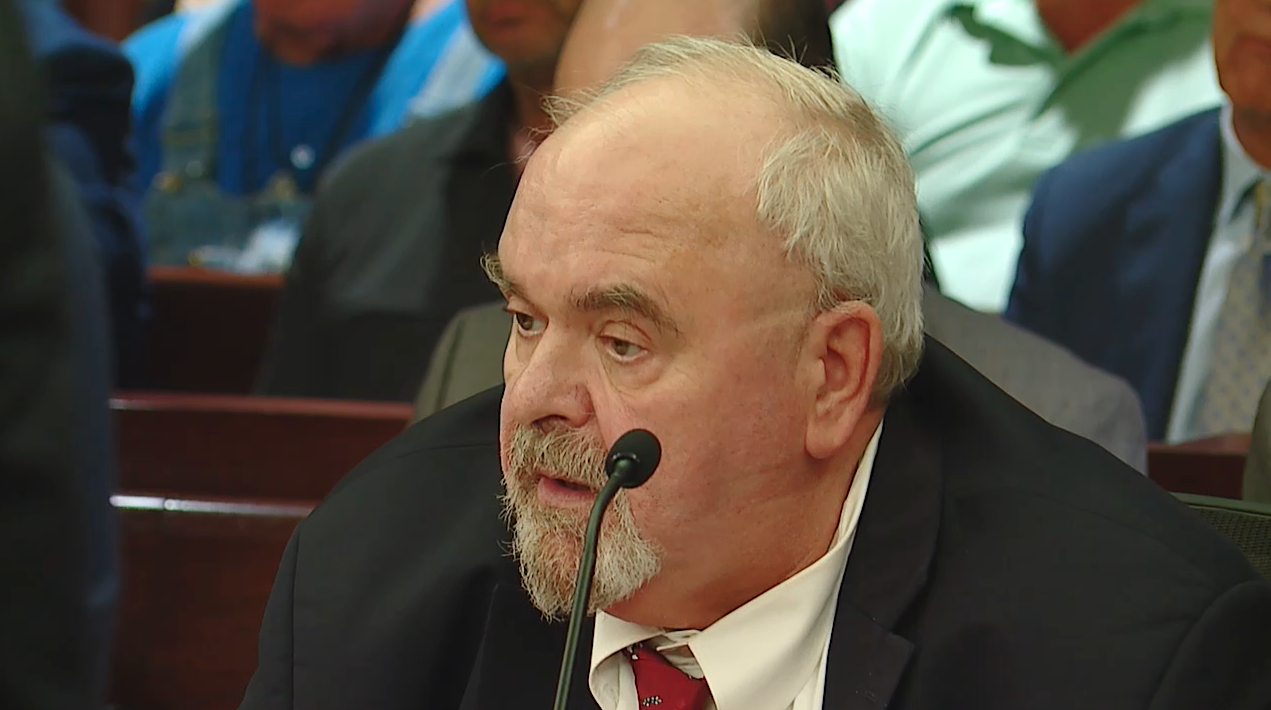
The orders came a day after Rucker and Rebecca Hill were forced to testify about whether they had violated the court’s order to get Peggy back to Dallas. The hearing stretched for more than three hours, and the couple faced the possibility of being held in contempt of court.

“The actions of the Colorado family members do not rise to the level of contempt,” Probate Judge Julia Malveau wrote in the order.

But the judge also concluded Rucker and Rebecca Hill had engaged in “significant interference” with the guardianship, including disclosing Peggy’s private health and personal information.

The judge found that the Colorado family members:

  • Failed to cooperate fully with the guardian and guardian ad litem.
  • Failed to provide care managers reasonable access to Peggy.
  • Enabled Peggy’s living situation to become public even though, according to the court, she lacked the legal capacity to consent.
  • “Likely” failed to follow instructions from Peggy’s medical providers.

The order requires the Colorado family members to get advance written approval from Peggy’s attorney ad litem (which is akin to a defense attorney and is appointed by the court to represent what the person under guardianship wants), guardian ad litem (who is court-appointed and is supposed to represent what’s in the best interest of the person under guardianship) and guardian before providing any of her health, financial or personal information to a news, internet or other media outlet.

“They shall not engage in any act or omission that might reasonable be interpreted as interference with Ward’s guardianship, protection and safety,” the judge wrote.

The judge also ordered that Peggy receive examinations and treatments recommended by her medical providers. The order prohibits the family from interfering with the guardian’s access to medical providers or Peggy’s medical and health information.

Rebecca and Rucker Hill have previously said they did everything they could to get Peggy to return. They also denied in court testimony interfering with her care.

The judge’s order applies to all family members, not just Rucker and Rebecca Hill.

Brian Hill, the attorney representing Peggy, also has asked the court to direct the bank managing Peggy’s finances to end lease at an assisted living facility, which has been costing her estate $6,000 a month. The motion asks that her “personal effects” be sent to her in Colorado.

In a separate motion, he asked that the court approve transferring her guardianship to Colorado. 

Full Article & Source:
83-year-old at center of two-state guardianship battle can stay in Colorado — and may not have to return to Dallas

Sunday, January 18, 2026

Missing Person Found: Guardian's Duties to Family?

Q:  In 2004, I had to report my mom missing in the state of Florida, where we lived at the time. I never stopped looking for her. She was added to the NAMUS database in 2009. This is the National Missing Persons database and website for missing or endangered persons for the entire United States. At the end of 2024, I received a call from the detective on my mom’s case. They had located her. She was in Massachusetts under court-ordered guardianship and had an ID with her Florida address. Because the facility she was placed in applied for her Social Security on her behalf to pay the guardian and privately owned facility, what rights did I or my mother have to be able to see each other, as her health was failing? Also, does a guardian have a legal obligation to make the courts aware that my mom had a family that wanted to be involved and loved her? After my mom's death, which was in August of this past year, the guardian told the facility to throw all her personal belongings away. That was after I asked for the things I had sent my mom and her personal belongings. 

A: Finding your mother after 20 years, only to face legal barriers and the loss of her personal items, is an incredibly heavy burden to carry.

The situation you’re describing touches on guardianship law, which varies by state but generally follows specific ethical and legal standards. Below is a breakdown of the rights and obligations involved in a case like this, specifically focused on Massachusetts and Florida law.

1. Did the Guardian Have a Duty to Find You?

Yes, generally. In both Massachusetts and Florida, a guardian has a legal and ethical obligation to act in the “best interest” of the protected person (the ward).

  • Due Diligence: When a court appoints a guardian, they are supposed to perform a search for “interested parties” (heirs and close family). If your mother had an ID with her Florida address and a Social Security number, a basic background check or a diligent search should have revealed her identity and her status as a missing person.

  • Reporting to the Court: Guardians are required to file periodic reports. If a guardian becomes aware that family members exist, they are legally obligated to disclose that to the probate court. Intentionally withholding that information to maintain total control is often considered a breach of fiduciary duty.

2. Your Right to Visitation

Until recently, many guardians had “gatekeeper” power to block family visits. However, laws have changed significantly to prevent “guardian isolation.”

  • The Right to Association: Most states now recognize that a person under guardianship retains the right to see their family unless a judge specifically rules that the visit would be physically or emotionally harmful.

  • Notice of Health Changes: In many jurisdictions, guardians are legally required to notify immediate family if the ward is hospitalized, moves to a new facility, or passes away.

3. The Disposal of Personal Belongings

When a person under guardianship passes away, the guardian’s authority usually ends and the case moves into probate law.

  • Preserving the Estate: A guardian generally does not have the right to throw away a deceased person’s property, especially if they know a grieving family member wants those items. Those items belong to your mother’s estate.

  • Potential Liability: If the guardian destroyed property after you explicitly asked for it, they may be liable for conversion (the legal term for unauthorized taking or destruction of property) or breach of duty.

Summary of Potential Legal Violations

Issue

Potential Legal Standing

Failure to Search

Possible breach of fiduciary duty for not identifying interested parties

Isolation

Violation of your mother’s right to association/visitation

Property Destruction

Potential liability for destruction of estate assets and personal effects


Recommended Next Steps

Because your mother was a missing person for two decades and was essentially found’ by the state without you being notified, there may be a case for gross negligence or violation of civil rights.

  1. Request the Court Records: Contact the probate and family court in the Massachusetts county where your mother lived. Request the full case file for her guardianship. Look for the petitions to see what the guardian told the judge about her “unknown” family.

  2. Consult a probate litigator: You need an attorney who specializes in contested guardianships or probate litigation in Massachusetts. They can determine if the guardian lied to the court or failed to perform a mandatory search.

  3. File a Complaint: You can file a formal grievance against the guardian through the Massachusetts Office of Adult Guardianship or the court that oversaw her case.

Contact the detective: Keep the records from the detective who finally located her. This documentation proves she was in a national database (NAMUS) that the guardian or facility failed to check. 

Full Article & Source:
Missing Person Found: Guardian's Duties to Family? 

Wednesday, March 19, 2025

Elderly man under guardianship wants to return to Harrison Township home

Gerald Harten says he’s been separated from his wife and held in various group homes for months. Monday a court hearing was finally held to determine Jerry’s fate, but justice for Jerry is delayed yet again.

By: Heather Catallo

MOUNT CLEMENS, Mich. (WXYZ) — Last fall, the 7 Investigators raised the voice of a Vietnam veteran who said he felt like he’s become a prisoner of Michigan’s guardianship system.

Gerald "Jerry" Harten says he’s been separated from his wife and held in various group homes for months. On Monday, a court hearing was finally held to determine Harten’s fate, but justice for him is delayed yet again.

Harten has been wanting to appear in person to talk to a judge at the Macomb County Probate Court. But once again on Monday, his public guardian would not let him attend the hearing.


Harten is an aging veteran who is so frustrated about being under court-ordered guardianship that he called the police on his own family several times last summer.

The 77-year-old Vietnam veteran’s journey into guardianship started in November of 2023, after he had back surgery and other health complications. His wife Mary had power of attorney to make his medical decisions, but she had her own medical emergency at the same time and could not care for him. So, Macomb County Probate Judge Sandra Harrison declared Harten legally incapacitated and made his son his guardian.

“I was in a hospital and my boy stepped up to be my overseer of medicine,” Harten told 7 Investigator Heather Catallo in an interview last fall.

Harten says after his health improved, he still was not allowed to leave his son’s home, and court records show Harten’s wife and his son started fighting over who should care for him.

So the judge appointed public guardian George Heitmanis, but the family conflict continued and so did the police visits.


Harten was then moved to three different group homes and now, he’s been moved to a rehab facility.

“I am really almost crying out for desperation. I want to go home,” Harten said. “They always get me away from court deals. And that's what made me mad. I said 'what? I can't see the judge.'”


After 15 months under guardianship, court records show Harten’s son is now trying to get him back under his roof. And instead of holding a long-awaited hearing for Harten Monday, lawyers for all of the parties asked for another adjournment.

“The one thing we did agree to is that we probably need a third party who is not any of us to investigate everybody and then report back who appears to be suitable,” said attorney Elizabeth Ferguson, who represents Harten’s son and daughter-in-law.


Harten’s new court-appointed attorney, Ben Schock, advocated fiercely for him in court, objecting that his client’s guardian would not allow Harten to appear in front of the judge for his own case.

“Why was Jerry not allowed to come to court today?” Catallo asked.

“There is a statement from a licensed medical doctor that indicates that his presence in the hearing can exasperate his medical condition,” Schock said.

“But that statement is a year old, and he’s had other evaluations since then. Hasn’t he expressed a desire to come to court?” Catallo asked.


“Absolutely, he’s expressed a desire to come. That was part of my objection today. We are going to get additional medical, hopefully for Mr. Harten, which allow him to attend future hearings,” Schock said.

Harten’s son and his wife declined again to speak to us on camera.

All of the parties are expected to be back in court in early May.

Full Article & Source:
Elderly man under guardianship wants to return to Harrison Township home

Guardianship hearing for Vietnam veteran adjourned again

Gerald Harten says he’s been separated from his wife and held in various group homes for months. Monday a court hearing was finally held to determine Jerry’s fate, but justice for Jerry is delayed yet again.

Source:
Guardianship hearing for Vietnam veteran adjourned again

Tuesday, December 24, 2024

Wendy Williams cries at son’s college graduation, rides scooter in rare public appearance as she battles dementia

By Sean Mandell

One proud mama.

Wendy Williams got emotional as she attended her son’s college graduation on Thursday in a rare outing as she battles early-onset dementia.

Wearing a sparkly dress and Chanel shoes, the former daytime TV host, 60, accessorized with a Louis Vuitton bag as she rode a red electric wheelchair in and out of the commencement event.

Williams was joined by her father, Thomas Williams Sr., 93, and her sister, Wanda Finnie, to witness Williams’ only child, Kevin Hunter Jr., 24, get his diploma from Florida International University (FIU) in Miami, Fla.


According to FIU’s commencement program, Kevin graduated from the university’s Steven J. Green School of International and Public Affairs with a Bachelor of Arts in Economics.

He began his college journey at another Miami school, Barry University, before transferring to FIU. Kevin also took time off from school in 2021 and 2022 to help take care of his mother as she struggled with her health. 


During the graduation ceremony, a beaming Williams cried and wiped away tears as Kevin walked across the stage and received his diploma.

The former “Wendy Williams Show” host was flanked by armed police officers as she exited the commencement and got in to a waiting vehicle. Kevin was seen shaking hands with one of the officers. 


Wendy was seen most recently over the weekend in Fort Lauderdale, Fla. smiling in the back of an SUV as she picked up a to-go order from local haunt Sho’nuff Oysters.

The star was accompanied by her nephew Travis Finnie, according to blogger Antoine Edwards, who captured video of the oyster pickup.


A little over a month ago, Williams’ legal guardian Sabrina Morrissey declared that the TV personality “has become cognitively impaired and permanently incapacitated” as a result of her early-onset dementia.

The claim was recorded in a Nov. 12 court filing Morrissey submitted in her ongoing legal battle with A+E Networks, the cable network she alleges exploited Williams in the Lifetime docuseries “Where Is Wendy Williams?” (Lifetime is a subsidiary of A+E).


Morrissey unsuccessfully attempted to block the release of the doc, which aired in February and revealed intimate details of Williams’ struggles with addiction and her finances.

The former radio DJ was diagnosed with frontotemporal dementia and aphasia in 2023 after the docuseries wrapped, though she reportedly showed symptoms indicative of the condition — which includes memory loss — from the beginning of production.

Williams has been under a court-ordered guardianship that oversees her health and finances since 2022 after her bank, Wells Fargo, alleged she was “incapacitated.”

Full Article & Source:
Wendy Williams cries at son’s college graduation, rides scooter in rare public appearance as she battles dementia

Saturday, November 16, 2024

‘Long time coming.’ Michigan Senate committee pushes guardianship reform bills forward


By: Heather Catallo , Johnny Sartin

(WXYZ) — Local families have been demanding changes to Michigan’s laws after the 7 Investigators' years-long investigation into the state’s guardianship system. After a vote today, several bills that would reform some of the guardianship rules are as close to becoming law as they’ve ever been.

The bills that moved forward Thursday do not have everything in them that Attorney General Dana Nessel’s Elder Abuse Task Force originally wanted, but experts say the bills are a major step forward in protecting Michigan’s vulnerable adults.

Since 2017, 7 Investigator Heather Catallo has raised the voices of Michigan families who say the state’s guardianship system has devastated them.

“This is not right. This is illegally keeping me. Might as well go to jail, at least I got more people to talk to,” said Gerald Harten, a 77-year-old Vietnam veteran from Macomb County. Harten alleges a court-appointed professional guardian has kept him from his loved ones for months, and says he feels like he’s been kidnapped.


If a judge declares you legally incapacitated, you lose the right to make your own medical and financial decisions.

This is how Gretchen Sommer described losing her aunt and uncle in 2019 to a professional guardian: “Kept them hostage, took them from their families, locked them behind a six-and-a-half- foot privacy fence and just drained their estate.”


Today the Michigan Senate Committee on Civil Rights, Judiciary, and Public Safety sent four guardianship reform bills forward to the full senate.

“Family is always held to a different standard when they’re in these roles. Because I continue to fight, press, retain counsel, I have been retaliated against by the courts – told to schedule visits with my own mother in my childhood home that I grew up in for 21 years,” Roslund Harris told state senators during Thursday’s hearing. “No stranger should have priority over family. I pray your hearts are convicted today to pass these bills and go back and amend what we need to do.”

Elder advocates said the bills will add much more due process and help for those facing guardianship, such as making sure your rights are clearly explained to you if someone’s trying to put you under guardianship. They would also beef up the current requirements that a ward can attend their own court hearings, something legal experts say is often ignored.

“These bills are a very, very, very long time coming. And I know we have people here who have been wronged by our system, we have people who have had family members essentially cut out of their lives because of our guardianship system. We’ve had people lose their homes, their freedoms, all because we have an antiquated system that desperately needs reform,” said Rep. Kelly Breen (D-Novi). Breen is one of the sponsors of the legislation.

“We require a court to state on record why a sale of a ward’s property is in the best interests of the ward,” said Senator Stephanie Change (D-Detroit), the chair of the Senate Committee on Civil Rights, Judiciary, and Public Safety, as she pointed out one of many proposed changes.

Despite those reforms, some on Thursday expressed disappointment that the bills do not require professional guardians (guardians with multiple wards who are guardians as a ‘business’) to be certified or have any state oversight.

“The one thing that was probably the most important thing – that should come first -- is these people have to have some place that they register. My gosh, my daughter has to get a license to polish nails. And we’re letting people take over people’s lives,” said Sen. Ruth Johnson (R-Holly).

“The [bills] are not perfect by any means, but they are good and they are absolutely better than what we have. The status quo not acceptable,” said Rep. Breen. 

The Attorney General’s Elder Abuse Task Force had originally introduced a bill to create an Office of the State Guardian to provide oversight and certification of guardians, but that’s been dropped for now. Members of the task force have said they want to get that concept introduced again in the next legislative session.

Full Article & Source:
‘Long time coming.’ Michigan Senate committee pushes guardianship reform bills forward

See Also:
‘I’m kidnapped.’ Vietnam veteran fighting Michigan guardianship system

Friday, November 15, 2024

‘I’m kidnapped.’ Vietnam veteran fighting Michigan guardianship system


By: Heather Catallo , Johnny Sartin

SOUTHFIELD, Mich. (WXYZ) — Prosecutors have called court-ordered guardianship a superhighway that you can’t exit from and that’s exactly what one Macomb County combat veteran says has happened to him.

Gerald F. Harten says he survived the horrors of the Vietnam War only to now feel like he’s been captured by the enemy decades later. But this time, he says the enemy is Michigan’s guardianship system.

Harten admits he’s fully into his golden years and he’s not quite as physically capable as he once was, but he insists he is not mentally incapacitated. Harten says he wants his voice to be heard by the American court system that he fought for so many years ago.

“This is not right. This is illegally keeping me. Might as well go to jail — at least got more people there to talk to. Get three squares there, they'll give you your medicine. I've been in ‘jail’ for a year. That's the way I feel,” Harten told the 7 Investigators.

The 77-year-old Army veteran’s journey into guardianship started last November after he had back surgery and other health complications.

According to court records, his wife, Mary, had power of attorney to make Harten’s medical decisions, but she was hospitalized at the same time, so she could not care for him.

“I was in a hospital and my boy stepped up to be my overseer of the medicine,” Harten said.

Harten’s son became his legal guardian. When a judge approved that petition for guardianship, Harten was declared legally incapacitated.

“The court says I'm not allowed to go to the bank, take any money out or do anything,” Harten said.

If a judge appoints a guardian and conservator for you, you lose your rights, meaning you can no longer make your own medical or financial decisions, you can’t get married, you can't get divorced or decide where to live.

Harten says his son did a good job taking care of him at his home in Madison Heights after his surgery, but as Harten and as his wife both got better, Harten says he started asking to go back to his own home in Harrison Township.

“I was a millwright by trade. Worked seven days a week for 31 years. And I had everything paid for — my house. I have… three motorcycles, the pool in back, jacuzzi. I was made for my retirement. I'm not allowed to go home,” Harten said. “It’s just been a nightmare.”

Things in court then got messy. According to court records, Harten’s wife tried fighting the guardianship, his son hired a lawyer and there are allegations Harten’s wife ignored court orders and refused to pay for Harten's care. The judge later terminated the wife’s power of attorney over her husband.

In May, the judge put Macomb County professional guardian George Heitmanis in charge of Harten’s life.

Harten says he was furious Heitmanis kept him at his son’s house, even though police records show that the family started feuding so much that officers were called to the home repeatedly last summer.

“I'm kidnapped. I am really kidnapped,” Harten said about his guardianship.

Through their attorney, Harten’s son and his family declined to speak to the 7 Investigators, but police records show they alleged that Harten was often the aggressor during their conflicts.

According to court records, the allegation that Harten has dementia has been used to justify the need for guardianship.

The doctor’s note filed with the court that was used to start the proceedings last fall says Harten was suffering from “likely underlying vascular dementia …”

A report later ordered by the court that was conducted by a gerontologist who also works as a professional guardian states Harten’s “need for a guardian and conservator... has been clearly noted by four different evaluators.” For at least two of those evaluations, court records show Harten was on opioid pain killers, and he alleges those were the cause of his confusion at the time, not dementia.

“Do you think you are mentally deficient,” 7 Investigator Heather Catallo asked.

“No! Just no,” Harten said. “I remember everything.”

Whether he’s been talking to the 7 Investigators or the police, Harten consistently insists he’s not mentally incapacitated and he says to anyone who will listen that he just wants to go home.

“Do you remember the last time we talked,” one officer asked Harten while his body camera was recording back in August.

“I sure do. I don't have dementia,” Harten said.

Harten later told the officer while he was in the back of the police car, “It is a real bad situation. I don't want to be there.”

In the police bodycam footage, as officers moved Harten to the hospital, the video shows him remembering the officer who’s a fellow veteran from past police runs to the house.

“You’re the Army guy,” Harten said.

“Yeah, yeah,” the officer said.

After that exchange with police in August, Harten was evaluated by more neurologists at the hospital, and doctors regularly noted in his records that he was alert and oriented to person, place and time. Doctor’s notes indicate there had not been an “outpatient workup for dementia ...”

In September, Harten arranged his own transportation to get to the Veterans Affairs Hospital in Detroit to meet his regular doctor who wrote a letter saying “... Mr. Harten is competent and able to make his own decisions ...” and that Harten understands “the consequences of his actions.”

“Everybody that I know would say that I'm not crazy,” Harten said.

Harten’s guardian eventually transferred him from the hospital to a group home, which he says he’s not happy about. And other than one hearing on Zoom in July, Harten says he has not been allowed to attend his own court hearings.

“They always get me away from court deals. And that's what made me mad. I said, ‘what? I can't see the judge?” Harten said.

Harten has written two letters to Macomb County Judge Sandra Harrison asking to be heard in court, and his fellow veterans have filled the courtroom to support him even though he says he has yet been allowed to attend in person. Instead, his guardian speaks for him.

“Mr. Harten has significant neurological issues,” Heitmanis said at a September hearing.

Regarding a ward’s attendance at court, “It's not up to their guardian. It's not up to their loved ones. It's not even up to their doctors. Only that person gets to make that call," Michigan Elder Justice Initiative attorney Nicole Shannon said.

Shannon says someone who’s under guardianship has the statutory right to attend key hearings, and she’s helped write new legislation to reinforce that right for anyone facing guardianship.

“This is not just a legal technicality. This is a very substantive, important right that folks need to exercise. And if somebody is prohibited from attending their own hearing, it can have devastating consequences,” Shannon said.

“I am really almost crying out for desperation. I want to go home,” Harten said.

On Tuesday, the 7 Investigators reached out to both Harten’s professional guardian and his court-appointed lawyer. Within hours, a new hearing was scheduled on the court docket to discuss a new petition to terminate the guardianship.

Heitmanis told the 7 Investigators, the court wants Harten to go home as long as it can be made safe.

The hearing to terminate the guardianship will be held in December.

On Thursday, the Michigan state senators are expected to discuss proposed guardianship reforms during a committee hearing. Those reforms include increasing access to court hearings for people under guardianship, and other safeguards.

Full Article & Source:
‘I’m kidnapped.’ Vietnam veteran fighting Michigan guardianship system

Saturday, May 18, 2024

Lifetime movie "The Bad Guardian" based on real accounts of guardianship abuse

Executive producer tells I-Team she wants to educate viewers


For more than a decade, ABC Action News investigative reporter Adam Walser and photojournalist Randy Wright have exposed problems with court-ordered guardianship in our ongoing series “The Price of Protection”. Guardianship is supposed to protect vulnerable seniors, but the I-Team has uncovered it often leads to isolation, exploitation, and abuse. The topic is at the center of a movie premiering on Lifetime Network Saturday.

HOLLYWOOD, CA — For more than a decade, ABC Action News investigative reporter Adam Walser and photojournalist Randy Wright have exposed problems with court-ordered guardianship in our ongoing series “The Price of Protection”.

Guardianship is supposed to protect vulnerable seniors, but the I-Team has uncovered it often leads to isolation, exploitation, and abuse.

The topic is at the center of a movie premiering on Lifetime Network Saturday.

Adam spoke with the movie’s producer about how she hopes the fictional story will educate viewers about the real-life dangers of guardianship.

The movie is called “The Bad Guardian” and stars Melissa Joan Hart and La La Anthony.

“The one way that I saw there was somewhat of a pattern of people getting their loved ones out was through the press, people like you who were shining a light on this story,” said the movie’s executive producer Elizabeth Stephen.

She said she spent years researching guardianship abuse.

“Every single turn of events is true. It's all real. And, you know, it's shocking. I mean, I was looking at some of your pieces this morning, and it reminded me that this is the stuff that really happens,” Stephen said. “What happens is they get into the system, and then, as you know, it's almost impossible to get out.”

She said the fictional story comes from real-life accounts of abusive guardianship she learned about in press accounts or from people who work in organizations to protect vulnerable seniors from abuse.

“It's just shocking. Anybody that I watched the film with, they all talk back to the screen, and they look at me and say, No, this couldn't happen. No,” Stephen said.

The movie airs on Lifetime Saturday at 8 p.m.

If you or your family is a victim of a predatory guardianship, contact the I-Team at adam@abcactionnews.com

Full Article & Source:
Lifetime movie "The Bad Guardian" based on real accounts of guardianship abuse

Monday, December 18, 2023

Lorain County Probate Judge James Walther returns $114,000 to general fund

Judge James T. Walther during the Graduation Ceremony for Keith Jackson from the Veterans Treatment Court Program on Nov. 7.
Credit: JEFF BARNES / CHRONICLE

by The Chronicle-Telegram  

Lorain County Probate Judge James Walther announced Monday that his office has returned of $114,271.42 to Lorain County's general fund, ahead of upcoming county budget hearings.

In a news release, Walther said giving the money back underscores "his commitment to fiscal responsibility and transparent governance."

The decision resulted from what Walther called "the unforeseen challenge of being unable to hire a magistrate for the current fiscal year."

Walther asked the Board of Commissioners for the money in January to create a new magistrate position to handle guardianship programs, oversee the guardianship docket, a new guardianship mediation program, the visiting Guardian Angel program and the Volunteer Guardianship Program.

Guardianship is "a court-ordered relationship" in which an appointed guardian acts on behalf of or in the interest of someone who is not able to care for themselves or their property due to age or health. It is one of the more-than 600 responsibilities of the Probate Court and takes up a large amount of Walther's time on the bench, he said earlier this year.

Walther said he plans to fix the staffing situation in 2024.

"While we faced challenges in hiring a magistrate this year, I am committed to ensuring that the necessary positions are filled for the effective functioning of the Lorain County Probate Court," he said in the news release. "Therefore, I plan to allocate funds to hire a magistrate for the fiscal year 2024."

Walther also praised the clerks in his office for their "collaborative efforts, hard work, and dedication," their "diligence" and "their vital role in the efficient operation of the Probate Court."

Full Article & Source:
Lorain County Probate Judge James Walther returns $114,000 to general fund

Saturday, January 23, 2021

Guardian waits 12 days to inform family members of their loved one's COVID-19 death

Family calls guardianship a civil rights violation

 
“She dies alone without her family knowing. And two weeks later we find out,” said Terri.
 
By: Adam Walser

DELAND, Fla. — Last July, we reported on a controversial eight-year-long guardianship in which state investigators already uncovered wrongdoing.

New developments have led a family to call court-ordered guardianship in Florida “a civil rights violation."

The I-Team introduced you to retired school administrator Dr. Lillie Sykes White last July.

She was isolated from most of her family by a professional guardian during a legal battle over her trust.

“I never thought anything like this could've happened,” White said, in a 2018 video shared with the I-Team by her niece Terri Kennedy.
 
White was removed from her home in August 2016 and taken to an assisted living facility.

When asked by Terri on the video if she wanted to see her sister, White said, “Of course I do. I’ve always wanted to see her.”

A detective tracked her down, so they bought airline tickets

That reunion of Lillie, her sister Jane and her niece Terri wasn’t supposed to happen.

Her guardian, with a judge’s permission, forbid most of her family from knowing where she was or communicating with her.

But Jane and Terri used the services of a detective, who worked pro bono, to track her down.

“We weren’t even sure she was really there. But the private investigator said there’s a high chance. So we bought a ticket and flew from New York to Florida,” Terri Kennedy said.

lillie white 3.jpg

“We were lucky because it was a holiday or a weekend or something. So the regular people who were supposed to keep us away I guess weren’t on,” said Jane Kennedy, Lillie’s sister. “When I saw her, you never know how great that was. And when she saw me, 'oh my God,' the twinkle in her eyes and the smile and the hugs. Wonderful!”

“My mom had dark glasses on because she had been crying and crying and crying. And didn’t want her sister to see that,” Terri said.

In the months that followed, the guardian ignored requests from Terri and Jane to contact Lillie.

“I just wanted to hear her voice. She probably wanted to hear my voice too,” said Jane.

And the guardian added even more restrictions, supposedly to protect Lillie.

“You needed a passcode to speak with her. No one gave us the passcode,” said Terri.

Watchdog agency found no wrongdoing

In 2019, the Florida Office of Public and Professional Guardians, the watchdog agency assigned to investigate complaints against professional guardians, found that Lillie’s guardian violated multiple sections of Florida’s guardianship law.

But the agency didn’t take any action, saying her conduct was mitigated “by the complexity of the family relationships."

Terri met with Florida Secretary of Elder Affairs Richard Prudom last year.

OPPG falls under his department's jurisdiction.

“Secretary Prudom, when we met in January 2020 said file another complaint. I will expedite it,” Terri said.

But after filing a new complaint, Terri and Jane say they never heard anything from the state.

OPPG’s policy is not to comment on any active or pending investigations.

In November 2018, Lillie’s original guardian resigned and a family member was appointed as her new guardian.

That person is not under the jurisdiction of OPPG, since she is not a registered professional guardian in the State of Florida.

“She dies alone without her family knowing”

The meeting in 2018 was the last time Jane and Terri spoke to Lillie.

“And now my sister’s gone. She’s gone,” said Jane, fighting back tears.

“She dies alone without her family knowing. And two weeks later we find out,” said Terri.

Earlier this week, they received her death certificate, which said Lillie died Dec. 31 of respiratory failure and pneumonia related to COVID-19.

“They should have at least said ok, you can talk to her. She’s not doing well. They didn’t do that. They just let her die,” Jane said.

“Now she’s dying and you still don’t let her 85-year-old sister speak to her? There are no words for that,” said Terri.

Terri says her life’s mission is to tell her aunt Lillie's story and push for changes.

She now operates a website to tell Lillie’s story and has started a fund.

“My aunt’s case reveals the cruelty of unchecked power. Being able to isolate and exploit a senior in secrecy under the guise of protecting her,” Terri said.

“Lillie’s life matters. They have violated her civil rights. My civil rights. The civil rights of all of our family members,” said Jane.

Full Article & Source:

Wednesday, November 18, 2020

Florida woman escapes guardianship using secret phone and Facebook to contact media

By: Adam Walser
 
LONGWOOD, Fla. — A Florida senior citizen speaks out after she was released from court-ordered guardianship and had her rights restored.

“It’s very scary to think that we’re in the United States, and this is happening to us,” said Jan Garwood, who was placed in professional guardianship in 2017 after she was involved in a car crash while grieving the death of her son.

Garwood, 70, was found to be incapacitated and stripped of her rights. That included her right to vote, choose her home and social environment, and control her money and property.

In Florida, a court can appoint someone to make decisions for another person if that person is found to be incapacitated by a panel of medical professionals.

Anyone can file a petition seeking to place another person under guardianship. Usually, those cases are brought by family members, social workers or guardians themselves.

Guardians are compensated at a rate of up to $95 an hour and are paid from the assets of those under guardianship. Guardians’ attorneys can be paid more than $400 an hour.

“All our rights. All our privileges, all the things we’ve worked all these years to keep. What’s going on?” Garwood said.

Reaching out on social media from dementia unit

Garwood first contacted the I-Team in April from the locked-down dementia unit of the Palms of Longwood Assisted Living Facility in Seminole County.

She first contacted us via Facebook with follow-up calls using the Facetime app on her secret cell phone.

“It’s hard to put a word on it. Heartbreaking, frustrating, challenging. Trying to get past people. Hiding my phone so I can get out and call people and try to get help,” Garwood said.

Her son snuck a cell phone into her room, which Garwood kept hidden from her guardian.

“There shouldn’t be anybody that should be able to have 100% control over anybody’s life,” she said.

A judge initially appointed disgraced former guardian Rebecca Fierle to care for her.

Fierle resigned from her cases after state investigators alleged she was responsible for the death of a man under her care. Fierle was later charged with two felonies and is awaiting trial.

A new guardian took over Garwood’s case. Garwood said when the woman wouldn’t help her get her rights restored, she took to social media.

“I put my ad on Facebook and said ‘somebody help me,’” Garwood said.

Guardianship reform advocate Hillary Hogue responded and visited her at the assisted living facility where her guardian had placed her. Believing Garwood didn’t belong in guardianship, Hogue helped Garwood get in touch with attorney Vito Roppo.

Lawyers and doctor help get rights restored

“I filed a motion to be appointed as her counsel at her request, and I put in there that I thought she should be re-examined,” said Roppo.

Roppo, who lives in Naples, worked with Central Florida attorney Leslie Ferderigos.

Ferderigos was the attorney of record for Garwood, who filed a motion which eventually led to Garwood's release.

The motion suggested Garwood's rights should be restored, following a doctor's evaluation of Garwood's mental capacity at a judge's request.

The doctor gave Garwood a nearly perfect score, writing in his report, “She is fully capable of handling and executing her own personal, medical and financial day-to-day affairs.”

Garwood was released from guardianship in late August.

“I never gave up that eventually, sooner or later, something would have to happen that I’d be able to get away from her,” Garwood said.

Home sold to ALF employee, belongings nowhere to be found

After her release, Garwood couldn’t return to the home where she raised her children and cared for her elderly parents before their deaths.

Her guardian had sold the house to an employee of Palms of Longwood, the facility where Garwood lived.

“It was sold for substantially less than the other homes in the area were going for, and we know that the house was never placed on the market for sale,” Roppo said.

“When you lose a house like that, you lose your memories,” said Garwood.

The proceeds went into a family trust Garwood can’t access, which was set up by her late uncle to benefit Garwood and her 103-year-old aunt.

Roppo and Ferderigos are currently trying to help her access the money.

What happened to Garwood’s belongings that were in the home remains a mystery.

“I had or have… over $300,000 worth of old furniture, jewelry, collectibles,” Garwood said, adding that she’s “still keeping my fingers crossed.”

Missing items include multiple signed original oil paintings Garwood bought while working at a high-end art gallery, she said.

Records show the guardian billed Garwood to pack and store her items, but Garwood's attorneys say the guardian's attorney the former guardian no longer has her personal property.

We contacted the guardian and her attorney each twice, but neither responded.

Getting food from charity, living in a garage

Garwood, who lived in a 2,735 square foot home before guardianship, now lives in a friend’s garage.

“We went to the food pantry and stood in line for four hours to get a couple of boxes of old food, and that’s what we’ve been eating,” Garwood said a short time after her release.

Roppo has now arranged for Garwood to receive her Social Security check instead of her guardian.

“You lose more rights in a guardianship, in most guardianships, than you do if you go to federal prison,” Roppo said.

If you have a story you think the I-Team should investigate, email us at adam@abcactionnews.com.

Full Article & Source: 

Saturday, July 11, 2020

Forced Assistance

by Rachel M. Cohen

In the summer of 2018, then-84-year-old Genyte Dirse was removed from her home — a motel she had owned and lived in for decades — and placed in an assisted living facility in St. Petersburg, Florida. This followed a relatively fast and bewildering legal fight between Dirse and a local real estate agent who argued that she wasn’t in her right mind to live independently. Ever since then, her closest living relative in the U.S., her great-nephew Gedi Pakalnis, had fought a losing legal battle to bring her back home.

Pakalnis’s fight to bring Dirse home ramped up this spring, as the coronavirus pandemic ravaged the globe. In the United States, residents of nursing homes and assisted living facilities have been particularly vulnerable, with more than 51,000 deaths reported nationally from those institutions so far. In Florida, like elsewhere in the country, the number of Covid-19 deaths at senior living facilities has grown at a much faster rate than the broader population and, by early May, accounted for more than a third of the state’s pandemic fatalities.

In late April, the virus struck Patrick Manor, where Dirse lived. For weeks prior, Pakalnis had been trying to reach his great-aunt’s legal guardian to get information about her health, raising concerns about the fast-spreading disease. After weeks of no news, Pakalnis finally learned that Dirse had been hospitalized with Covid-19 symptoms. Dirse’s guardian told Pakalnis that he could potentially visit her once the pandemic calmed down.

He never got the opportunity. On May 5, Dirse died of Covid-19, alone at St. Anthony’s Hospital. She was not the first Patrick Manor resident to be hospitalized with the coronavirus, and by mid-May, 11 Patrick Manor residents and two staff had tested positive with the disease.

The frequent deaths of elderly people in nursing homes and assisted living facilities has become a horrifying reality throughout the pandemic. But something was also different about Dirse’s death; according to her great-nephew and others who were involved in the guardianship process, she was confined against her will to Patrick Manor, where she faced a greater likelihood of getting sick — despite having family willing and able to take care of her.

For decades, adult guardianship has been a legally thorny issue, with independent watchdogs and journalists repeatedly finding that senior citizens are stripped of their rights and often financially exploited — with little government oversight. The cases often involve complex family drama and disagreements among siblings, but sometimes, as in Dirse’s case, it’s an outsider who gets involved, over the objections of the elderly person’s relatives. A court’s decision to appoint a guardian is usually final, as appeals are costly and complex, and appellate courts are highly deferential to the lower court’s initial findings.

The issue has taken on new relevance amid the pandemic. In a Covid-19 resource compiled by the National Guardianship Association, the American Bar Association, and the National Center for State Courts, advocates acknowledge the pandemic “will make it more difficult” for seniors to exercise the remaining rights they do have.

“In this pandemic we’re going to see abusive guardianships started over Zoom, with the virus facilitating the racket that’s already in place,” warned Dr. Sam Sugar, founder of Americans Against Abusive Probate Guardianship, a national advocacy group. “The difference with Covid-19 is we’re going to see wards dying in nursing homes faster, in weeks, rather than months, and a further decrease of any monitoring.”

Like many legal guardianship cases, the story of how Dirse ended up at Patrick Manor is fraught with allegations of ulterior motives and complex family dynamics. It all started after a local real estate agent accused Pakalnis of exploiting his great-aunt.

Pakalnis, who is 37, is the great-great grandson of Dirse’s maternal grandmother. In the early 1990s, Dirse visited her relatives in Lithuania, where Pakalnis was being raised by his dad. Dirse invited him to come live with her in the U.S. He took her up on the offer in 2003, living with Dirse throughout high school, college, and graduate school. “My aunt has always been like my mother,” he said. “We were a happy family for 15 years, lived together, and loved each other.”

For several decades, Dirse managed her small motel business, Dirse Apartments and Motel. In 2017, in front of witnesses and a notary, she sold one of her three properties to Pakalnis for $50,000. Diana Sames, a local real estate agent who visited Dirse annually to pass out calendars and broach selling her property, was aghast at the transaction, which was for well below market-value.

Sames petitioned a court to appoint a guardian for Dirse, citing the property sale as evidence that she was not in her right mind. Though Sames denied doing so out of self-interest, she did tell local reporters that she “would have no problem” taking a commission from the sale of Dirse’s property if it were listed on the market. As the guardianship case proceeded, tenants said in sworn affidavits they repeatedly heard Dirse tell Sames that she had no intention of listing and had long planned to sell one building to her family. One recalled Dirse mentioning that she was “well prepared for retirement” and would “have more than enough for herself,” even with one less property. Pakalnis meanwhile scrambled to hire attorneys to provide evidence to the court and file complaints with local institutions.

But a few months later, a judge and a panel of professionals declared Dirse “incapacitated” and appointed an adult legal guardian to take over her affairs. The guardian, Traci Samuel, had no prior relationship with Dirse and was proposed to the court by Sames, the petitioner.

Samuel quickly filed a lawsuit to reverse the sale of Dirse’s property and moved Dirse against her will to an assisted living facility, Inspired Living in St. Petersburg. At first, Pakalnis was able to visit her there. After a visit on November 10, 2018, he filed an affidavit with the court saying that his great-aunt looked weaker, less healthy, had complained of untreated leg pain, and told him she wanted to go home. The guardian then barred Pakalnis from seeing Dirse again, claiming that Dirse didn’t want to hear from her great-nephew anymore.

Romualdas Pakalnis, Genyte Dirse, Gedi, and Gedi’s brother Tom Pakalanis in December 2016. Romualdas and Tom were visiting Florida from Lithuania for Christmas.
Photo: Courtesy of Gediminas Pakalnis

Samuel, who later changed her name to Traci Hudson, was soon engulfed in scandal. In November 2019, she was charged with felony exploitation by the Pinellas County Sheriff’s Office and accused of stealing more than $500,000 from a 92-year-old man who she was also caring for. Investigators found that she had transferred nearly all his money to her bank accounts and used the funds to buy NFL tickets, new clothes and jewelry, and even a new house. She did not return requests for comment.

The court appointed a new legal guardian for Dirse in late November: Jean Farnan. In March, at the outset of the pandemic, Pakalnis contacted Farnan through a court filing, requesting information about his aunt’s well-being and said he was concerned “since nursing homes and assisted living facilities are vulnerable to fast-spreading Coronavirus.”

But he got no response. A month later, he learned via Farnan’s attorney, Hamden Baskin, that Dirse had been taken to the hospital. Farnan and Baskin declined to comment for this article.

Pakalnis filed another court petition on April 29 asking for more information about Dirse’s whereabouts and lamented to Farnan that he could have been caring for his great-aunt at home. “My aunt has educated family who never committed any crime and we have healthy environment and people who love her and can take care of her at any time at no cost,” he wrote in a court filing. He begged for his great-aunt to at least receive video and phone calls, stressing that she needed the emotional support.

The next day, Farnan wrote back claiming that she hadn’t received his earlier court correspondence. Attaching a photo of Dirse from January, Farnan wrote that Dirse is a “very pleasant lady” and said, “I am sure she is not feeling that well, and being in the hospital is always stressful.” Farnan ended her email by saying when the Covid-19 situation is under control, she’d like to allow Dirse to see whoever she wants.

Pakalnis wrote back on May 1, urging again for the opportunity to talk with his great-aunt on the phone and reiterating that Dirse could stay with him. “[P]lease remember that she has her home near the beach in ecological environment with her family that misses her,” he wrote. “[Not] being able to hear and see her for many months is unhealthy for both of us.”

Four days later, Baskin filed a brief asking the court to deny Pakalnis’s emergency petitions and prohibit any further communication from him. Dirse died later that day. Diana Sames, the realtor who started this whole process, defended her decision to petition for guardianship for Dirse. “She’s in heaven now. Why is there so much drama around this poor lady?” she asked The Intercept. “I don’t need to make money; I own my car, own my home, I have my own conscience.”

Adult legal guardianship is a process that has existed in the United States since colonial times, imported from a 14th century English legal principle known as parens patriae. The idea entails giving full rights and obligations to the state if an adult is deemed too vulnerable or “incapacitated” to care for themselves. A judge can appoint a guardian — often it’s a family member, sometimes it’s a third-party professional like Traci Hudson or Jean Farnan — and they have full legal authority to manage the individual’s health care decisions, their financial assets, or both. Many people can petition a court for guardianship if they believe an elderly person needs it: relatives, hospitals, government agencies, and even acquaintances like the realtor Diana Sames.

Adult legal guardianship varies by state, even sometimes county by county. However, in most places anyone 18 or older can nominate themselves to be a guardian, and few states require any sort of registration or licensing for the role. No good data even exists on how many seniors are currently living under guardianship. The National Center for State Courts estimated that based on the average of active pending cases in four states in 2008, there were 1.3 million cases nationwide, in control of roughly $50 billion in assets. This could be a low estimate, and as baby boomers get older, experts anticipate the numbers to rise considerably.

Though guardianship can at times be beneficial for the elderly, particularly if they really are at risk of being swindled or do need assistance, a growing movement over the last few decades has raised staggering examples of how mentally sound seniors lose their rights through this process, becoming totally isolated and forced to live in ways wholly contrary to how they want. In the worst cases, it’s the guardians themselves who exploit the senior, draining their assets, cutting off contact with friends and family, and confining them to expensive facilities when they just want to remain in their homes. Seniors have described the experience as living a “civil death” or being a “legal ghost.”

Patrick Manor, the assisted living facility where Genyte Dirse resided, sits in St. Petersburg, Fla., on June 6, 2020.
Photo: Tailyr Irvine for The Intercept
How widespread guardian abuse is remains unclear, but following a yearlong investigation, the U.S. Senate Special Committee on Aging said in a 2018 report that they “identified persistent and widespread challenges that require a nationwide focus” to ensure  that guardianship “works on behalf of the individuals it is intended to protect.” The committee acknowledged that in some cases, “more rights than necessary” may be taken from an individual and that with such minimal oversight “once a guardianship is imposed, there are few safeguards in place to protect against individuals who choose to abuse the system.”

Issues around guardianship have existed for decades, and efforts at reform really took off in 1987, following a six-part Associated Press exposé. The investigative series prompted a flurry of new state legislation and the formation of the National Guardianship Association to establish new standards.

Yet despite modest improvements, lasting and widespread change remains elusive, and media reports detailing guardian abuse have continued to emerge. The U.S. Government Accountability Office looked at guardianship in 2004, 2010, 2011, and 2016, each time identifying major issues and a lack of clear information to guide policy. In its 2010 report, the GAO “identified hundreds of allegations of physical abuse, neglect and financial exploitation by guardians in 45 states and the District of Columbia” since 1990.  (Click to Continue)

Full Article & Source:
Forced Assistance

See Also:
Hotel owner placed in guardianship by St. Pete Beach realtor dies from COVID-19

Realtor seeks court-ordered guardianship to take away rights of elderly beach hotel owner