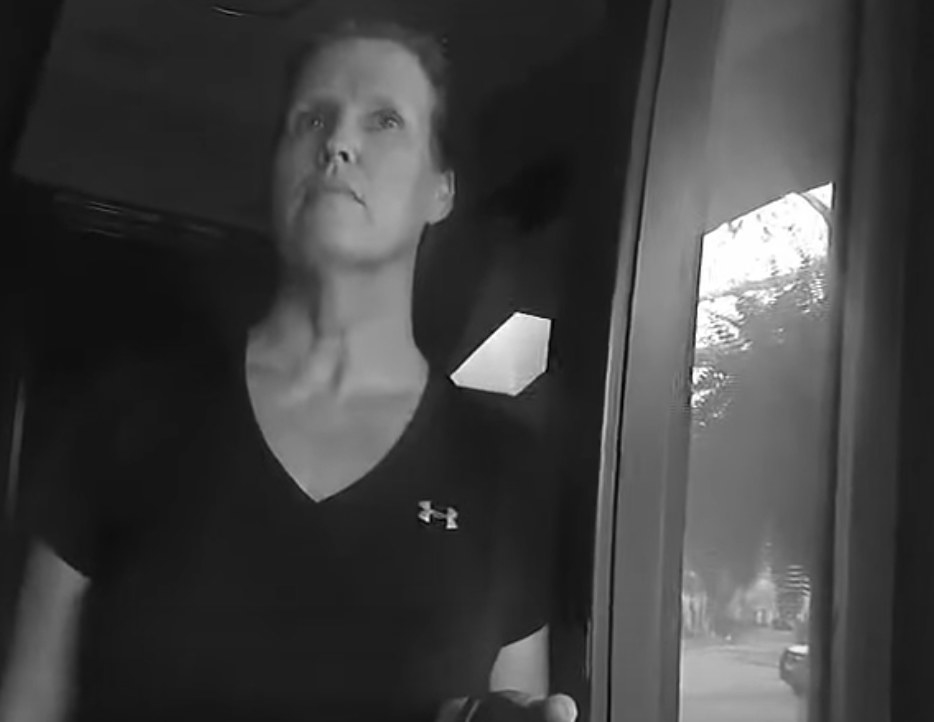
Barbara Collier escaped the Caldor Fire and was put into Brookdale Folsom Senior Living facility where her family alleges she faced physical abuse before dying.
LONGS, S.C. (WBTW) — Horry County police have arrested a man they say
neglected a person he was the caregiver for, causing them to die.
On December 23, 2020, an autopsy revealed that a person died from
clinical neglect and extensive Psoriaform rash ulcerations, according to
arrest warrants obtained by News13.
During the time of death, and for 10 months before the
death, David Constantine was serving as the victim’s caregiver,
according to the arrest warrant.
The autopsy also showed “the wounds on the victim and condition of
the body indicate a long painful suffering before death,” according to
the warrant.
Because Constantine did not seek medical help for the victim, police say his lack of actions resulted in their death.
For people under guardianship, the system can be dehumanizing, dangerous, and even deadly. For the professionals — who can control hundreds of people at a time — it can be very profitable. A BuzzFeed News investigation.
By Heidi Blake and Katie J.M. Baker
They can isolate you: A teenager with cerebral palsy was snatched from the school gates and hidden from his parents.
They can bleed you dry: A successful rheumatologist was declared incapacitated after a bout of depression and lost her million-dollar waterfront home.
And they can leave you to die: A 46-year-old man died under a do-not-resuscitate order that went against the desperate pleas of his wife.
All three nightmares share a common cause: These people had been
placed under the care — and control — of legal guardians. America’s
guardianship system was designed as a last resort
to be used only in the rare and drastic event that someone is totally
incapacitated by mental or physical disability. In those cases,
conscientious guardians can provide vital support, often in complex and
distressing circumstances. But an investigation by BuzzFeed News has
found that the system has grown into a vast, lucrative, and poorly
regulated industry that has subsumed more than a million people, many of
whom insist they are capable of making their own decisions, and placed
them at risk of abuse, theft, and even death.
The #FreeBritney movement
has drawn international attention to the case of Britney Spears, and
wrongdoing by individual guardians has surfaced in the past, but our
investigation reveals the systemic failings behind these isolated
stories.
In local courts across the country — often woefully unfit for the
sweeping power they command — guardians, lawyers, and expert witnesses
appear frequently before the same judges in an established network of
overlapping financial and professional interests. They are often paid
from the estate of the person whose freedom is on the line, creating
powerful incentives to form guardianships and keep them in place.
“The
judge knows the lawyers, the lawyers know each other,” said J. Ronald
Denman, a former state prosecutor and Florida lawyer who has contested
dozens of guardianships over the past decade. “The amount of abuse is
crazy. You’re going against a rigged system.”
Without being
convicted of any crime, those declared incapacitated face some of the
most severe measures that the courts can take against any US citizen.
Most freedoms articulated in the UN Universal Declaration of Human Rights are denied to people under full guardianship: They can lose their rights
to vote, marry, start a family, decide where they live, consent to
medical treatment, spend their money, seek employment, or own property.
Thousands of professional guardians, lawyers, and corporations now hold sway over assets totaling tens of billions
of dollars. Some guardians have hundreds of people under their control.
And despite the public perception that guardianship is a protective
measure for older adults nearing death, the system traps huge numbers of young people.
BuzzFeed News has scoured hundreds of thousands of court documents,
obtained confidential mental health filings and financial records,
examined hundreds of guardianship cases, gathered exclusive data from
extensive public records requests, conducted hundreds of interviews, and
carried out a detailed review of guardianship laws in all 50 states.
Our investigation reveals an opaque, overgrown, and malfunctioning
system wielding vast and frightening power in the dark.
People
have been abused, neglected, and killed while living under
guardianship. BuzzFeed News identified 20 cases in which young or
middle-aged people died under questionable circumstances, including
murder, severe neglect, or malnourishment. A 31-year-old man was abused
by care home staff and buried in concrete for months before his guardian
realized he was missing. No charges were brought against her and she is
still in charge of 130 people.
People under guardianship
— commonly referred to as wards — have been locked up and isolated from
their families and friends, with guardians obtaining restraining orders
to keep loved ones at bay. One professional guardian who concealed the
whereabouts of a woman’s teenage son declared “I’m mom now” and said she
had no problem “taking the noose around” the mother’s “neck and
tightening it” to keep them apart, a nurse alleged in court filings.
In
many states, guardians can force wards to undergo invasive medical
procedures including the implantation of contraceptive devices — and in
several cases, wards were permanently sterilized.
Court
clerks have failed to perform vital checks in hundreds of cases, and lax
vetting has left vulnerable people in troubling hands. The owner of one
major guardianship corporation was given control of hundreds of wards —
including young people — despite having been repeatedly accused of
domestic abuse and assault involving children.
Guardians
have had scores of younger people placed under do-not-resuscitate orders
(DNRs) — including some who have a mental illness but are physically
healthy — blocking their access to potentially lifesaving treatment if
they fall seriously ill. Several middle-aged people, including a former
space shuttle scientist, have died under these orders, sometimes without
the courts being informed.
Professional guardians have
stolen tens of millions of dollars from hundreds of people and exploited
obscure trust fund laws to conceal their financial activity from the
courts. One guardianship nonprofit drained the accounts of more than 800
people, while another professional guardian transferred money from
several of her wards’ accounts into a trust controlled by her husband.
Other
wards say they have been trapped under the guardianship of controlling
relatives who strangled their ability to have social or romantic
relationships, choose where they live, or express their true gender
identity.
The public rarely hears from people who have
been stripped of their rights given the significant restrictions they
live under, but in an ongoing series, BuzzFeed News will report on the
cases of wards who endured harrowing ordeals while under the control of
private, public, and family guardians.
BuzzFeed News reviewed
details of more than 200 guardianships involving young and middle-aged
people across more than 30 states. In 130 of those cases — gleaned from
court documents, interviews, first-person testimony, and local news
reports — we found evidence suggesting that wards were exposed to
financial exploitation, and 110 may have suffered abuse or neglect.
There were nearly 50 claims that people had been isolated from friends
and family, and dozens of reports that people were confined against
their will. In scores of cases, people were put under guardianship based
on a questionable finding of incapacity. Many cases indicated that
wards had experienced several of these alleged harms at once.
No comprehensive data
exists on the guardianship system, and courts in many states keep case
documents under seal, making it impossible to say for sure how many
people are under its control. Estimates have put the number of adult guardianship cases at more than one million — a figure that experts say is rising.
BuzzFeed News filed public records requests to all 50 states and the
District of Columbia to create an unprecedented dataset on the number of
cases being opened across the country each year. Fewer than half of the
states had fully usable data, but BuzzFeed News consulted statisticians
to develop a national estimate based on the figures provided. Our analysis suggests that as many as 200,000 adult guardianship cases are filed per year.
People
whose capacity is in question are often struggling with physical and
mental conditions that make caring for them unquestionably difficult.
But guardianship is such an extreme measure that in most states,
judges are required by law not to impose it unless no other options are
available. Too often, however, they opt for full guardianship in
hearings that can last just minutes, without considering any
alternatives. Many state laws
allow hearings that determine if someone is incapacitated to be held
without notifying the person in question, meaning someone can be placed
under emergency guardianship without having an opportunity to fight
back. Some people are placed under guardianship without even undergoing a
medical examination. And people who have been declared incapacitated
generally lose the right to appoint their own lawyers or represent
themselves, which means that once guardianships are in place, they are
often impossible to escape.
The loss of liberty is particularly
consequential for people who have not yet had a chance at adult life.
Many young Americans with disabilities are funneled into guardianship as
soon as they turn 18 as part of what the National Council on Disability calls
a “school-to-guardianship pipeline.” Most 18- to 22-year-olds who
receive publicly funded services for intellectual and developmental
disabilities have guardians.
Others
have been declared incapacitated because of conditions that can often
be managed, such as depression, PTSD, autism, physical disability, or
addiction.
And for professionals who are unscrupulous, younger wards with access
to large inheritances or personal injury payments can represent the
most lucrative cases of all, because they have decades ahead during
which the guardian can keep billing.
With no federal laws to govern guardians, the powers given to them can vary dramatically: In more than 10 states, the law grants full guardians the same powers over a ward as a parent has over an “unemancipated minor child.” Illinois judges may give guardians “custody of the ward's minor and adult dependent children.” Guardians in Arkansas can put wards in the county jail “for safekeeping,” and in Texas, they can lock wards in psychiatric hospitals before asking for court approval.
Many professional guardians work hard to care for clients who
genuinely can’t care for themselves. Others are committed family members
looking after vulnerable loved ones in exceptionally difficult
situations.
But Shannon Butler, a “master guardian”
and board member with the National Guardianship Association, said
judges are too quick to put people under full guardianship because “It’s
just easier for them, and honestly, it's easier for us too.”
The association has clear standards
that guardianship should only be considered as a last option. “We
should only be using those powers that are absolutely necessary,” she
said. “A good guardian is actually working towards getting their wards
out of guardianship.”
Yet flaws in the system leave “room for
abuse,” Butler said. “If you’re somebody that’s predatory and you get
into this business,” she added, “it’s scary.”
WHEN NO ONE IS WATCHING
Ben Kothe / BuzzFeed News
Elizabeth Hensley was stripped of her rights and put under
guardianship by a judge while she was receiving treatment for depression
in a Florida hospital.
The
59-year-old acknowledged she had autism and mental health difficulties,
but begged the judge not to take away her rights. “I really do not need
a guardian!” she wrote to the court, pleading to be allowed to return
to her home where her partner, “precious cats and the garden” were
waiting for her. But her pleas were denied.
Hensley was assigned a
professional guardian who was meant to help her. Instead, she
complained, she was kept under “lockdown” while court filings show the
guardian paid herself from Hensley’s accounts without court permission.
Florida’s guardianship industry is among the most bloated outgrowths of the system, with more than 500 professional guardians
and hundreds more lawyers who draw their income from vulnerable people
across the state. Hensley had fallen into the hands of one of the most
notorious.
Marion County Sheriff's Office
Rebecca Fierle made millions while controlling the lives and finances of more than 500 people before she was charged
last year with abuse and neglect of an older adult ward who died after
she had him placed under a DNR and allegedly told doctors to cap his
feeding tube. When police raided her office, they found urns containing
the cremated remains of nine former wards on display. An analysis of
thousands of court records by BuzzFeed News sheds new light on her
practices.
Though Fierle marketed herself as a specialist in care
for older adults, around a third of her wards at the time of her arrest
had been placed under her guardianship in their youth or middle age. She
sold people’s homes, cars, and belongings to pay her bills and moved
hundreds of thousands of dollars from their accounts into opaque trust
funds that shielded her from court scrutiny. More than $660,000 of
Hensley’s money was moved into a trust that a 2019 audit
found Fierle used to pay herself without court approval. Court auditors
were able to track several thousand dollars Fierle had directed to
herself and her business from Hensley’s accounts, but they noted that
she had failed to provide records for numerous other transactions.
Fierle
declined to respond to detailed questions from BuzzFeed News but has
previously denied any wrongdoing and pleaded not guilty to the abuse and
neglect charges. She told court auditors who flagged multiple concerns
about her use of Hensley’s funds that all her spending was “for the
ward’s benefit,” but she couldn’t prove it because her paperwork had
been seized by law enforcement.
Like Hensley, many of Fierle’s
wards were diagnosed with mental rather than physical ailments,
including depression, bipolar disorder, and alcohol addiction. But
records reveal she had dozens of young and middle aged people placed
under DNRs and diverted thousands of dollars from their estates to buy
prepaid burial plans from two favored local funeral homes — in one case
for an 18-year-old with bipolar disorder and ADHD.
Judges eventually revoked nearly 100 DNRs in Fierle’s cases — but
records show it was too late to free at least two of those wards from
those orders. Unbeknown to the courts, Penny Pilkington, a 56-year-old
woman with developmental disabilities, and Drazen Premate, a 63-year-old
former space shuttle scientist who had schizophrenia, were already
dead.
Other professions that yield such large financial rewards
and power over the lives of vulnerable people — like law or medicine —
typically require years of intensive training and extensive vetting. But
guardianship generally demands neither.
In some states, guardians
(sometimes referred to as conservators) control both a ward’s personal
life and their money, while others assign a separate person to manage
financial matters. These roles can be assumed without a degree in law,
social work, or accounting — and some states require no more than a few
hours of education before guardians are empowered to assume control of
people’s lives.
Guardians are required to file annual reports on
their wards' well-being and financial affairs, often reviewed by
low-paid, overstretched court clerks who lack formal training in
spotting fraud. Many clerks are also charged with vetting people seeking
to become professional guardians — but troubling cases can slip
through.
In Minnesota, records reveal the owner of a major guardianship
corporation was placed in charge of hundreds of vulnerable people
despite pleading guilty to domestic assault in 2004 after her son told
police she threw him on the floor, slammed him against the wall, and
called him a “shit head.” Rebecca Reich, who owns the firm Guardian and
Conservator Services, had also been arrested the previous year for
allegedly telling another child to get a knife from the drawer and kill
her then-boyfriend, though no charges were brought. Court filings detail
other allegations of domestic abuse involving her son.
The
Minnesota Judicial Branch declined to comment on Reich’s case but said
background checks are run every two years and provided to judges who use
them to decide on a case-by-case basis whether to appoint guardians.
Reich’s
father, a retired local judge who now represents her guardianship firm,
responded to questions from BuzzFeed News on her behalf. He said she
had pleaded guilty to assault only to spare her son the distress of
testifying in court and the case was dismissed without an adjudication
of guilt after she met her parole conditions. Reich’s father said she
disputed all the allegations, which arose during a messy divorce, and
reiterated that no charges had been brought against her. She had been
fully vetted, he said, and currently serves on the statute committee of
the Minnesota Association for Guardianship and Conservatorship. “The
background concerns that you raise are incomplete, contested, and do not
reflect years of subsequent competent and compassionate service,” he
wrote.
In Florida, Fierle’s wrongdoing went unchecked for more than a
decade. Court clerks had failed to raise warning signs, and regulators
did not respond in a timely manner to reports about Fierle’s suspect
practices. After her arrest, the head of the Florida Department of Elder
Affairs said that the Office of Public and Professional Guardians —
whose four employees were tasked with overseeing the conduct of hundreds of guardians across the state — had a backlog of 80 open investigations.
This spring, the comptroller of Orange County, where Fierle controlled the lives of more than 100 people, issued a damning 86-page report
warning that overworked and ill-qualified court clerks were failing to
subject guardians to basic scrutiny, such as criminal records checks.
Some guardians had failed to report on the well-being of their wards for
years without the clerks raising any concerns. Guardians had paid
themselves from wards' estates without court approval and moved money
into trusts without filing mandatory paperwork. The Orange County Clerk
of Courts told BuzzFeed News she disagreed with many of the report’s
findings, but had made recent improvements including adding more deputy
clerks to the guardianship team and providing training in general
accounting principles and reviewing internal procedures.
BuzzFeed News identified more than 130 cases across the country in
which evidence suggested young or middle-aged wards were exposed to
financial malpractice, including 50 cases involving trust funds, which
can be used to shield guardians from court scrutiny.
One professional guardian moved money belonging to several of her wards into Florida trusts before successfully petitioning
the courts to release her of any obligation to account for future
spending because she said the money was no longer under her control. But
in three of those cases, the funds had been moved into a trust controlled by her husband. The conflict of interest was highlighted
in the report by Orange County investigators this spring, without
naming the guardian concerned. BuzzFeed News has identified her as Theresa Barton,
a professional who has controlled the lives of wards in Florida for 25
years. Her husband, Nick Barton, runs a non-profit that controls a pooled special needs trust used by guardians across the state to store wards’ funds. The Bartons did not respond to repeated requests for comment.
Another Florida guardian, Teri St. Hilaire, has faced scrutiny over alleged financial irregularities
involving more than 60 of her wards — including a 29-year-old man with
funds of more than $2 million following a personal injury settlement.
Records show St. Hilaire established a trust with his money and charged
fees of more than $70,000 by the time regulators launched
an investigation into the “wellbeing and financial affairs” of scores
of people in her care last year. The probe concluded in May, and a
report was sent to the Office of Public and Professional Guardians, but
its findings have been designated confidential. Meanwhile, St. Hilaire
continues to wield power over the wards who remain in her control. She
did not respond to requests for comment from BuzzFeed News.
Guardians
are often legally empowered to liquidate wards’ assets to pay their own
bills — and BuzzFeed News identified cases where people lost almost
everything they owned. Among them was a rheumatologist in her 50s who
was placed under guardianship after experiencing a bout of depression
during acrimonious divorce proceedings in 2019. Her professional
guardian had her placed against her will in a lockdown facility while
arranging the sale of her $1 million waterfront home and other
belongings. By the time she was released from guardianship eight months
later, the guardian and her lawyers had charged more than $100,000 in
fees and expenses. The guardian refused to comment.
In New Mexico,
the owners of the nonprofit Ayudando Guardians embezzled around $10
million from more than 800 clients, spending the stolen funds
on expensive cars, luxury homes, Las Vegas shopping sprees, and exotic
holidays to the Caribbean and Hawaii. Court clerks had spotted no red
flags in any of the firm’s financial filings, leaving the abuse to
continue unchecked for more than a decade until junior employees blew
the whistle. The firm’s president was finally sentenced to prison in July, but by then there was almost nothing left in the accounts of any of Ayudando’s wards.
As
well as serving as guardian, conservator, or trustee for hundreds of
“private pay” clients, Ayudando was paid millions of dollars by New
Mexico’s Office of Guardianship to take over the lives and finances of
people living in poverty.
THE POOR CAN VANISH
Ben Kothe / BuzzFeed News
Private guardians can profit from wards with access to large
amounts of cash and valuable assets, but people with little money who
get sucked into the state-run guardianship system are also vulnerable to
abuse — and may be more easily overlooked.
Carl DeBrodie was a
happy and high-spirited child with multiple developmental disabilities
when he was first placed under the guardianship of Mary Martin, who said
she raised him in a loving home with his own pet horse. But she didn’t
realize she and her husband had to apply to be his guardians after he
became an adult, she told BuzzFeed News, so DeBrodie eventually came
under the control of a public guardian named Karen Digh Allen.
In
Missouri, elected public administrators handle the cases of
incapacitated people without financial resources or anyone else to care
for them. Allen has overseen hundreds of wards in Callaway County since 1997. As DeBrodie’s guardian, she was responsible for ensuring he received proper medical care and lived in a safe and comfortable setting.
Debrodie
was placed in a group home named Second Chance. While he lived there,
Martin reported seeing him covered in cuts and bruises. After she
reported the alleged injuries, she was banned from seeing DeBrodie,
according to her testimony in confidential court records obtained by
BuzzFeed News. Martin applied to adopt him as an adult, but Allen filed
an objection.
A law professor named Mary Beck who was appointed by the court to
determine DeBrodie’s best interests in the adoption case concluded that
he wanted to live with Martin and her husband, who he knew as “Mom” and
“Dad.” In the confidential report, she also noted what she saw as a
“conflict of interest”: Allen’s longtime deputy had a second job working
for Second Chance. Allen later said that homes like Second Chance had a financial incentive to hold on to clients, according to the Fulton Sun: "The amount of money paid almost creates a scenario that invites deception if you don't have good people in there.”
The judge ruled against the adoption, and the Martins said they never saw DeBrodie again.
“Why keep him from a home where he was loved, where he wanted to be?” Beck said to BuzzFeed News regarding Allen’s objections.
Carl DeBrodie
DeBrodie had been missing for around seven months when his remains
were found encased in concrete in a storage unit in April 2017. He had
been made to sleep in a staffer’s basement, and denied medical care when
his health deteriorated. He died just two blocks from Allen’s office.
Second Chance staffers hid his body and then falsified medical documents describing him enjoying snacks and dancing to music in order to keep collecting over $100,000 from Medicaid for his care.
Multiple
Second Chance staffers went on to plead guilty in connection to
DeBrodie’s death in what a judge called “one of the most deplorable,
depraved and disturbing” cases he’d ever heard.
Allen refused to
answer questions about her role in DeBrodie’s case. “In 25 years, I’ve
always been neutral,” she said, adding that it was the judge’s decision
to deny the adoption she contested, not hers. She said she was involved
in efforts to strengthen guardianship policy both state and nationwide.
She was originally named in the civil lawsuit but was dismissed
as part of a settlement agreement with the county. Her lawyer argued
she could not have known about DeBrodie’s abuse or death given Second
Chance’s elaborate cover-up.
She still holds her elected office and currently
oversees 130 people. In May this year, Allen was named Missouri’s
public administrator of the year as well as Callaway County's April employee of the month. “Allen is a great example of an employee who goes above and beyond every day,” the announcement said.
Public
guardianships for people who have little or no money form a significant
part of the industry. Across America, young people in group homes,
specialist schools, or foster placements have been pushed straight into
guardianships as soon as they turn 18.
“In
a lot of cases, it’s just reflexive,” said disability rights attorney
Viviana Bonilla López. Parents of children with disabilities turning 18
are often told
by doctors, teachers, or lawyers that they will lose any say in their
care unless they get a guardianship. What they don’t know is that, as
soon as they’re in the system, the judge can push the parents aside and
appoint a professional — even a stranger — in their place. “Parents say,
‘I don’t know how this happened. I didn’t mean to do this. Help me get
them out,’” Bonilla López said. But by then, it’s often too late.
Public
guardians are typically paid by the state to take on wards only if no
one else is willing to do so. In such cases, judges frequently favor the
total removal of the ward’s rights. Young adults who enter guardianship
can find that they are in it for life.
BuzzFeed News reviewed
details of 19 cases in which wards were allegedly abused, neglected,
isolated from friends or family, wrongly stripped of their rights, or
killed while under the control of public guardians. (Click to continue reading)
by: Shaul Turner and Web Staff and Nexstar Media Wire
ENGLEWOOD, Colo. (KDVR) – A Denver woman’s body was discovered three days after she died in a vehicle in Swedish Medical Center’s parking lot.
Yvette Mooney, 50, was found on Sunday, Aug. 23. She died Thursday, Aug. 20. She had two children and several grandchildren.
“A hard worker all her life. She raised amazing children,” said Kandra Garcia, Mooney’s daughter-in-law.
Mooney didn’t answer calls the day she died. Her family thought she had gone to Swedish to visit a family friend.
But when they didn’t hear from her, they contacted police.
Englewood officers discovered Mooney’s body in her car in the emergency room parking lot.
“She couldn’t make it inside. She thought, ‘I’m in an ER parking lot.
They will find me –somebody will come.’ Not three days later when she’s
blistered and too decomposed for us to have a proper burial,” Garcia
said.
The hospital sent the following statement to KDVR:
“We offer sincere condolences and
deepest sympathy to the family and loved ones. Upon discovery of the
event we immediately notified the Englewood Police Department and have
worked closely with them throughout the ongoing investigation.”
“Somebody dropped the ball and I want answers,” Garcia said.
The family says they want changes in security policies so cars are checked more regularly.
The Englewood Police Department said the coroner’s office is still
determining Mooney’s cause of death. Detectives are requesting
surveillance video from the hospital, but say the car’s windows were
tinted and it would be difficult to see inside the vehicle.
The
six-time Emmy-winning comedian and actor was known for his characters
on "The Carol Burnett Show,” "Rango" and "Ace Crawford Private Eye." He
also voiced the animated Barnacle Boy on “SpongeBob SquarePants.”
"The love he gave us, and the laughter he gave the world will never
be replaced, but will be remembered forever," Kelly told continued. "He
is at peace now but I will miss him every second of every day until we
meet again in heaven.
Not long after the news, celebrity friends
and fans alike immediately took to social media to mourne the loss of
the comedy icon.
"I cry laughing ....tears streaming...with almost every one of his sketches. RIP to the magnificent Tim Conway," wrote actress Rhea Seehorn.
"Tim Conway, Comedian and 'Carol Burnette Show' Star Has Left For Paris," wrote RuPaul.
"Sad
to read of the passing of Tim Conway. Both Tim AND Harvey Korman
couldn't have been any nicer AND funnier. Now together again making each
other laugh. RIP," Marlee Matlin wrote.
You were always my favorite comedian. Thank you #TimConway for all the laughter over the years. RIP dear one," Kristy Swanson said.
"So
sad to hear of the passing of #TimConway at 85. His Dentist sketch with
Harvey Korman on the #CarolBurnett Show is still one of the funniest
9:00 you will watch on TV. Do yourself a favor and watch in his honor," Al Roker said.
A tribute was posted from late actress Rose Marie's account, which is run by her daughter.
"So
sad to hear about Tim Conway. "Discovering" Tim and managing him for a
time, was a source of tremendous pride for Mother. He was, after all,
one of the funniest men on the planet! My heart goes out to his family,"
it read.
"Watching Tim Conway destroy his cast mates is pure joy. Wait until Vicki Lawrence’s a-bomb ad-lib at the end. #RIPTimConway," Patton Oswalt wrote.
Fox News' Tyler McCarthy contributed to this report.
Frank Williams died Dec. 21, 2016, from sepsis, with bedsores he
suffered at Safire Rehabilitation at Northtowns, a nursing home in the
Town of Tonawanda, listed as a likely cause of the sepsis.
Frank L. Williams didn't have bedsores when he left Kenmore Mercy
Hospital and entered a nursing home for rehabilitation after a stroke.
That fact is established in a document detailing his condition when
he entered Safire Rehabilitation of Northtowns in the Town of Tonawanda.
Four months later, when he returned to Kenmore Mercy, the 82-year-old
retired ironworker had seven bedsores on the lower half of his body. He
died 14 days later from cardiac arrest caused by sepsis – an extreme
response to infection – according to his death certificate. Hospital
records cite infections from bedsores as the most likely cause of the
sepsis.
"They told me this is the worst case of bedsores they have ever seen
from that nursing home," his son, Mark F. Williams Sr., recalled doctors
and nurses telling him in the emergency room. "The sores were black.
I'd never seen that before. I was shocked. I thought it was the black
plague."
Williams' case illustrates how vulnerable individuals who go to
poorly rated and understaffed nursing homes for rehabilitation can
quickly succumb to preventable but lethal ailments like bedsores.
A New York State Health Department spokesman declined to say whether
an investigation into Williams' death was conducted, citing "privacy
concerns," but inspection records show Safire Northtowns wasn't cited
for the care provided to Williams in late 2016.
However, health department inspectors cited the facility three times
from 2015 through 2018 for failing to provide proper treatment and
prevention of bedsores to other residents. Those violations included
conditions inspectors observed two days after Williams was transferred
to Kenmore Mercy.
Among the 47 nursing homes in Erie and Niagara counties, Safire
Northtowns had the worst record for residents with bedsores in 2017,
according to data from the federal Centers for Medicare and Medicaid
Services. Nearly 13 percent of the long-term, high-risk residents at
Safire Northtowns had bedsores. That was almost double the statewide
average of 7 percent at nursing homes in New York. Only 43 of about 620
nursing homes statewide in 2017 had a higher percentage of long-term
residents with bedsores than Safire Northtowns.
In the first two quarters of 2018, the latest available, Northtowns'
bedsore percentages have grown even worse, with 16 percent of its
long-term, high-risk residents having pressure sores in the second
quarter.
Michael Balboni, a Safire Northtowns spokesman, said the facility has
higher percentages of residents with bedsores, in part, because it
accepts a greater number of obese individuals than other nursing
homes. Of the 85 residents at the nursing home, he said, 12 are
bariatric patients.
"Care of patients with this condition requires specialized equipment, beds and chairs, and is more complicated," Balboni said.
Obesity, however, should not result in bedsores if a facility is
providing proper care, according to a medical official and a wound
treatment researcher.
"Because you have accepted bariatric patients, you have a
responsibility to have appropriate staffing to reposition them without
dragging them," said Dr. Laura E. Edsberg, director of Daemen College's
Center for Wound Healing Research.
Safire Northtowns, a 100-bed facility, ranks low in the federal
government's five-star rating system. Its overall rating is one star,
which is "much below average," according to the U.S. Centers for
Medicare and Medicaid Services. Ten of the 47 nursing homes in Erie and
Niagara counties are rated that low.
Bedsores in nursing homes
The percentage of long-term high-risk residents with bedsores at nursing homes in Erie and Niagara counties in 2017. (Click for chart)
Provider Name
% of high risk long-stay residents with bedsores in 2017
Preventable injuries
Bedsores, also known as pressure ulcers, occur when a section of the
body is pressing against a surface for too long and not repositioned to
alleviate the pressure. Several other factors, such as nutrition, the
surface on which the body is pressing and moisture also contribute to
bedsores, according to experts in the prevention of these injuries.
Yet there is consensus among nursing homes and other health care providers that most bedsores can be prevented.
Several years ago, nursing homes, hospitals and the Health Department assembled the best practices for preventing and treating bedsores.
The effort paid off, said Nancy Leveille, executive director of the
Foundation for Quality Care at the New York State Health Facilities
Association, an industry group. The statewide average of bedsores
among long-term residents dropped from 13 percent to 7 percent.
But Mark Williams, who sued Safire Northtowns in May, says the
nursing home failed to provide proper care for his father. The lawsuit
was filed by attorney Michael Scinta of the Brown Chiari law firm.
Caitlin Robin & Associates, the law firm representing Safire Northtowns, denied the allegations in a response to Mark Williams' lawsuit in State Supreme Court. A lawyer at the firm declined to comment on the case.
Safire Northtowns has also been sued by the family of another man,
which alleges he developed severe bedsores in 2016 while at Safire
Northtowns because of the nursing home's negligence. That case is also
pending.
Bedsore lawsuits can be costly. Earlier this month, a Niagara County jury awarded $1.25 million
to 72-year-old Shirley Burrows after determining Newfane Rehab &
Health Care Center was negligent in its care of her bedsores.
The state Health Department can also cite or fine nursing homes for allowing bedsores that are deemed avoidable.
Problems from the start
Frank Williams raised his family on the Tuscarora Indian Reservation
in Niagara County, where he and his late wife had operated a smoke shop.
After he suffered a stroke, he was treated at Kenmore Mercy Hospital,
according to medical records. He was transferred to Safire Northtowns
on Sept. 9, 2016.
Public records do not provide many details about his stay at Safire Northtowns, but his son provided an account.
"He was placed in long-term care for three days. I had to tell them
he was a rehab patient. They didn't have a bed for him in rehab. The
place smelled of urine and it was hot. There were no open windows and my
father was sweating," Mark Williams said.
With assistance, Williams could walk. But when he was in bed, the son said, caution was necessary. His father was restless.
"He liked to roll. I'd asked them to place rails on the sides of his bed," Mark Williams said.
The request, he said, was not addressed.
"One day when I came in, he had a big old bump on his head. I asked,
'What happened to you?' He said, 'Oh, I fell out of bed.' The nursing
home never told me about that," the son said.
Mark Williams said the nursing home staff informed him in early
December 2016 that his father had developed a bedsore in the groin area.
"We were told it was a little pressure sore. I asked, 'Can we look?' and we were told, 'No,' " Mark Williams recalled.
Frank Williams, who had diabetes and high blood pressure, had also
been diagnosed with a urinary tract infection, according to hospital
records.
In the coming days, Mark Williams said, he noticed his father's health deteriorating.
'Down to the bone'
On Dec. 7, 2016, Frank Williams was readmitted to Kenmore Mercy
Hospital because of generalized weakness, a cough and fever, hospital
records stated.
After he arrived, hospital records note, Kenmore Mercy staff
discovered bedsores on the lower half of his body, including one with
"foul smelling drainage" and greenish gray and black spots, along with
dead tissue.
According to hospital medical records, there were bedsores on his
lower back, right ankle, right and left heels and right big toe. There
were two lesser wounds on his right pelvis and scrotum.
"The sore on his right ankle looked like it was down to the bone," Mark Williams said.
Doctors removed dead tissue and muscle from Williams' lower back,
scrotum and ankle, medical records stated. So much tissue was removed in
his rectal area, that a colostomy bag was required, according to
Scinta, Williams' attorney.
"The doctors told us that they had gotten to the point where they
were down to his tail bone and couldn't do anything more," said Mark
Williams.
Preventable pain
Williams' attorney said the bedsores could have been prevented if the
nursing home staff had regularly changed Williams' position in bed.
Safire Northtowns is operated by a limited liability company with
five New York City area partners: Judy Landa, Richard Platschek, Solomon
Abramczyk, Robert Schuck and Moshe Steinberg, according to Health
Department records.
Theresa Lyman, administrative organizer for the union that represents
certified nursing aides at Safire, said the facility's estimated 80
certified nursing assistants and licensed practical nurses were cut to
38 after the partners bought the nursing home in 2014.
"If there are not workers, how can you change a resident's position?"
said Tanya Goffe, a certified nursing aide at Safire, said when asked
about the high percentage of bedsores at the facility. Goffe and other
unionized nursing home workers rallied in June against the staffing cuts
by out-of-town owners.
Balboni, the spokesman for Safire Northtowns’ owners, said the owners
have hired nonunion certified nursing assistants to supplement the
hours worked by the nursing home’s staff. The total hours worked by all
certified nursing assistants – union and nonunion – have not decreased,
he said.
"We believe the cause in the bedsore percentages is taking in bariatric patients, not staffing cuts," Balboni said.
Tanya
Goffe, a certified nursing aide at Safire Rehabilitation of Northtowns,
says the nursing home's owners cut the number of nurses and certified
nursing aides working there after they purchased the facility in 2014.
Goffe participated in an 1199 SEIU union protest outside Emerald South
nursing home in Buffalo on June 28, 2018. Union members protested
understaffing and unsafe conditions at Emerald South. (Sharon
Cantillon/Buffalo News)
An expert's insights
While repositioning is the No. 1 preventive measure for bedsores,
there are other necessary steps to avoid pressure injuries, according to
Edsberg at the Center for Wound Healing Research.
They include closer attention to the different surfaces the skin
comes in contact with, whether it is on a bed or in a chair, and the
friction that causes.
"It all comes down to what are the different forces on the tissue.
When a bed is raised up, you start to slide down the bed and there is
friction," Edsberg said.
Able-bodied individuals can shift to lessen pressure when they become
uncomfortable. But nursing home residents may not have that ability,
said Edsberg, a former president and member of the National Pressure
Ulcer Advisory Panel, a think tank. Sweat and incontinence can also
weaken tissue.
Close watch of residents also figures into prevention and treatment, according to Mark Dirlam, the assistant administrator of Elderwood at Lancaster, the nursing home with the lowest percentage of bedsores in Erie and Niagara counties in 2017.
Nurses at that Elderwood home make daily checks of residents for possible breakdowns in the surface of the skin, Dirlam said.
He said the facility also has a "skin team" that has been in place
for several years and conducts weekly rounds to assess and treat
individuals with bedsores. Team members include nurses, occupational or
physical therapists and a dietitian.
Frank Williams' death
Williams died at 4:10 p.m. Dec. 21, 2016, at Kenmore Mercy.
Williams' son said he remains upset that Safire Northtowns did not
tell him how bad the pressure sores were on his father's body.
"I arrived at the hospital a few seconds after he died," Mark
Williams recalled. "The nurses told me he had smiled when he died. He
finally had relief."
PHILADELPHIA (KYW Newsradio)
— After 85-year-old Ruth Pasley died in a Philadelphia nursing home
last New Year’s Eve, she was quietly laid to rest in Montgomery
County, so quietly that her family had no idea for more than six months.
Accounts
of her case, provided exclusively to KYW Newsradio, not only expose a
family’s heartbreak but also raise red flags about cracks in the state’s
guardianship system.
Cherri Gregg | KYW Newsradio
“It still hurts”
David
Wilson is still trying to come to grips with his grandmother’s death.
Coping with a slew of family illnesses recently meant he hadn’t gone to
visit his grandmother, known to loved ones as “Miss Ruth,” since before
the holidays in 2017.
“Once my father passed, it was on me,” he
told KYW Newsradio. “It still hurts. All I want to know is what happened
to my grandmother, when, and why we weren’t informed.”
Miss Ruth
had dementia and lived in the community with help from neighbors and
friends. But when her son died in 2014 and those friends aged, the
Pennsylvania Corporation for Aging stepped in. During a hearing in June
of 2015, the court appointed attorney James Tyler as her legal guardian.
Wilson said he did not object to the appointment.
Eventually,
according to the family, Tyler moved Miss Ruth to Cheltenham Nursing and
Rehabilitation Center, a facility 26 miles from her old North
Philadelphia neighborhood near 17th Street and Susquehanna Avenue.
"During
that time, I had a heart attack, I had cancer," said Sandra Pasley, 71,
Miss Ruth’s daughter-in-law. "There were a lot of things going on." She
and other family members lost touch. "But still, I used to try to visit
her when I could," she said.
When Miss Ruth died, representatives
from Cheltenham said they called the guardian. But, the family told KYW
Newsradio, no one called them.
The Pennsylvania Corporation for Aging declined to comment on the case, citing confidentiality issues.
"I am very upset," said Sandra Pasley.
Cherri Gregg | KYW Newsradio
A “semi-private plot”
On
July 8, Wilson visited Cheltenham and discovered his grandmother no
longer lived here. He was told to call Miss Ruth’s guardian. He said
when he called Tyler the next day, he was told Miss Ruth had died, but
Tyler would not tell him where she was buried.
"He told us to call
this person, talk to that person," said David Wilson. "I really want to
hurt that man. I really want to hurt him."
It took Wilson weeks
of calls, visits to the nursing home and calls to local funeral homes to
find out that Miss Ruth was buried Jan. 10 at Fairview Cemetery in
Willow Grove, in Montgomery County. On Aug. 8, he took the 45-minute
ride to his grandmother’s final resting place with his mother, Sandra,
and sister, Ashley.
"This is bull crap man," said Ashley. "There's no name, no nothing. How do we even know that our grandmother is here?"
Sandra Pasley burst into tears. "She can't stay here," she bellowed. "She can't stay here!"
Wayne
Luker, Fairview's president, told the family the cemetery received a
direct order for burial. He said there were no chairs set up, and Miss
Ruth was buried in a semi-private plot — with four other bodies. He says
the cemetery was told that there was no family. The burial cost $900.
"We’re going to have to do something," said Wilson. "Everything she needed funeral-wise, we had. She deserved better than this."
Cracks in the system
Wilson
said he believed that having a guardian meant his grandmother would be
okay and that the family would be notified if there were problems.
However, notifying next of kin is not required under the state’s guardianship laws.
"There
are people who feel, especially if they are not local or close family,
that if they have a guardian they are taken care of," said Diane Menio,
executive director of CARIE,
a nonprofit that advocates for the elderly in Pennsylvania. She said
guardianship laws in Pennsylvania fail to adequately protect seniors.
Cherri Gregg | KYW Newsradio
"The statute, as it exists now, it requires people to report," she said, "but it doesn't require a whole lot beyond that."
Under the rules, guardians are not even required to visit their clients.
"We recommend once a month, but that rarely happens," said Menio.
In
order to do a thorough job, Menio said a guardian would have to call
and check in, visit and communicate with the family of his or her
client. The only problem is compensation. Many of those needing a
court-appointed guardian are poor and have family who are unable or
unwilling to put forth the type of effort required to adequately take
care of an incapacitated person. Monthly pay for such services from poor
seniors is only $100 a month. In order to make ends meet, some
guardians will run a volume business, taking on many clients and doing
the bare minimum. Additionally, the courts are understaffed and provide
limited oversight.
"They don't have the type of resources they need to do monitoring," said Menio.
In
response to an inquiry from KYW Newsradio, the Philadelphia Orphans
Court wrote that James Tyler, the attorney appointed to Miss Ruth's
case, has one of the larger guardian caseloads. Multiple sources say he
has scores of guardianship clients. According to the annual reports his
office filed with the Orphans Court, Tyler earned at least $1100 a year
for providing guardianship to Miss Ruth from June of 2015 until her
death in December of 2017. Those filings show that he visited Miss Ruth
only one time, for 10 minutes, during those two and a half years. Mr.
Tyler did not respond to repeated requests for comment.
Pennsylvania
has nearly 2.7 million residents age 60 and older, and that number will
hit 3.3 million by 2020. Thousands of seniors and infirm individuals
have state approved guardians who are supposed to protect their rights,
but the law requires only that guardians do what's in the "best
interest" of an incapacitated individual and the specifics are left for
interpretation.
"It's time consuming to be able to do what you need to do," said Keelin Barry, a Philadelphia-based attorney with an elder law practice
in Center City. She also sits on the Pennsylvania Elder Law Task Force
and is a guardian for 37 seniors. "I think, really, it's unclear what a
guardian should be doing," she said.
Cherri Gregg | KYW Newsradio
What can be done?
In
2014, the task force delivered a 284-page report to help the
Pennsylvania Supreme Court better protect elders from abuse and neglect,
including 130 specific recommendations. Some included mandatory
training for guardians on ethics and liability, a bill of rights for
seniors and family and more.
"We need to have a stronger system for supporting guardianship," Barry said.
One effort to improve the system is the Guardianship Tracking System that is scheduled to roll out this year. In a promo video
created by the Pennsylvania Supreme Court and released last month,
judges explain that GTS will allow guardians to file reports online and
send email reminders.
"It will allow judges to put red flags on guardians who may have done something wrong," Barry said.
GTS
supporters like Barry are hoping it will provide a statewide tracking
system, something that is currently lacking since filing practices vary
from county to county. Last year, it was discovered that a woman
convicted of fraud was serving as guardian on a total of 100 cases in
three different counties, prompting lawmakers to propose a bill for
guardian background checks. Advocates are hoping these reforms and
others will close the cracks in the system.
Meanwhile, David Wilson is still living with the guilt of relying on others to care for his grandma Ruth.
"I
do feel bad because I didn't get a chance to get out there and do what I
should had been doing," he said. "Even though there’s a power of
attorney, that doesn't mean they'll take care."
Wilson’s focus now is saying goodbye to his grandmother.
"We wanted to give her a proper home going," he said.
It
will cost thousands to move Miss Ruth from the grave in Willow Grove to
Eden Cemetery in Philadelphia, where her son and the rest of the family
are buried. Wilson says it's money the family does not have, but
they'll work on a solution and take the lesson to heart.
"Try do whatever you can," said Wilson. "Just go see your loved ones."
PHILADELPHIA (CBS) — A family of an 85-year-old grandmother
who died in a Philadelphia nursing home last New Year’s Eve didn’t find
out she passed away until seven months later.
Ruth Pasley, 85, died at the Cheltenham Nursing and Rehabilitation
Center on New Year’s Eve and was quietly laid to rest in Montgomery
County.
“No name, no nothing,” said granddaughter Ashley Wilson. “How do we know that my grandmother is here?”
“All I want to know is what happened to my grandmother and why we were not informed,” said grandson David Wilson.
A retired teacher’s aide, Pasley lived on her own for years, but when
her son died and dementia set in, the court appointed a legal guardian.
The guardian moved Pasley to the rehab center 26 miles away. The
family last saw her in December. When she died later that month, the
nursing home called the guardian, but no one in the family.
Wilson says he asked the guardian where his grandmother was buried
but he would not tell them. It took weeks of effort to discover Pasley’s
body lies in a Montgomery County grave with four strangers.
There is currently no requirement in the law the guardian needs to stay in touch with the family.
“As it exists now, the statute requires people to report, but it
doesn’t require a whole lot beyond that,” said CARIE executive director
Diane Menio.
While visits and calls to clients and the family are needed for a
guardian to do a thorough job, it is not required. Courts are
understaffed and guardians earn only $100 a month from poor seniors, so
some guardians do a volume business and perform minimum duties.
According to court filings, Pasley’s guardian visited her once in two-and-a-half years.
There are efforts being made to try to tighten things up. In 2014,
the Pennsylvania Elder Law Taskforce released a report with 130
recommendations. One reform is the Guardianship Tracking System, which
launches this year. Other recommendations include mandatory training, a
bill of rights for seniors and family, and background checks.
Failure to correctly monitor the blood sugar
levels of a diabetic assisted living resident in Aitkin amounted to
neglect, the Minnesota Department of Health concluded.
Golden Horizons in
Aitkin was the site of a March investigation determining the home care
provider failed to comply with hospital orders to increase the number of
blood sugar checks on an unidentified resident. The resident—a Type 2
diabetic with dementia—went to the hospital several times with high
blood sugar before ultimately dying, a death partially attributed to
diabetes and its complications. The state's Office of Health Facility
Complaints reported its findings Tuesday, June 19.
"Based on a
preponderance of evidence, neglect is substantiated," the report stated.
"The home care provider failed to implement hospital orders for
increased monitoring of the client's blood sugars and therefore had
insufficient information to provide to the client's physician when
requesting changes to the client's insulin regimen."
A month after
the resident was admitted to Golden Horizons, they showed elevated
blood sugar. Within five days, the resident's blood sugar reached 540, a
level at which they were unresponsive. At the hospital, the resident
received a diagnosis of diabetic coma, and the hospital ordered blood
sugar checks be increased from once to four times daily.
Evidence
collected by the MDH investigator showed nursing staff failed to follow
this directive, however, despite acknowledgement of the change in a note
written by a nurse. Three additional hospital visits followed,
including one for a broken clavicle attributed in part to the resident's
lethargy brought on by high blood sugar.
Ten days after the
hospital ordered the additional tests, the assisted living facility had
yet to implement the regimen, the report stated. On the 11th day,
records showed blood sugar testing was completed three times a
day—although the provider failed to document the amount of insulin the
resident received or the number of carbohydrate grams consumed in meals.
Elevated
blood sugar remained an issue for the resident, records showed, and the
final hospital stay indicated the resident was experiencing kidney
failure. The resident was placed in hospice care after a four-day
hospitalization, and died one week later.
As part of the
investigation, a family member of the client said they were unaware of
the incorrect procedures, but noted they thought staff provided good
care and managed their family member's behavioral needs well.
Interviews with nurses at the facility pointed toward staffing issues as the culprit responsible for neglectful care.
"There
was many transitions of new nurses starting and the primary nurse
leaving," the report stated. "The primary nurse was completing training
with new nurses and other nurses were going back and forth between two
of the home care provider locations. Work was not assigned to any
particular nurse and work was completed by whichever nurse came across
it."
The lack of insulin reports was explained by technical issues with an electronic monitoring system, according to the report.
State
law defines neglect as "the failure or omission by a caregiver to
supply a vulnerable adult with care or services, including but not
limited to, food, clothing, shelter, health care or supervision" or "the
absence or likelihood of absence of care or services ... necessary to
maintain the physical and mental health of the vulnerable adult, which a
reasonable person would deem essential to obtain or maintain the
vulnerable adult's health, safety or comfort."
According to
records maintained by MDH, Golden Horizons in Aitkin was the subject of
three other investigations yielding a substantiation of claims. In
October 2016, a case involving multiple falls by a resident resulted in a
neglect determination. Two investigations took place in October 2014:
one involved inadequate supervision of residents, resulting in one
injuring another, and the second investigation found a staff member
abused two residents by forcing their movements and causing pain. The
staff member was fired.
Five other Golden Horizons locations are
in Crosslake, Preston, Sandstone, Worthington and Ida Grove, Iowa. None
of the other Minnesota facilities, operated under the same comprehensive
home care provider license, show substantiated investigations,
according to the MDH database.
According to the company's website,
the facilities are managed by Pequot Lakes-based KC Companies Inc.
Chuck Lane, co-owner of KC Companies Inc., was reached by phone
Wednesday and he asked for more time before commenting. A Thursday phone
interview was scheduled with Lane, but he did not answer his phone nor
returns calls.
***UPDATE***
When
this story was first printed, Golden Horizons in Aitkin was referred to
as a nursing home. The facility is considered an assisted living
facility, rather than a nursing home.
A
Texas hospice nurse admitted she overmedicated two patients at the
direction of her company’s CEO in order to speed their deaths, court
records reveal.
But at this point, no one has been charged with murder.
Nurse
Taryn Stuart is expected, instead, to plead guilty to one count of
conspiracy to commit health care fraud. The 34-year-old is one of 16
total defendants in a criminal case against them and their employer,
Novus Health Services Inc. and Optim Health Services Inc.
Court documents obtained by the Daily News — and first reported on by the Dallas Morning News
— say that Stuart acted out the instructions of Novus’ CEO Bradley
Harris to “intentionally overmedicate” patients with drugs like
hydromorphone and morphine “with the intent to hasten their deaths.”
The records show that Harris – who isn’t medically trained — texted
Stuart that one of their patients “better not make it tomorrow. Or I
will blame u.”
Harris
routinely advised several nurses on patient care that included
overmedicating and changing end-of-life directives and had doctors
falsify prescription and death records, authorities allege. His
instructions were carried out by registered nurses and licensed
practical nurses or the staffers were swiftly replaced with someone,
often Stuart, who would “do it right,” according to the documents.
A number of texts were discovered to be linked to the deaths of patients referred to as J.J and B.R in the court filings.
“I
told this chick if she would just give her 1ml of Ativan and turn her
she would die,” Harris wrote to Stuart about a lethal dose of a sedative
is quoted in the documents.
“Yeah
I bet a good few hours of 1ml Ativan and 2ml morphine q1hr would help
that right along,” Stuart agreed with the CEO, using the medical
shorthand “q1hr” to refer to each or every hour.
Similar
texts about medications and doses that worked “like a charm” between
Stuart and her supervisor-turned-co-defendant, Jessica Love, were noted
in the report as well.
“turn
off o2 (oxygen) or down to nothing if family at bedside… give 2 mg
Ativan – 20 of morphine and start fresh with meds,” Love messaged
Stuart.
“Those are the same things I always do…” Stuart replied. “Great minds think alike.”
At
this point, the only pleas made by defendants in the case are in
connection to fraudulent activity, not the deaths. It remains unclear
why no murder charges have been brought against Stuart, Harris, Love or
any other defendant.
"It's
not the nature of law enforcement to ignore a higher and greater
offense," criminal defense attorney Barry Sorrels told the Dallas Morning News.
The
penalty for murder could be life in prison – regardless of the health
status of the deceased, including hospice patients who likely didn’t
have much time left to live.
"This has murder and conspiracy to commit murder all over it,” medical malpractice lawyer Jack Walker told the news site. “All of the distribution of controlled substance allegations stem around murder.”
"These
intentional acts? This is horrific," Walker added. "This is probably
the worst that you could see because all of this is for a business
purpose."
Stuart’s
conspiracy plea says that between June 2012 and September 2015, she
defrauded Medicare and Medicaid by “admitting patient beneficiaries to
Novus hospice service who were not eligible,” and later billing the
government health offices for services that were never provided to
anyone.
Her
plea agreement states that she cannot be imprisoned for more than a
maximum of 10 years and that the court can grant her a term of
“supervised release” of just three years or less. The government, in
turn, agrees that it “will not bring any additional charges against
(Stuart)” based on the facts laid out in her plea agreement.