Showing posts with label visitation restricted. Show all posts

Friday, September 25, 2020

KARE 11 Investigates: Elder neglect alleged in locked down facilities

by  Lauren Leamanczyk, Steve Eckert

PLYMOUTH, Minnesota — There’s been a 20% drop in complaints about maltreatment in Minnesota’s Long Term Care facilities as families were locked out during the COVID-19 crisis. But some families say it was only because they weren’t there to see the neglect.

June Linnertz says she went to visit her dad Jim Gill on March 19th at Cherrywood Pointe of Plymouth. A photo from that day shows him outside, neatly dressed and smiling as he stood next to a bird feeder.

“He was still in good spirits, obviously always enjoyed a family visit,” Linnertz recalled.

Credit: Linnertz family
A family photo shows Jim Gill standing, neatly dressed and smiling in March.

Her dad was suffering from Lewy Body Dementia and although he needed assistance with many tasks, at the time he was still only considered a Level 1 case, the highest functioning level, soon to move to Level 2 at Linnertz’s request.

Linnertz visited regularly, helping with some of her dad’s care. But that March day she says she was told to leave. The facility, like others, was closing its doors to outsiders because of COVID 19.

I got all the verbal assurances in the world, ‘Don’t worry, we got it’,” she said.

Linnertz says she could call her dad on his cell phone, but the staff wouldn’t facilitate video chats. Her dad couldn’t do that on his own.

In phone calls, she says he didn’t understand why his kids hadn’t come to visit and why he was confined to his room for so much of the day.

“He was confused. He thought he maybe did something wrong,” she said.

Several months later she said she came by to try to see her dad through the window and was shocked by his appearance.

“He had lost a ton of weight, completely disheveled. He had grown facial hair. Had crust on the corner of his lips,” she said of her once neatly dressed dad. “I was nauseated. I was so sad”

On June 7th, Linnertz took a photo through the window. Her dad slumped over in a wheelchair. His hair untrimmed and unkempt. His shirt was dirty.

Credit: Linnertz family photo
This photo taken through a window in July shows Jim Gill's decline.

“He didn’t look well. He hardly had the strength to even try to bring his head up a little bit. Heavily soiled,” she remembered.

By this time, Jim Gill was receiving hospice care – and Linnertz wanted to bring him home.

But nothing prepared Linnertz, who works as a death investigator, for what she says she saw when she finally had access to see him in person.

“My dad is lying face down in the mattress and pillow … he is shaking and he is just saturated with perspiration,” she described to KARE 11. Care notes from his hospice agency document the sweat soaked sheets.

Linnertz also found her dad bruised and in pain. Care notes show he’d fallen unattended at least six times in less than two weeks. An aide wrote “bruises from previous falls are now appearing.”

Linnertz says she and a hospice nurse tried to flip Jim over into a more comfortable position. “He immediately started wailing out in pain.”

Credit: KARE 11
June Linnertz says she was shocked by her father's condition when she finally saw him.

Moments later, she would see why.

“They cut his diaper off and that’s when they called me over and said you’ve got to see this,” Linnertz said. “His genitalia was bright red and the skin was sloughing off already.”

A healthcare worker who saw the scene spoke with KARE 11 and confirmed Linnertz’s account, describing Jim’s treatment as “severe neglect”.

The Minnesota Department of Health is investigating.

Ebenezer, the company that owns Cherrywood Pointe, denies allegations of neglect. They sent the following statement to KARE 11:

We take suggestion of neglect very seriously and remain committed to providing safe and compassionate care to every resident we serve. Recent inspections by regulators found our facility in compliance with applicable local, state and federal laws. While privacy laws prevent us from commenting on specific cases or situations, all concerns brought to our attention by staff or family members are immediately reviewed and acted upon, if necessary. Our employees are required by law to report issues involving substandard care or neglect. We constantly look for ways to improve our procedures, and we take additional actions as circumstances warrant.

So, what happened in that three months Linnertz was locked out? 

“I think it comes down to the isolation, the loneliness and ultimately I figured out – the neglect,” she said.

Eilon Caspi – a gerontologist and researcher – says COVID didn’t create problems in some poor performing long term care facilities. It exposed them.

Credit: KARE 11
Gerontologist Eilon Caspi says suspending family visits because of COVID created other problems.

Coupled with health officials temporarily cutting back on site inspections and families not there to keep an eye on things, it created a recipe for disaster.

“It came from a goodwill of protecting residents. But then it spilled over into people dying out of neglect, dying out of loneliness in excruciating emotional and physical pain,” Caspi said.

KARE 11 reviewed data from the Minnesota Department of Health showing a 20% decline over last year in maltreatment reports during the long-term care lockdown. 

But the ombudsman’s office was flooded with calls.

“We have seen significant weight loss and other decline in some people in long term care,” Deputy Ombudsman Aisha Elmquist said.

Health officials didn’t open up facilities for approved love ones to visit until August – five months into the pandemic. As part of the Essential Caregiver program, some families, friends and loved ones can now visit in person with approval of the facility.

Leading Age, an industry group, says 68% of senior care residences have implemented that Essential Caregiver program. But, so far, their survey shows just 1 in 4 families is currently signed up.

“Our members are - join families about being concerned about the impacts of prolonged social isolation,” said Kari Thurlow of Leading Age.

Credit: KARE 11
Kari Thurlow says many families still haven't signed up for Essential Caregiver visits.

But some experts like Caspi say, though, concerns of spreading COVID 19 inside facilities were valid, Minnesota kept visitation restrictions in place too long.

“The idea of outdoor visits should have been introduced much earlier,” Caspi said.

Thurlow agrees isolation is not a sustainable plan. But she says many things need to happen before long term care facilities are open to all families.

“We cannot go to business as usual with regard to visitation until one of two things happens. Either we have widespread vaccine use which we know is some time away from now. Or widespread access to accurate, rapid testing which we also don’t have at this time,” she said.

“You cannot leave people abandoned,” Linnertz said. She fears what fall will bring, with the pandemic still raging, cold weather making outdoor visits more difficult and some facilities still locked down.

But she no longer worries for her dad. Jim Gill died at her home days after leaving Cherrywood Pointe.     

“Do I think my dad would still be alive right now? Yes. Would he still by declining because of the Lewy Body? Absolutely. But not maltreatment. Because guess what I would have been in there. I was his advocate,” she said.

The Minnesota Department of Health is now doing more onsite investigations, especially in the most serious cases. Linnertz has not heard back about their findings in her dad’s case.

Full Article & Source:

Sunday, August 16, 2020

Florida nursing home residents ‘dying of failure to thrive’ as state debates visitation

by Kate Santich
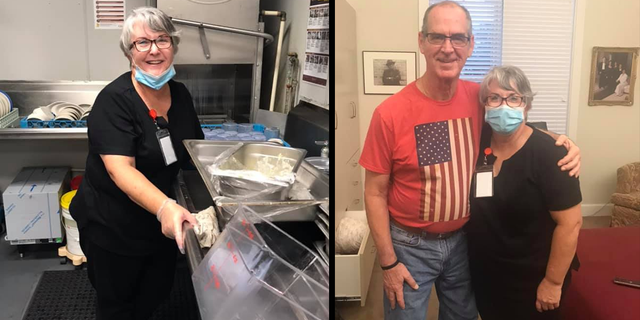
In this July 13 photo, Mary Daniel and husband Steve sit together in his room at a Jacksonville memory care center. Daniel took a part-time job washing dishes at the facility to see him after a 114-day absence. (AP)
After five months of physical separation from their loved ones, Florida’s nursing home residents are dying of loneliness and isolation, the wife of an Alzheimer’s patient said Friday as she pleaded with a state task force to speed up the process of allowing at least one visitor per resident.

“There are people dying today, right now ... from failure to thrive,” said Mary Daniel, who took a job washing dishes at a Jacksonville memory-care center so she could see her 66-year-old husband there. “I am begging for urgency. ... Why am I allowed to touch my husband as a dishwasher, but I am not allowed to touch him as his wife?”

Daniel’s comments came during an initial meeting of the task force, created last week by Florida Gov. Ron DeSantis to map out a “safe and limited reopening” of the state’s long-term care facilities to visitors. DeSantis ordered them closed in mid-March to prevent the spread of COVID-19, which has killed at least 68,000 residents and workers at facilities across the country.

In Florida, nearly 3,900 people have died of the virus in nursing homes, assisted-living centers and group homes as of Thursday night. But in recent weeks the number of infections among residents has begun to flatten, and it is now declining for workers.

Daniel’s claim that residents are dying from the despair of separation, she said, comes from anecdotal evidence. Members of her Facebook group, Caregivers for Compromise, now over 8,000 strong, describe distraught loved ones who stopped eating and seemed to lose the will to live after months of isolation — a scenario also recounted by gerontologists and long-term care ombudsmen in other states.

While some states have allowed outdoor visits or limited indoor visits, Florida’s facilities have remained largely shuttered — although state officials said confusion over the governor’s order has kept out some visitors who should have been allowed in.

“We have certainly allowed facilities to consider it as optional” to allow visitors who previously served as regular caregivers for their loved ones, said Mary Mayhew, secretary of Florida’s Agency for Health Care Administration, which oversees the industry. “It’s either confusion or a decision” by the facility not to continue that.

Daniel also said that “compassionate” visits — for nursing home residents who are nearing death, grieving or recovering from surgery — are also being blocked.

“That [visitation] is not happening,” Daniel said. “A lot of what I’m asking are little things [including] clarification of what the rules are.”

Mayhew said she agreed with the need to act urgently and planned a second meeting for Tuesday, when the group will debate specific requirements to help facilities prepare for visitation.

Dr. Scott Rivkees, Florida’s surgeon general and a task force member, said federal guidelines spell out such requirements already, including that the facility be free of new COVID cases for 28 days. They also recommend outdoor visits when possible, the use of masks and other personal protection equipment for visitors and residents, maintaining a 6-foot buffer between visitors and loved ones, and having a designated employee “monitor” the visits to ensure compliance.

The Florida Health Care Association, which represents most of the state’s nursing home owners and operators, has its own task force that has recommended all facilities allow outdoor visits for residents who are COVID-negative.

“Preference No. 1 [is] outside areas protected from weather elements, such as porches, patios and other covered areas — or tented areas,” said Emmett Reed, the association’s executive director. “In-facility visits should be limited to the compassionate care situations ... and also facilities that have no new-onset cases for 28 days.”

Facilities also should have no staffing shortages; adequate supplies of masks, gowns and gloves; sufficient testing supplies and room in local hospitals to transfer residents if they become ill, Reed said.

But he also called for the resumption of beauty salon and barber shop services within nursing homes for COVID-negative residents, provided they follow certain safety protocols.

“This is a little outside the purview,” he admitted. “We think beauty salons and barbers help quality of life and make residents feel good about themselves.”

Other task force members did not comment on his suggestion.

Full Article & Source:
Florida nursing home residents ‘dying of failure to thrive’ as state debates visitation

See Also:
Wife takes dishwashing job at nursing home to visit husband with Alzheimer's

Sunday, July 12, 2020

Wife takes dishwashing job at nursing home to visit husband with Alzheimer's

visBy Peter Aitken

A Florida woman took a dishwashing job at her husband’s nursing home after the coronavirus pandemic kept them apart for 114 days.

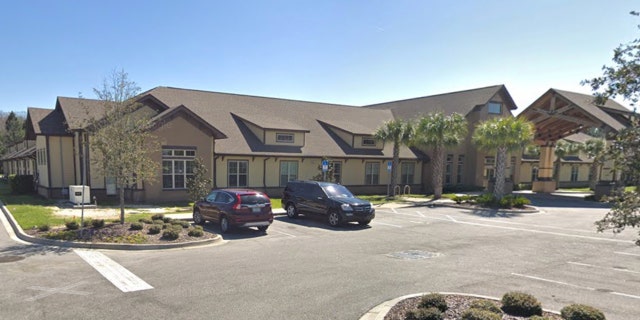
Mary Daniel’s husband, Steve, has been living at Rosecastle Assisted Living and Memory Care facility in Jacksonville since he was diagnosed with early-onset Alzheimer’s. 

Mary Daniel and her husband, Steve, reunited after 114 days apart after she took a job at the memory care facility that he lived in. 
Mary Daniel and her husband, Steve, reunited after 114 days apart after she took a job at the memory care facility that he lived in.  (Mary Daniel via Facebook)

Before the pandemic, Mary would visit her husband every night and help him prepare for bed. She couldn’t live with him, but it was what she could do to stay connected to him.

“I put him in a memory care center and everything was going really, really well,” Mary told CBS News. “He was thriving with all the people, and in March, obviously everything changed.”

When the coronavirus spread across the state, Gov. Ron DeSantis banned visitations to nursing homes to protect patients and prevent the spread among a vulnerable population. Mary sent “at least a hundred” messages to DeSantis asking for permission to visit her husband, and appeared on local news to tell her story.


“We tried a window visit,” Mary told First Coast News. She would visit twice a week and stand outside his window. “He just cried. You can’t explain it to him.”

Mary appealed to Rosecastle, offering to bring a therapy dog or volunteer in another way, but the facility wasn’t sure how long the pandemic might last. Then, out of the blue, the corporate office reached out to Mary and offered her a job as a dishwasher.

She finally reunited with her husband on July 3, after nearly four months of separation.

"He was teary-eyed," Mary said. "He touched my face, even with my mask on."

Mary has also created a Facebook group called Caregivers for Compromise - because isolation kills too, urging the governor to reconsider visits under certain circumstances.

"After 114 days, I got to hug my husband today. I also washed a lot of dishes," Mary Daniel wrote on Facebook, according to FOX 12. "Proof where there’s a will there’s a way!"

Full Article & Source:
Wife takes dishwashing job at nursing home to visit husband with Alzheimer's