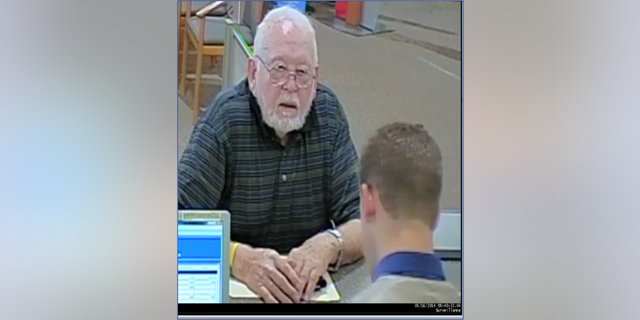
Sandra Hudson, 57, is accused of stealing more than $10,000 from a mentally incompetent man she was hired to care for
By Wayne Roustan
A Margate healthcare worker is accused of exploiting an elderly
client by making repeated withdrawals from his bank account until he was
overdrawn.
Sandra May Hudson, 57, was working for Care Partners Nursing Services
in late 2019 when assigned to care for a man who was deemed mentally
incompetent after a psychiatric evaluation by medical staff at a
hospital in Fort Lauderdale, police said.
According to her arrest report, Hudson made twice-daily ATM
withdrawals from the client’s J.P. Morgan Chase Bank account over a
two-week period, draining the account of more than $10,000. It was
overdrawn when a check for $500 was written to Hudson.
Sandra Hudson
The bank’s security camera videos showed Hudson or her silver BMW at the ATMs.
Care Partners Nursing Services ended the client’s services for non-payment, unaware of the theft at the time, police said.
The client and his legal representative learned of the theft of
nearly $10, 603 and said Hudson had no permission to access the bank
accounts. They claim she took advantage of the client’s fragile health,
the report stated.
The bank absorbed the financial loss and wanted Hudson prosecuted, investigators said.
An arrest warrant was issued in May and she was taken into custody
Monday on charges that include elderly exploitation and fraudulent use
of a person’s identification.
She remained in the Broward County Jail Tuesday on bonds totaling $17,500, records show.
America’s grandparents are increasingly online.
They’re connecting with relatives digitally, shopping in the web’s
endless aisles, and even finding online love in their golden years.
However,
with that wifi connection comes a darker side. Specifically, the danger
of scams targeting the elderly population and their substantial life
savings.
The Federal Bureau of Investigation (FBI)
has raised the flag on the precipitous rise in elder fraud scams in
recent years. According to their 2021 Internet Crime Complaint Center
(IC3) report, there were over 92,000 victims who lost $1.7 billion to
elder fraud scams. The losses were a 74 percent increase over 2020’s.
"Elder fraud is simply financial fraud that targets any individual,
any citizen in the United States over the age of 60 years old," FBI
Deputy Assistant Director of the Criminal Investigation Division Aaron
Tapp told Fox News. "… It could be romance based. It could be technology
based. But any type of fraud scheme that’s targeting our elderly
population."
Tapp said the technological divide that separates
sexagenarians from younger generations is at the heart of the rise in
elder fraud. Scammers key in on individuals who are not digitally savvy
to bilk them out of thousands of dollars.
"The technology is just a modality for these scammers to commit
fraud," he said. "And so as the technology develops, they’ll use that
modality in any way they can to prey upon the elderly population."
On
average, victims lost over $18,000 and more than 3,000 victims lost
over $100,000. The total among of money taken from victims has
skyrocketed since 2017, when the FBI claims there was less than $400
million in total losses. The most common types of fraud in the report
are tech support, non-payment/non-delivery, identity theft and romance
scams.
One such victim of a romance scam was the late Donald Griffith, whose
daughter Angie Kennard shared his story with Fox News in hopes of
warning other families of the dangers of fraudulent online romances.
Grifftih ran a construction business in the Washington D.C. area and helped build the regions metro transportation system.
"I
think, you know, just being lonely, he turned to the internet and
started looking around on dating sites and, you know, built a
relationship with this person, Mary, online," Kennard told Fox News.
Kennard said this woman claimed she was working abroad in Europe and
wound up trapped overseas. The scammers knew enough about her father to
make "Mary" seem like she was keyed into Griffith’s interests and
background as an owner of a construction firm.
"They’re very
manipulative," she said. "They just really fed into my father’s
background and who he was. And they made him fall in love. … It got to a
point where they basically started turning my father against me,
against my uncle, against his own family, saying that we just wanted his
money."
he scammers targeted Griffith on a dating site and used his
loneliness in his golden years against him. They started small and
eventually drove him into debt after draining his life savings.
"Over
time, she started asking him for money, and it started in small
increments and then eventually, you know, worked its way up to … $40,000
at a time," Kennard said. "From what I can add up and find in terms of
receipts and notes and statements, it looks like [he sent] about
$750,000."
Donald Griffith depositing money to send to the scammers at a bank teller window.
(FBI)
Kennard
said the relationship her father had with Mary occurred entirely over
text messages and emails, they never once spoke on the phone. Right
away, she was concerned he was being scammed. But her concerns were met
with resistance and even distance from Griffith, who taught her to be
financially responsible in her youth. She said those lessons are why she
was so shocked when she discovered the scam.
"It was finally
when I went to go visit I ended up sneaking through his laptop and I
went through his emails and financial statements and I saw the magnitude
of what happened," Kennard said. "That’s when I contacted the FBI."
The agent who investigated Griffith’s case told Fox News that the people who targeted him were part of a Nigerian ring of scammers who defrauded hundreds of other victims out of upwards of $20 million in losses.
"We
identified at least $22 million worth of money that flowed through all
the financial accounts that we looked at," Special Supervisory Agent
Keith Custer told Fox News. "So, hundreds of victims, hundreds of bank
accounts and well over $20 million in losses."
Custer said elderly
fraud is an international problem, with highly sophisticated and
organized groups of scammers targeting America’s retirees from a number
of foreign countries. He specifically named Ghana and Nigeria as hubs
for high-tech swindles. The Nigerian ring that targeted Griffith was
eventually tracked down and mostly apprehended.
"We indicted ten
people in the initial round of indictments," Custer said. "So nine of
those were guilty either at trial or through a plea bargain. One remains
at large in Nigeria." (Continue reading)
Rensselaer City Court Judge Kathleen
Robichaud was disciplined by the state's Commission on Judicial
Conduct for invoking her judicial status while representing her niece's
boyfriend in seven courts in three counties
by Robert Gavin
JamesBrey, Contributor / Getty Images
ALBANY – The state’s watchdog panel for the judiciary
has disciplined a longtime Rensselaer City Court judge for invoking her
judicial status while representing her niece's boyfriend in seven
courts in three counties.
Judge Kathleen Robichaud, who emailed local courts and a Family Court
magistrate in her own county using her judicial account that contained
the word “judge” in the title, received a censure — the second-most
severe of the three punishments meted out by the state Commission on
Judicial Conduct.
Robichaud,
an attorney since 1990 who has been on the bench since Jan. 1, 1996, is a
part-time judge in the city of 9,200 residents across the Hudson River
from Albany. She violated ethical rules for judges that prohibit them
from using their judicial titles to advance their private interests or
the interests of others.
In a stipulation, Robichaud, 60, and the commission agreed that between
March 2019 and April 2021, Robichaud used an email address on court
filings and legal correspondence in Rensselaer, Albany and Rockland
counties that identified her as a judge.
The cases involved Robichaud's legal representation of her niece's
boyfriend in an effort to clear his driver's license for suspensions he
received due to traffic tickets he faced in the local courts of Sand
Lake, as well as Bethlehem, Watervliet, Guilderland, Knox and Stony
Point in Rockland County — as well as a child custody matter in
Rensselaer County Family Court.
In the Sand Lake case, both sides agreed, Robichaud
crossed out the words “notary public” and identified herself as “City
Court Judge.”
The commission said she used her judicial email
address to communicate with the support magistrate handling the Family
Court case, as well as the opposing attorney, in the matter in her own
county.
"By using her judicial title in this way, respondent
violated the rules and lent the prestige of her office to benefit her
client," the commission's determination said.
Robichaud told the commission that since 2014, she had assisted three
clients free of charge and no longer practices law, while remaining a
member of the New York State Bar Association. She said she would create a
new email address that did not mention her judicial post, the agreement
said.
The commission's administrator, Robert Tembeckjian,
recommended Robichaud be censured, as opposed to a less-severe public
admonition, because she was previously disciplined by the commission in
2007. That time, Robichaud was disciplined for delays in her rendering
of judgments and decisions on motions and cases and in her reporting of
it to the administrative judge.
“Part-time judges who practice law must scrupulously
avoid even the appearance of asserting their judicial title for the
benefit of private clients," Tembeckjian said in a statement. "Using an
email address as an attorney – that announces you are also a judge –
crosses an ethical line and undermines the integrity of the judiciary.”
Robichaud's term ends at the end of 2025.
Robichaud represented herself. The commission's case was handled by its
deputy administrator, Cathleen Cenci, senior attorney Kathleen Klein and
investigator Laura Misjak.
Providence Extended Care, located near Boniface Parkway in East
Anchorage, as photographed on Thursday, Sept. 29, 2022. (Bill Roth /
ADN)
One of
Anchorage’s largest nursing home and rehabilitation facilities was fined
over $300,000 this year for what federal investigators described as
serious deficiencies including extended isolation and numerous residents
with chronic bed sores.
The
approximately 90-bed Providence Extended Care facility is located off
Boniface Parkway about 4 miles from Providence Alaska Medical Center,
the state’s largest hospital. Providence describes the center as
providing a home environment for patients who need long-term nursing or
rehab services.
The Centers for Medicare and Medicaid Serviceslevied
the $310,369 fine earlier this year after investigators discovered
problems at levels higher than were reported at other similar facilities
in Alaska last year.
Providence
officials say the federal findings, which have since been rectified,
occurred in the wake of the state’s worst COVID-19 wave, which overwhelmed Alaska’s health care system and prompted staff shortages as well as sometimes extreme measures to protect these at-risk patients from the virus.
In
a report from December 2021, surveyors with the Centers for Medicare
and Medicaid noted instances of patients who did not leave their rooms
for months or even, in the case of one patient, twoyears.
They
also found advanced bed sores involving wounds that had festered long
enough to develop dead tissue, a situation generally considered an
immediate health risk, among nearly a quarter of all residents at the
time — well above the national average for similar facilities.
One
of the many violations, involving residents quarantined to their rooms
when federal COVID-19 guidelines didn’t require such a drastic step, was
serious enough thatit “placed the residents residing in the
facility at risk for loss of independence, self-esteem, and quality of
life,” the surveyors wrote.
Providence
Extended Care has since paid the fine, passed a reinspection that
occurred a few months later, and is now in good standing with the
Centers for Medicare and Medicaid, an agency spokesperson said recently.
The pandemic’s role
Providence hospital officials say the investigation, which took place in December afterthe
height of Alaska’s COVID-19 delta wave, illuminated the consequences of
a severe staff shortage brought on by the pandemic and the burden that
nursing homes like Providence’s were forced to undertake when hospitals
needed a place for patients to go to free up beds for coronavirus
patients.
At the
time of the site visit, Providence Extended Care and other skilled
nursing homes in the state were serving as overflow for the main
hospitals, an unusual role that added new patient loads to the
already-understaffed facility.
In
a statement to the Daily News, facility leadership described the
actions that had been taken in response to the survey, which included
closing one of the cottages and discharging residents to other skilled
nursing facilities in order to free up staff, forming a work group to
respond to the bed sores and reeducating staff on quality assurance
measures.
“We
take all citations very seriously and quickly corrected deficiencies,”
according to an emailed statement from Providence leadership.
All
facilities that receive Medicare and Medicaid funding are required to
pass regular inspections from federal and state surveyors who arrive
periodically and without warning to check on quality of care.
Jared
Kosin, president of the Alaska Hospital and Healthcare Association,
said in an interview that it is normal for those inspections to unearth
dozens of minor and sometimes insignificant problems that need to be
addressed.
According to a database
managed by ProPublica, in 2021, five nursing homes in Alaska out of 20
that qualify for that funding were faulted for one or two serious
deficiencies. Providence Extended Care was cited for five.
‘Nothing to get up for’
The report described multiple instances of patients confined to their rooms for long periods of time.
Providence
says that at the time, it was following federal rules and regulations
meant to prevent highly vulnerable residents from contractingCOVID-19.
But the surveyors appeared to find instances where those precautions may have been taken too far.
One
resident, in a late December interview with investigators, said they no
longer got out of bed and hadn’t left their bed in two years. Another
resident told investigators the last time they’d been out of bed was to
be taken to the hospital — nearly two months earlier.
A third resident told investigators that “there was nothing to do, nothing to get up for,” according to the report.
Others
described being unable to visit friends in other parts of the facility,
exercise, or sit in the dining room and look out the window. They
complained about limited activities and few opportunities for
socializing or mental stimulation.
“We are doing Zoom bingo at the moment, that is the only group activity,” one resident told investigators.
Spending
so much time in bed also contributed to one the more serious findings
in the report concerning “pressure ulcers,” also known as bed sores.
Bed
sores are skin injuries caused by persistent pressure, and typically
show up on people confined to bed or who sit in a chair or wheelchair
for long periods of time.
At
the time of the report, roughly a quarter of all residents at
Providence Extended Care had advanced or “unstageable” pressure ulcers, a
serious condition in which the base of the wound is covered by dead
tissue.
Surveyors
noted the facility “failed to ensure that residents received the
necessary care and services to prevent the development of new pressure
ulcers” in one in seven surveyed residents.
The
center’s failure to stop the progress of sores resulted in “physical
harm to residents who developed deep tissue injuries” with two
developing medical complications, the report said.
Providence
said the increase in ulcers was an “unintended consequence of adhering
to the CDC’s COVID-19 guidelines directing residents to remain in their
rooms as much as possible to limit possible COVID-19 exposure and
spread,” according to the statement from leadership.
“In
the absence of group activities and being able to move freely through
the facility, residents spent more time in bed than usual and
experienced this negative outcome,” the statement said.
‘There are trade-offs’
Currently,
Providence Extended Care is caring for 94 residents, 10 of whom are
being treated for pressure ulcers, according to Mikal Canfield, a
spokesman for Providence.
That level is well below what it was in late 2021, and close to the national average in nursing homes, which was around 11%, according to a 2009 federal Centers for Disease Control and Prevention report.
Asked
what the extended care facility could have done differently, Providence
Alaska’s chief medical officer, Dr. Michael Bernstein, said facility
administrators could have considered offering increased incentive wages
to hire more staff as travel nurse demand skyrocketed and health care
job resignations hit all-time highs.
Ultimately,
though, Bernstein said most of the precautions taken to protect
residents from getting COVID-19 were necessary, despite some of the
negative outcomes identified in the report.
“I
don’t think we, even in retrospect, would have done that differently,
because although some people may have dealt with pressure injuries,
that’s better than dying from COVID,” he said. “There are trade-offs in
those decisions.”
Anita Fisher looks towards a photo of her son at her home in Spring Valley, Aug. 16, 2022.
By Jennifer Bowman
Anita Fisher has been here before. Her son has stopped taking his medication. Again.
“Nothing
has changed,” she said. “Yes, there have been new programs out there,
but unless he voluntarily” — Anita gives a quick, doubtful chuckle —
“accepts it, that doesn’t work.”
Anita’s son was diagnosed with
schizophrenia two decades ago. What followed was a series of setbacks: A
bad conduct discharge from the U.S. Army, a prison term and months of
living on San Diego’s streets.
Anita struggled, too. As she maintained a career — and raised another
child, born 10 years after his brother — she and her husband spent
hours driving around San Diego looking for him. She’d get him into
housing, but it would never quite work out. He’d get help sometimes, but
landed in jail on multiple occasions. She would try again and again,
unsuccessfully, to convince her son he was sick and needed help.
For
years, Anita tried to convince decision makers, from medical providers
to staff in San Diego County’s public conservator office, that her son’s
mental illness was so severe that he needed help — even if it meant
treating him involuntarily.
In 2014, there was some action:
Anita’s son was placed on a conservatorship, a decision that puts some
of an individual’s most significant life choices in the hands of someone
else. He lasted about two weeks at a treatment center before being
released.
“Families are not invited to the conservatorship process,” Anita said. “And guess what? We get back the collateral damage.
“So
when they are let out of a hospital too soon, and then they’re arrested
again, it’s us having to run to court hearings. Nobody shows up for
that. We are the ones that have to try to find them on the street.”
Relatives who spoke with inewsource about their loved ones’
yearslong struggles with severe mental illness shared similar stories:
Their family member was often known to law enforcement, the Psychiatric
Emergency Response Team that responds to emergency calls, and the
hospitals where they were taken while in crisis. Some cycled in and out
of shelters and other living arrangements.
They may have
voluntarily sought treatment at times, but inconsistently, and their
situation quickly deteriorated without it — and often, their loved one
was unaware of their own mental health condition.
LPS
conservatorships, named after the state’s Lanterman-Petris-Short Act,
give counties the power to mandate treatment and place a person in a
locked facility if that person has been diagnosed with a severe mental
illness specifically cited in the statute — schizophrenia, bipolar
disorder or major depression, among others.
The person must also
be deemed “gravely disabled,” meaning they’re unable to provide for
basic personal needs such as food, clothing or shelter as a result of
their disorder.
Anastasia, a San Diego mom whose adult son was
diagnosed as a teen with bipolar I with psychotic features, spent much
of the COVID-19 pandemic searching for him as he slept on benches and in
parks across the city. He frequently went months without treatment, was
held on multiple 72-hour hospital stays while in psychosis and
neglected his physical health.
Anastasia, who inewsource is
only identifying by first name, thought her son was close to being
placed on a conservatorship last year, as discussions took place while
he underwent yet another hospital evaluation.
Ultimately, it didn’t happen.
A fence near the Fashion Valley trolley station is shown on Aug. 24,
2022. Anastasia's son ran away through a nearby fence before a PERT team
arrived.
“No one cares about this kid,” she said with tears in her eyes. “He’s
26 years old. He was 25. He has a whole life ahead of him and the
potential to do something – to live a life. And (they) don’t care.”
Now,
officials have turned to potentially expanding conservatorships as part
of a solution to the state’s homeless crisis. And those who have spent
decades trying to help their loved one with a severe mental illness have
largely been in support — Gov. Gavin Newsom’s newly approved CARE Court,
which will create a separate court process that could eventually lead
to a conservatorship, is backed by the California chapter of the
National Alliance on Mental Illness, a group founded by family members.
But
some advocates have raised concerns, saying CARE Court will divert
resources from people who need housing and services — and shouldn’t be
used “as an end run around reform” to the LPS Act. In a letter to the governor
earlier this month, Disability Rights California and more than 50 other
organizations said the program “is exploitative of poor people who need
mental health care and will create a chilling effect preventing people
from seeking treatment and care.”
inewsource spent months
speaking with dozens of people who said gaps in the system and other
longstanding problems have plagued the conservatorship process, from a
shortage of resources and services, to the lack of clear data on how
well the current system is working and lax state oversight that’s left
counties to largely take on the challenges alone.
“We have the law
we need for the society we’ve got,” said Joseph De Vico, a former
employee in San Diego’s public conservator office. He now works with
families and people with severe mental illness as a consultant on LPS
issues, and previously was hired by Anastasia.
“What would we do
for the severely mentally ill if we were a better society and we
actually gave a crap about them, that’s a completely different
conversation, which I would also hope to live long enough to be part
of.”
But he’s not exactly hopeful.
“We don’t really care. We
don't prioritize the severely ill,” he said. “We're not gonna become a
different society with different priorities. So we have to accept that
we only care as much as the LPS Act reflects.”
‘Do you know where your son is?’
Anita’s
home, tucked away in a hilly Spring Valley suburb in East County, is an
homage to her family — and to a cause she found herself intimately
involved in after her son’s diagnosis.
Photos lining walls and
console tables display relatives that go back generations; another shows
her with her husband and son, grinning mid-laugh while at a taping of
“Let’s Make a Deal.” Next to it is a photo of her standing with Newsom,
when she met the governor to talk about her family’s struggles.
Family photos fill the living room of the Fisher home in Spring Valley, Aug. 16, 2022.
Down the hall, her home office stores stacks of binders involving her advocacy work.
Anita
switched career paths after her son was diagnosed, leaving the banking
industry after 30 years. She worked as director of education at NAMI San
Diego for more than 10 years, helping coordinate family support
programs before semi-retiring. She continues to serve on several boards,
including at PERT and the state’s Council on Criminal Justice and Behavioral Health.
The
people attending support groups and other programs are in crisis, Anita
said, and she hasn’t seen the number of attendees drop since her work
began.
“If you have over 300 family members going to a 12-week
course, or over 1,100, going through support groups, that means
something isn't working with this system of care,” she said. “There are
too many gaps and holes.”
Anita’s son, who inewsource agreed
not to identify by name, joined the Army after high school and became a
medical specialist assigned to the Walter Reed Army Medical Center.
Anita was proud of her son’s accomplishments, and confident his life was
headed in the right direction.
Then, during one trip home, she took notice.
Anita
said her son seemed disorganized. He also was drinking heavily. She had
to rush him to get his things packed when his leave was over. At the
end of the trip, she drove him to the airport to catch a plane back to
the Washington, D.C., area.
Her phone rang a few days later.
“Do you know where your son is?”
His sergeant informed Anita that her son never made it back to work. He was later located, inexplicably, in Pennsylvania.
What
followed was a downward spiral that ended his Army career. It was at
his military trial that Anita first heard anything about her son being
sick: “Schizophrenic form disorder,” a psychologist would say on the
stand.
He was kicked out, on a bad conduct discharge that cut off
access to any income or benefits. When he returned to San Diego, Anita
said homelife got disruptive. Conversations turned into arguments.
She
wanted him to get a job and was frustrated by his seeming inability to
move forward. She says she realizes now that she didn’t fully understand
his mental illness.
Anita’s oldest son, then in his early 20s,
couldn’t stay home. He became homeless, cycling between shelters and
jail or prison for what Anita said were largely petty theft or
drug-related crimes.
She estimates he was homeless for about eight
months — the longest he had been on the streets — when his
conservatorship process began. He had been taken to the UC San Diego
Medical Center on a 72-hour involuntary hold under what’s commonly
referred to as a 5150, in reference to a section of the state’s Welfare
and Institutions Code. Officials determined he needed to be held longer.
Though
he was being placed on a conservatorship, Anita said her son was in
agreement to stay up to six months at the Alpine Special Treatment
Center, a 128-bed locked facility.
Anita said the family visited
and encouraged him to continue seeking treatment. But two weeks into his
stay, he called his mom: He told her he was leaving after getting
assistance from patient advocates, she said.
Anita Fisher is shown at her home in Spring Valley, Aug. 16, 2022.
“The family are the ones who know from a historical place how long
someone might need,” Anita said. “And I knew it was too soon.”
Anita’s
son went missing. He emptied $5,000 from his checking account, and
within days, was back in jail. He later didn’t know what happened to the
money, Anita said.
Anita is frank about her frustrations. She
believes her son, who also is diagnosed with substance use disorder, at
times was put in jail when he should have been taken to the hospital
instead — and she believes it’s in part because he’s Black.
Statistics from the American Psychiatric Association
report that only one in three African Americans who need mental health
care services receives it, and that Black people with mental health
conditions — particularly schizophrenia, bipolar disorders, and other
psychoses — are more likely to be incarcerated than people of other
races.
Anita also blames patient advocates for her son’s
short-lived conservatorship: They fought to get him out of a hospital
where he was receiving what she considers life-saving treatment, she
said, but they weren’t on hand when he was taken to jail.
A failed attempt
Anastasia
documented and organized every time it got rough, from when she called
police to the home or the multiple times her son went missing. She
attended a family support group — and continues to do so — and even
hired a consultant to pursue a conservatorship.
It wasn’t enough.
“I have done everything everyone has told me to do, and it has not made a difference,” Anastasia said.
inewsource
agreed to not identify Anastasia by her full name, or her son, as he
continues his recovery. Her son now is living at home and continues to
participate in an assertive community treatment program, which offers
case management, housing assistance and other services for people who
have been homeless and have been diagnosed with severe mental illness.
A parking lot at Fashion Valley is shown from the Fashion Valley trolley
station, Aug. 24, 2022. Anastasia met her son here after he had been
missing.
That’s
a far cry from early 2020, when “it was just off the rails,” Anastasia
said. Her son spent two years cycling between living on the streets and
independent living facilities. Twice, he went missing and later was
found to have been in Mexico.
Anastasia’s son refused to take his medication, her one rule for
living at home. He left and initially stayed near their Clairemont
neighborhood, sleeping in a nearby park.
She watched from a close
distance. She’d spot him at a nearby gas station during a coffee trip,
or walking along the street in psychosis, yelling. The cycle of calling
PERT, which includes licensed clinicians, paramedics and specially
trained police officers, began.
“I was naive,” Anastasia said.
Her
son had “not a dime to his name,” she said. He lost most of what he
took from his family home within days, and had no way to eat. As a teen,
he had been hospitalized during arguably less severe crises, she said.
“I just had no reason to think that this was gonna go on for any extended period of time,” she said.
Sometimes,
PERT would place her son on a 5150 — like when he stood for 36 hours on
a street corner while in psychosis, Anastasia said, convinced he was
going to be picked up by a record producer and taken to a Los Angeles
mansion to make music. Other times, clinicians weren’t available to join
officers on the call, or teams responded and decided against taking him
to the hospital.
When Anastasia found her son sleeping at an
Ocean Beach bus stop after he went missing for nearly two months, PERT
determined he didn’t meet the criteria: He told the team he was able to
feed himself with leftover meals from passersby, and he had a friend in
Point Loma who occasionally let him stay over.
A bus stop in Ocean Beach is shown on Aug. 24, 2022. Anastasia found her
son sleeping on this bench after he had been missing for about a month
and a half.
It didn’t matter that her son looked like he had lost as many as 30
pounds, Anastasia said, or that his Point Loma friend hadn’t lived there
for quite some time.
She estimates her son has more than 40 interactions with PERT or law enforcement.
“I
cried more times than I can count,” Anastasia said. “I didn’t sleep
more times than I could count. I got up and drove in the middle of the
night more times than I could count. I spent every free moment I had
outside of work, evenings and weekends, driving around looking for him.”
Late
last year, Anastasia’s son began having altercations with other tenants
in shared-housing facilities where he was living. He threatened
violence. And he later threatened violence against his mother, too.
Again,
she got PERT involved. Her son was picked up in Chula Vista and placed
on another psychiatric hold. Anastasia was told he’d be held longer,
this time on a 14-day stay known as a 5250.
Anastasia again
thought that this was it. Officials with his treatment program were in
agreement and pushing for a conservatorship.
But a psychiatrist disagreed, she said, and declined to file a gravely disabled petition for her son.
Anastasia was floored.
‘How long?’
Anita’s son lives in what’s known as an independent living association
home. She said his recovery goes through waves: At times he has
voluntarily stuck to his treatment and his medication, even
participating in NAMI and other peer-recovery programs. Several years
ago, with the help of Veterans Affairs representatives, he was able to
upgrade his bad-conduct discharge from the Army and receive disability
benefits.
But last year, he was again hospitalized for a
psychiatric crisis. And though he was on a monthly shot for his
medication, Anita said last month he recently decided to stop taking it.
“It is draining,” Anita said. “But do you ever give up on someone you love? No.”
Anita Fisher shows a recent photo of her family on her cell phone at her home in Spring Valley, Aug. 16, 2022.
After a psychiatrist did not move him forward for conservatorship,
Anastasia’s son briefly moved into another living facility, and
initially refused to go to a hospital for an infection that developed on
his foot. It got so severe that tests revealed he had sepsis and was
also suffering from malnutrition, Anastasia said. Her son spent a total
of 11 days on IV antibiotics.
Anastasia said he’s continuing to go
to treatment and is taking his medication. The ultimate goal, with the
help of his community-based program, is for her son to move into his own
housing. He recently heard he’s next on the list for placement.
Anastasia
said she’s been following CARE Court, which is expected to be
implemented in San Diego by October 2023. She wonders whether the new
program will be able to meet the urgency of situations like her son’s.
“Is it a month? Is it six months? Is it a year? Is it the rest of his life? How long does he get to do it?” Anastasia said.
“How long does he get to fail before someone intervenes?”
Anne
Heche's son, Homer Laffoon, may have the upper hand in legal
proceedings against James Tupper's request to become the guardian ad
litem of his 13-year-old son Atlas Heche Tupper
By Kelly Wynne and Stephanie Wenger
Video
James Tupper may have no legal ground in asking to be the guardian ad litem of his biological son, Atlas Heche Tupper, according to a legal expert.
Family law expert, Atousa Saei, explained to PEOPLE why Anne Heche's son and Atlas' half-brother, Homer Laffoon, may have the upper hand in litigation regarding Heche's estate.
"I really think that Tupper is just going to be kind of faded out of
this whole situation," Saei told PEOPLE. "I think he's the father of a
minor who stands to inherit from his mother, and I think that's really
going to be the extent of his involvement here. I don't think that the
court's going to find that he's a valid — that he's the executor of it,
of the estate."
She added, "I also don't think the court is likely to award him as the
[guardian ad litem] here. Because remember, if the court does need to
appoint someone as the GAL, the court can just appoint a neutral. It
doesn't have to be him."
Photo: David Buchan/BAFTA LA/Getty
On Tuesday, Laffoon, 20, filed an opposition
— obtained by PEOPLE — against Tupper's request to become the guardian
ad litem of Atlas, 13. This is not the same as a legal guardian,
however, it gives the guardian rights to decide what is in the best
interest of the child in a legal sense. Theoretically, this would give
Tupper, 57, control over Heche's estate as passed on to Atlas.
Saei compared this to Britney Spears' former conservatorship.
"Sometimes, as we saw in the Britney Spears case, the guardian ad litem
in representing the best interest of the incapacitated party might
report back to the court things that are completely, completely
different than what that incapacitated party wants," she said.
Photo: getty (2); Anne Heche/Instagram
On Monday, Tupper filed paperwork asking that Laffoon (whom Heche shared with ex-husband Coleman Laffoon) be removed as the temporary executor of Heche's estate.
His legal claim, obtained by PEOPLE,
stated: "In order to preserve family harmony and a healthy, brotherly
relationship between ATLAS and HOMER, and given the complexity this
estate will foreseeably involve – i.e. intellectual property and
publishing issues, possibly third party claims, and public relations
issues – a bonded, neutral, private professional fiduciary would be a
more appropriate administrator."
Photo: Rachel Murray/Getty
Laffoon's response asked for Tupper to be removed from any involvement
in Heche's estate, as they were no longer in a relationship at the time
of her death. To do this, he cited possible "conflict of interest" —
which relates to the potential of a lawsuit by Heche's estate to remove
him as any beneficiary.
"[Laffoon] raises up something interesting where he said, 'Had they been
married, during the divorce process, that would've been handled, but
because they weren't married, it's like an oversight on her end where
she just failed to change the beneficiaries of some of her accounts,'"
Saei added. "So now he's got the money and they pointed to that as a
direct conflict of interest in being appointed a guardian ad litem
because they were saying that the estate may actually have to go sue
him."
In September, Tupper surfaced an email from Heche dated 2011 that was to serve as an electronic will, after it was assumed Heche died without a will. Laffoon has challenged the will's legitimacy because it was not physically signed, or overseen by two legal witnesses.
In Saei's professional opinion, this will is not valid. "I think it
fails in more than one area," she said. "It's not just that it's
electronic, but it's also because you don't have a valid signature, you
don't have witnesses and so forth."
Shawn King and television personality Larry King.
Jonathan Leibson/Getty Images
A battle for the estate of Larry King
is getting messier. Shawn King, the broadcaster’s widow, is suing her
former business managers, accusing them of stealing money and conspiring
to help King’s son Larry King Jr. usurp her as executor of the estate.
King died in January 2021 after being hospitalized for COVID-19. A
month later, Larry King Jr. moved to become special administrator of the
estate. He pointed to a handwritten amendment by King leaving his
assets to his five children. Shawn King challenged the will, arguing it
was changed under questionable circumstances. The matter was resolved
through a confidential settlement.
In a lawsuit filed Thursday in Los Angeles Superior Court, Shawn King
alleges Blouin & Company colluded with Larry King Jr. to divest her
from the estate in addition to illegally transferring millions of
dollars to numerous people and entities without her permission. She
seeks over $100 million for breach of fiduciary duty, professional
negligence and fraud, among several other claims.
“The Blouin Defendants led a fraudulent and malicious conspiracy to
steal money from their own client, Mrs. King, and deprive Mrs. King from
her rights and interests in the estate of her late husband,” reads the
complaint, adding that the firm shared confidential financial
information with Larry King Jr. to aid him in his suit.
Shawn King takes issues with Blouin allegedly siding with Larry King
Jr. in the fight for King’s estate. She says that the firm breached its
fiduciary duty to her when client manager Bob Cinelli, a defendant in
the suit, provided a sworn declaration in support of Larry King Jr.’s
emergency petition to become administrator of the estate and by
providing confidential financial information to him.
The suit claims that Blouin managed secret bank accounts to facilitate
transfer of funds directed by Larry King Jr., who allegedly gifted money
to several others. Those named in the complaint include Greg
Christensen, a longtime former producer of one of King’s TV shows, and
Becky Radant, King’s former assistant who allegedly helped Blouin keep
financial information away from Shawn King. Radant was allegedly paid
$50,000 and Christensen $40,000. They allegedly used the money to buy
designer clothes, jewelry and furniture, among other things.
In further violation of the firm’s fiduciary duties to her, Shawn King
also says that Blouin neglected to pay recurring household bills and
annual taxes for her, which has resulted in significant late fees and
penalties. She claims the firm has refused to turn over financial
records.
Blouin didn’t immediately respond to a request for comment.
King’s amendment to his will was written two months after he filed for
divorce. It was never finalized, but Larry King Jr. argued that Shawn
King shouldn’t be executor of the estate since she and King were
actively involved in discussions to separate.
When an incapacitated person cannot make personal or financial
decisions, state courts may appoint a guardian to assist the individual
with determining where to live, what kind of care to receive, or how to
manage finances. In some cases, guardians may wish to move their ward —
someone whom a court has found need a guardian’s protection — to another
state for care.
However, guardianship, as a matter of state law,
does not automatically transfer across state lines. In many cases, to
transfer a guardianship, guardians must petition the state where the
ward currently lives and the state to which the ward is moving.
This process can be complex, as each jurisdiction has rules
regulating guardianship. Inconsistencies between states can create
challenges. For instance, one state court may find that an incapacitated
person needs a guardian, whereas another may disagree.
Even
after relocating, guardians may remain subject to the reporting
requirements of the state in which the guardianship was initiated. The
original state can retain jurisdiction if the guardian forgets to close
the guardianship. Failing to comply with reporting requirements may
cause legal problems, and the state may seek to remove the guardian.
The Uniform Adult Guardianship and Protective Proceedings Jurisdiction Act
Individuals
can request that the state where they plan to resettle the ward records
the existing guardianship order. Once the UAGPPJA state records the
order, it honors it, allowing the guardian to continue making critical
decisions for the ward after the move.
Nevertheless, even when
states use the UAGPPJA, they implement it in various ways and have their
own specific rules. Individuals seeking to transfer guardianships
should consult an experienced attorney who can assist them with the process.
When Is a Transfer Permissible?
The UAGPPJA permits guardians to move wards across states when:
Relocating is in the ward’s best interests, promoting the ward’s physical and mental well-being.
The guardian has reasonable and acceptable plans for the ward’s care in the new home.
No one opposes the transfer.
The move is permanent; guardians cannot orchestrate temporary moves for convenience.
Notice Requirement
When guardians are first
appointed, they must inform the close relatives of the incapacitated
person, allowing them the option to contest the guardianship. This
notice provision also applies to transfers: Guardians must inform close
relatives when electing to take their wards to another state.
Many
guardianship transfers are uncontested. Should a ward’s relatives
challenge a relocation, courts often will hold evidentiary hearings to
decide whether the resettlement is legal.
Although relocations
can be complex, guardianships may transfer successfully when a move is
uncontested and is in the ward’s best interests.
MOBILE, Ala. (WKRG) — Victory for a Mobile County woman who led the charge to create an “elder abuse registry” in the state of Alabama.
“Shirley’s Law” requires the state to keep a database of people
convicted of abusing vulnerable adults so nursing homes and families can
check a caregiver’s background. “Shirley’s Law” was created after
Shirley Smith, who was financially exploited in 2017.
Smith’s daughter Jo Holcombe said her mother will always be remembered as a lovely lady.
“She was the gentle southern lady of the 1960s who matched her hat,
gloves and shoes,” said Holcombe. “She had a lot of physical struggles
in her life and endured a lot of pain.”
Pain is one of the many words to describe what Smith went through in her last few months on earth.
Smith’s caregiver Veronica Wiggerfall wrote countless fake checks and
forged Smith’s signatures, stealing thousands of dollars. On Wednesday,
Sept. 21, Wiggerfall was convicted of financial exploitation of the
elderly.
“Mother was financially exploited in October of 2017,” said Holcombe.
“Throughout this entire process, we have worked to bring the person who
did that to trial, because it fundamentally changed my mother in her
ability to trust other caregivers, and feel safe and at peace in her own
home.”
This pushed Smith’s daughter to create “Shirley’s Law” in honor of
her mother. It’s an Adult Abuse Registry that will track those who are
convicted of elder abuse.
Governor Kay Ivey signed this law into effect this year, making
Alabama the first state in the country to pass a bill such as this one.
“It was needed, and it’s not anywhere,” said Holcombe. “The crime of
elder abuse has become so rapid. It’s continuing to increase. As our
population ages, it’s going to get more and more prevalent, and someone
had to stop it.”
Homcombe hopes “Shirley’s Law” can one day protect the elderly across the nation.