Sunday, October 16, 2016

Grassley's legislation would help seniors

The legislation that Sen. Chuck Grassley introduced would address many of the concerns expressed in the recent Register story by taking a comprehensive approach to improve prevention, awareness, investigation and prosecution of crimes targeting seniors [Could elder abuse be prosecuted more often, Oct. 2].

In 2014, my parents were victims of elderly fraud of more than $44,000 by Leading Health Source. On my own $21,000 was refunded and Iowa's attorney general sued Leading Health Source for the remainder $23,000 in Iowa civil courts.

Could more been done by involving the Iowa criminal courts? Leading Health Source was not charged with any criminal acts, which allows them to continue the abuse of elderly people.

Sen. Grassley’s bipartisan Elder Abuse Prevention and Prosecution Act, which received unanimous approval by the Senate Judiciary Committee, addresses many issues:
  • Ensures that federal prosecutors in Iowa and across the country are tasked with, and equipped to, address the specific challenges of crimes against seniors. It also calls on the Justice Department and Federal Trade Commission to develop agency-wide policies on elder justice in order to provide a consistent and effective response to these crimes.
  • Increases criminal penalties and jail time for those who use telemarketing or email in their schemes to defraud seniors.
  • Improves training for state and local governments to help communities across Iowa better prevent, investigate and prosecute these crimes, as well as helping victims to recover.
  • Helps gain a better understanding of these crimes through improved documentation and information sharing so we can continue to develop the best prevention and response plans possible.

Full Article & Source:
Grassley's legislation would help seniors

Saturday, October 15, 2016

Citing Observer Report, Senators Vow Stronger Protection for Texans Under Guardianship

Rosamond Bradley
Texas House of Representatives
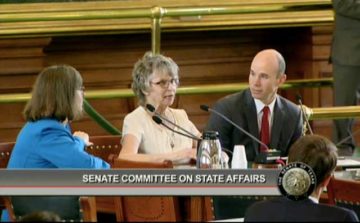
Rosamond Bradley testifies before the Senate State Affairs committee about her difficulty getting her guardianship case reviewed in Lubbock County. Office of Court Administration director David Slayton, right, asked lawmakers for more funding to examine guardianship records across Texas.


Hearing seeks solutions for courts’ weak safeguards for vulnerable Texans.

In the July issue, the Observer featured the story of Rosamond Bradley, a Dallas woman whisked away to Lubbock by her sons and placed under a court-ordered guardianship. Her son got the legal right to determine where she lived, who she saw and how she spent her money. Bradley had suffered a mental health crisis that prompted her sons to intervene. After recovering, she found herself unable to get the order lifted and her rights restored.

As in the vast majority of Texas counties, Lubbock has no staff dedicated to overseeing guardians to ensure they aren’t abusing or neglecting people in their care, or to check whether a guardianship is still necessary. For years, Bradley’s letters asking the judge to restore her rights went unanswered, and she remained under guardianship, even getting married secretly in Dallas in case the Lubbock court found the union invalid.

On Wednesday morning, Bradley recounted her story to a Texas Senate committee considering how it could keep people like Bradley from slipping through the cracks.

“The judge in Lubbock wouldn’t do anything about it,” she said.

Simply beginning to address this problem would cost Texas millions each year, but the senators sounded ready to spend it.

Over the past few months, auditors with the state Office of Court Administration (OCA) have been reviewing guardianships in seven counties to gauge the severity of the problem. The results, OCA director David Slayton told lawmakers Wednesday, have been “a little bit troubling.”

One-third of the cases they’ve reviewed are missing required annual reports on the condition of the person under guardianship. Nearly half of the cases are missing annual reports on how the guardian is spending the money entrusted to them. Forty-five percent are missing initial financial reports — without which it’s impossible to know whether the guardian went on to steal money later. In a quarter of the cases, Slayton said, judges waived the requirement that a guardian post a bond to guarantee they won’t run off with the money entrusted to them — even though waiving the bond is against state law.

In one case they reviewed, Slayton said, an initial inventory of the estate included an airplane but no longer does.

“How do you lose an airplane?” wondered State Senator Judith Zaffirini, D-Laredo.

“There’s no record of where that is now,” Slayton said.


In another case Slayton recalled, a woman living in New York was brought to Texas by her nephew, who secured a guardianship order over her, placed her in a nursing home and — according to his own filings with the court — began spending her money on truck payments, a refrigerator, gifts for family members and payments on two separate credit cards. The last report was filed seven years ago, Slayton said, and the guardian has since moved to Florida, where he has not been returning inquiries from the court.

The OCA review was part of a pilot program approved by the Legislature in 2015. Slayton told lawmakers it would cost around $3 million a year to expand the audit statewide and provide ongoing support for local judges. “What we’re finding is not that the judges don’t want to do this,” Slayton said, “they just don’t have the resources.”

Montgomery County Court at Law Judge Claudia Laird, one of the judges participating in the state audit, told senators there’s just no way she could keep track of the guardianships in her court and follow up in cases of fraud or abuse. “I can’t convince my commissioners to give me the staff that I need,” she said. “What you are asking the judge to do is to be a judge, to be an accountant, to be a social worker and to be a police officer.”

Even with the multimillion-dollar price tag, senators sounded ready to expand the OCA audit statewide. They discussed a draft of a bill from Zaffirini to do just that, and the only remaining question seemed to be whether counties’ participation in the audit should be voluntary or mandatory.

Committee chair Joan Huffman, R-Houston, figured it should be required. “We’re going to all be in agreement on that,” she predicted.

Slayton told lawmakers that only one county so far has refused to open its files to state auditors, though he declined to name it in the hearing and no lawmakers pressed him to do so. “Most places so far have voluntarily participated,” he said.

State Senator Brian Birdwell, R-Granbury, seemed especially riled by counties refusing to participate. “I want to make sure that every judge in this state understands that that court does not belong to them,” he said. “It is not up to them to say, ‘You do not get to come in.’”



Patrick Michels Rosamond Bradley with her husband, Jim Bithas. Bradley spent years trying to break free from a guardianship in Lubbock County, even after experts said she was fit to make her own decisions. After Bradley shared her story, lawmakers turned their questions to how capably Lubbock County has overseen the guardianships in its courts. What was the response, senators wondered, to Bradley’s letter-writing campaign?

“They ignored it,” she told them.

Bradley told senators that she credited Lubbock’s Office of Dispute Resolution and its director, Gene Valentini, with rescuing her case from limbo. “That’s where it all started,” she said.

As the Observer reported in July, Lubbock County had hired a court investigator, working in the county’s Office of Dispute Resolution, to review guardianship case files and coordinate in-person visits. The county cut that funding in 2013. Two days after the Observer’s story ran online, Lubbock County’s board of judges unanimously agreed “that Gene Valentini and [dispute resolution] personnel should not be involved in any form of guardianship activities or cases” unless ordered by the court, according to minutes from the meeting.

Asked why the panel made that decision, Lubbock County Court Administration Director Dean Stanzione explained in an email to the Observer that oversight authority rests with the judges, not Valentini’s office. “They were never given permission from the Board of Judges to oversee guardianship,” he wrote. Stanzione has yet to respond to a follow-up question about what prompted the judges’ decision in July.

On Wednesday, Zaffirini asked Slayton whether Lubbock County was also part of his audit.

“We’re working with Lubbock County right now to try to get in to assist,” he said. “We’ve reached out to them a couple of times. Currently we don’t have any agreement with them to go there, but that’s something we’d like to get.”

“I’d like to send them a message right now,” Huffman said, “that they need to let you come and look at their system. They can either do it on their own, or we can specifically mandate it to them through legislation.”

Full Article & Source:
Citing Observer Report, Senators Vow Stronger Protection for Texans Under Guardianship

See the Texas Senate Committee on State Affairs Hearing of September 2016

8 Conditions Often Confused with Alzheimer’s Disease

There are few diseases more devastating than Alzheimer’s disease, a menacing condition that causes the slow deterioration of brain functionality and ends, inevitably, in death. Far too many people have already watched as their loves ones wither away and perish as a result of this hated disease.
However, it’s not the only condition that affects brain functionality. In fact, Harvard researchers point out that more than 50 conditions can cause or mimic the symptoms of Alzheimer’s disease and dementia. It’s a potentially dangerous mixup that can be avoided by knowing more about these other conditions, so let’s take a look…

1. Several Infections

A number of different types of infection—most of them painful and annoying but rarely fatal—can be confused with Alzheimer’s disease. This includes urinary tract infections, skin infections, and lung infections like pneumonia. 

The problem is that all of these conditions can reduce physical functionality during the day and night, causing the sufferer to feel overwhelmingly exhausted and groggy. In certain circumstances this can lead observers to believe that the individual is suffering from some kind of mental deficiency or a condition like Alzheimer’s disease.


2. Medications

It’s no mystery that many of today’s most popular medications come with some significant side effects. These medications can affect both our mental and physical well-being in both positive and negative ways. Unfortunately, many medications—and particularly those meant to treat mental disorders, such as depression—often come with serious side effects that can make patients appear tired, both mentally and physically.

According to research from Harvard University, that’s why so many people often suspect that individuals taking powerful medications are suffering from some kind of brain disorder, such as Alzheimer’s disease. That’s why it’s important for close family members to be aware of the medications their loved ones are taking.

3. Dehydration

The key to beating the summer heat—aside from staying inside a place that’s air conditioned—is staying hydrated. Experts typically recommend that we drink more water during the hot summer months to ensure we don’t feel run down and unable to perform our normal daily activities.

That’s why dehydration is so often confused with dementia and disorders like Alzheimer’s disease, according to research from the Alzheimer’s Association. Dehydration can significantly reduce normal body functionality and can also negatively affect cognitive functionality. To prevent confusion, drink lots of water, particularly during the long, hot summer.  (Click to Continue)

Full Article & Source:
8 Conditions Often Confused with Alzheimer’s Disease

Friday, October 14, 2016

Elderly Couple Reunited After Forced to Live in Separate Nursing Homes for Months

An elderly Canadian couple has finally been reunited after being forced to live in separate nursing homes for more than eight months, according to their granddaughter.

The reunion, which was filled with "tears of joy," came after Wolfram Gottschalk, 83, and Anita Gottschalk, 81, were photographed crying in late August during a visitation a few months after they were first separated, according to their granddaughter, Ashley Bartyik.

"This is the saddest photo I have ever taken," Bartyik, 29, captioned the photo posted to Facebook.

At the time, Bartyik told ABC News she and her family had been pleading with Fraser Health Authority, which manages the assisted living residences, to allow her grandparents, who had been married for over 62 years, to live together.

Bartyik added that that she was worried her grandparents' heartbreak and stress "could literally kill them."

Fraser Health previously said that it had been working to get the couple together but space was unavailable.
"We certainly understand how heartbreaking this is for the family," Fraser Health spokeswoman Tasleem Juma told ABC News partner CTV News at the time. "It’s upsetting for us as well."

But nearly a month later -- and after the heartbreaking photo of Wolfram and Anita had been shared more than 10,000 times on Facebook -- the couple's wishes have been finally granted, Bartyik announced on social media last week.

Wolfram was moved into the same facility as Anita on Thursday, Sept. 22, and the two were captured smiling, kissing and embracing in heartwarming photos and video Bartyik posted to Facebook.

"They can now be under the same roof for their remaining years, and we couldn’t be more grateful," Bartyik wrote in her post on Facebook. "They would like to thank Fraser Health for this reunion, and also the media for helping to get their story heard. They also wish to thank everyone around the world that liked, shared, or discussed their story."

The 29-year-old added that though her grandparents were now reunited, "the story isn't over" and that she would continue advocating for other couples separated by the health system in the British Columbia area.

Fraser Health cared "deeply about reuniting couples in long-term care as quickly as possible," Juma told ABC News in a statement today, adding that the health authority was happy to be able to reunite Wolfram and Anita.

Juma explained that Fraser Health had been working with Bartyik's family "for some time to ensure we were able to reunite their loved ones as quickly as possible." She added that health authority had "presented the family with options for reunification and they chose the option that suited them best until a bed became available at their preferred site."

"Couple reunification is a priority for us," she said. "This can sometimes take longer when individuals need different levels of care, and especially when families have a preference for a particular site. Still, we do everything in our power to bring couples together quickly."

Bartyik did not immediately respond to ABC News' requests for additional comment today.

Full Article & Source:
Elderly Couple Reunited After Forced to Live in Separate Nursing Homes for Months

Boy with special needs poured in gasoline, set on fire

A young Texas boy is fighting to stay alive after being set on fire.

Kayden has special needs. The boy's mother says he was playing in a field with two other children, when one boy poured gas on him and another set him on fire.

Kayden has burns on more than 20 percent of his body.

The family plans to press criminal charges against the people they think are responsible for the fire.

Full Article & Source:
Boy with special needs poured in gasoline, set on fire

New Jersey Police to Be Trained on Elder Law Prevention

New Jersey Police are now being trained in elder law prevention, and over 140 officers in law enforcement from a variety of departments throughout the state were able to attend a two-day conference that was designed to teach them how to protect, as well as assist, elderly citizens in their communities. The hope is that elder law attorneys, such as those at Garcia Law, will be needed much less often for cases of abuse of seniors. 

What Was Taught?

The two-day conference that so many NJ law enforcement officers throughout the state attended was designed to effectively teach them how to easily and quickly recognize the various signs that are associated with the abuse of seniors. These include not only physical signs of abuse, but also psychological signs of abuse, and the signs of financial abuse of the elderly. 

The Conference

The conference, which is called the Elder Abuse and Exploitation Conference, was sponsored by the Middlesex County Prosecutor’s Office, and it was held in early September at the Middlesex County Fire Academy in Sayreville. 

Andrew C. Carey, who is the Middlesex County Prosecutor, stated that law enforcement officers from every one of the 28 police agencies throughout his county, as well as police officers from the Piscataway Police Department, attended the conference to learn what they could do to keep the elderly safe and to recognize signs of elder abuse. 

A Variety of Speakers to Learn From

There were over 20 guest speakers at the Elder Abuse and Exploitation Conference, and they were able to discuss a wide range of important topics that were designed to assist police officers and law enforcement officials in their ability to recognize abuse and help senior citizens. The goal of every talk was to teach the officers the many ways that seniors can be abused, from physically to financially, by the caretakers that they should be able to trust. 

Even though there were many talented speakers at this special event, the keynote speaker for the conference was Deputy District Attorney Paul Greenwood. He is from the San Diego County District Attorney’s office, and he is the leader of that particular agency’s own Elder Abuse Protection Unit, so he has a lot of knowledge to share to NJ officers who want to follow suit. 

A Twofold Approach

To combat elder abuse, and to tackle the financial exploitation of the elderly, police officers need to have two main goals in mind. The first would be to provide support, as well as identify the resources that are available to senior citizens and their caretakers. The second goal would be to thoroughly investigate and prosecute the individuals who commit illegal acts against the elderly when there are signs of crimes being committed. 

Ultimately, this conference was an engaging and educational one, and it is proof that New Jersey police officers will now be able to detect the signs of elder abuse much more easily and help senior citizens throughout the state get the help that they need and deserve.

Full Article & Source:
New Jersey Police to Be Trained on Elder Law Prevention 

Thursday, October 13, 2016

Keeping a closer eye on PA nursing homes

Harrisburg, Dauphin County, Pa. - The State Health Department released recommendations on Tuesday, aimed at improving the oversight of nursing homes in Pennsylvania.

The  department says past state regulations were designed to evaluate the quality of the nursing home facility, but did not fully account for the quality of life of the residents.The new recommendations call for changes in regulations and inspections to focus on the  residents' quality of life.

They also propose  more comprehensive and consistent surveys in order to evaluate the quality of life in nurse homes.

Health Secretary Dr Karen Murphy says the state will increase its use of fines as a way to improve care in nursing homes. They'll be based on several factors including the level of harm  to residents.

Full Article & Source:
Keeping a closer eye on PA nursing homes

Your Family: Abuse of Elders

Click for Video
CHAMPAIGN,Ill - Our family expert, Sheryl Bautch stops in to talk about elder abuse and the statistics behind it.

It is estimated that about 100,000 seniors in Illinois are elder abuse victims. Sometimes the abuse is intentional, while other times it occurs when a caregiver becomes overwhelmed. Anyone can report suspected elder abuse and services are available in our community to help.

Elder abuse is the mistreatment of an adult age 60 or older living in a domestic setting.  It can involve financial exploitation; physical, sexual or emotional abuse; or neglect (not providing for essential needs).

It is important to know that elder abuse can happen to anyone, and that anyone can be an abuser: It is not limited to any geographic area, or race, or income level.  However, statistically, most victims of elder abuse are women, over age 75, and with some physical or mental impairment.  And 80% of abusers are family members of the victim, most commonly those serving as the victim’s primary caregiver.

There are many causes, but a few of the most common include:

Caregiver stress: Many times a well-meaning family caregiver simply becomes overwhelmed or lacks the resources and skills necessary to provide the care.  Often these situations can be improved by arranging for in-home services, respite care and training.

Domestic violence grown old: Some couples have had abusive interactions for decades, and the abuse simply continues as the couple ages.

Dysfunctional abuser: Abusers may have a substance abuse or mental health problem and for that or other reasons are still financially dependent on the victim, which can often lead to financial exploitation.

Professionals are required by law to report suspected abuse within 24 hours if they believe the senior cannot make a report themselves. But anyone can make a report.

The identity of the reporter is always kept confidential. If the victim is 60 years of age or older, a trained professional will investigate the situation and will offer to intervene and provide assistance if that is needed. However, the senior has the right to accept or reject that offered assistance.

Where can people call for more information or to report suspected elder abuse?

They can call the state hotline at 1-866-800-1409 or, in Champaign and Piatt counties, they can call us at family service at 352-5100.

Full Article, Video & Source:
Your Family: Abuse of Elders

Transparency and protecting seniors from fraud

Based on a question in July from a reader about how to keep her elderly mother from getting scammed, I started a series on elder finances. In that July column, I emphasized the importance of transparency within “Mom’s team,” a group of family/friends and professionals selected by mom, ideally.

Transparency is the state in which team members can see what is going on with mom’s money in an appropriate manner. Duplicate statements can be sent on mom’s accounts to team members, for instance. These days secure, online access can be granted on a view-only basis. This is a handy way to allow team members to see what is going on but not exercise transactions.

View-only is a good step when mom wants someone to help her out by keeping tabs on things but wants to maintain decision making independently. When it is time for someone else to make decisions on mom’s behalf, transactional permissions can be granted.

Online access in general has a lot of appeal because geographically separated team members can get the information they need in a more timely and efficient manner than waiting for statements in the mail. If mom starts to engage in odd transactions like hitting the ATM more often or for more cash than normal, questions can be raised.

Everyone on the team doesn’t need to see everything and the attorney/client privilege is an important safeguard that must be respected but everyone’s activities should be subject to some level of review. Sadly, family members are actually the most common perpetrators of financial exploitation of the elderly.

Bernie Madoff was able to pull off his massive fraud largely because he controlled the supply of information. Had his clients’ assets been held by a third party that reported to clients independently, the odds he would have been much lower. He may not even have tried it.

It has been said that reputation comes from what people see you do but character reflects what you do when no one is watching. One sign mom has a good team is if its members welcome transparency or better yet, insist on it.

Full Article & Source:
Transparency and protecting seniors from fraud