Advice for you or your parents to get the best medical care
By Judith Graham
The doctor is talking to the daughter
who has accompanied you to a medical appointment, not you. A nurse
speaks slowly in an unnaturally high-pitched voice, as if you were a
child needing instruction.
While
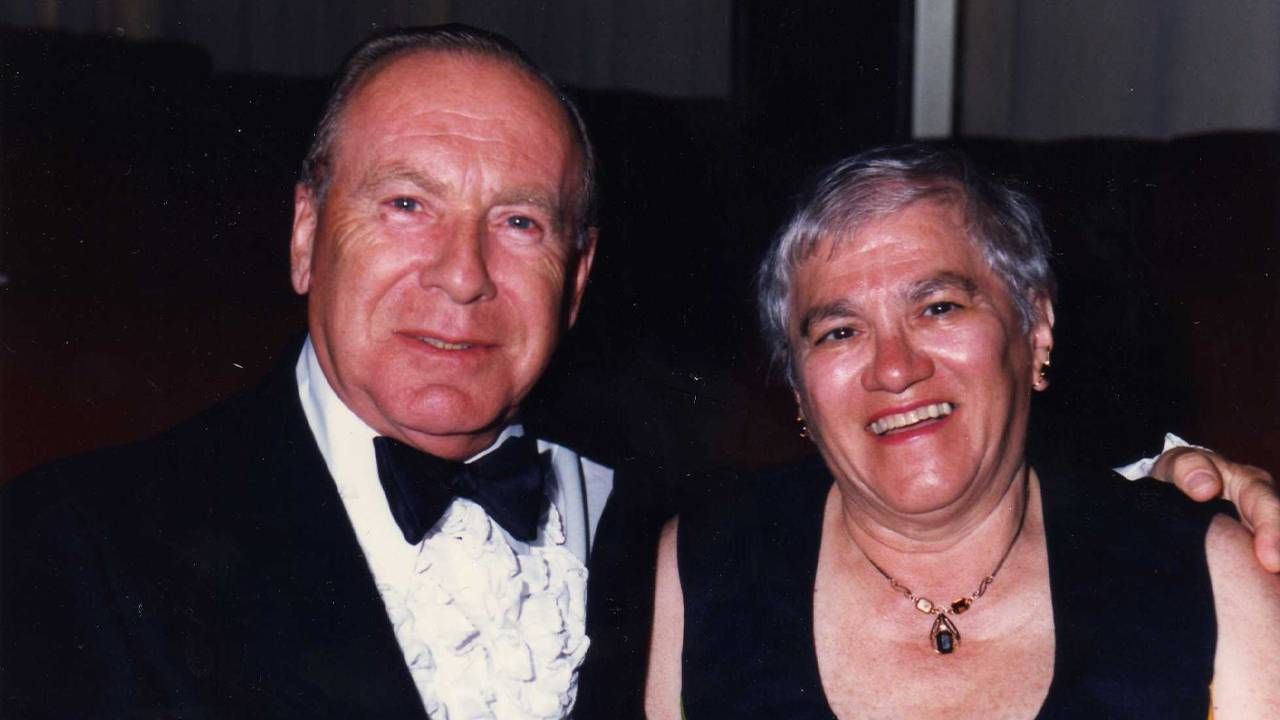
caregiving for her parents Americo and Rosina (shown here), social
gerontologist Jeanette Leardi heard ageist tropes from their doctors | Credit: Courtesy of Jeanette Leardi
What can you do about manifestations of ageism like these – the devaluing, diminishment or dismissal of older adults based on prejudice against old age?
Mostly, people don't know how to respond.
Some
stiffen but say nothing. Others speak up but try not to be overly
confrontational. And some, like Doris Morgan, 85, a retired scientist
who lives in Shepherdstown, W.Va., simply walk away from doctors and
nurses who don't treat them as they'd like.
When
her long-time physician retired a while back, Morgan began looking for a
replacement. It didn't go well. "One doctor never even got around to
listening to my heart and lungs. She was in trouble with me from the
beginning," Morgan said.
Confront or Cower?
Morgan
was also dissatisfied with an eye doctor who told her she didn't have
glaucoma — a judgment that contradicted an earlier diagnosis and that
another physician reversed. And she didn't care for a dentist who sent a
hygienist in to discuss findings from an examination rather than coming
in himself.
"I don't confront these people; there's no use doing that. I just dump them and find someone else," she said.
Jeanette
Leardi, 69, a social gerontologist and community educator in Portland,
Ore., takes a different approach. Her work is deeply informed by her
experience caring for her mother and father who died in 1995 and 2003
respectively.
"There's a way of
politely calling people out on ageism," she told me. "Let's say I'm an
older adult at a medical appointment with my daughter and the doctor is
talking to her, not me. You can say 'Doctor, I'm the patient, and my
daughter is here to support me. I want to talk to you; let's leave some
time at the end when you can talk to my daughter."
Leardi added: "You are paying for
medical professionals' services; you are entitled to ask all the
questions you want and make sure they communicate with you in ways you
understand."
Responding to 'Elderspeak' With Humor
Should a medical professional engage in what's known as "elderspeak"
— using overly simple language and sometimes endearments, often spoken
in a high-pitched lilting tone — humor can come in handy.
Imagine
an aide at a rehabilitation facility asking: "Have we had our bath
today?" Leardi said she might respond this way: "I've had mine, have you
had yours?" Or "Not yet, do you want to get in the tub with me?"
Sometimes, matter-of-fact directness to ageism by doctors and nurses may be the best response.
Regan Burke, 75, wishes
she had been more vocal
with her orthopedic surgeon Credit: Courtesy of
Joan Wolfensberger
For instance, if a nurse comes into your
hospital saying "How are we today young lady?" you might respond "I'm
really not a young lady and I'm okay with that," Leardi advised.
Tracey
Gendron, chair of the department of gerontology at Virginia
Commonwealth University and author of the forthcoming "Ageism Unmasked,"
offers another possible response: "You can tell the nurse 'I
acknowledge you're trying to be kind to me but it makes me feel small
and unimportant. Please call me this [insert a name] instead."
Dr. Louise Aronson, author of the much-acclaimed book "Elderhood" and a Next Avenue Influencer in Aging, suggested appealing to physicians' or nurses' professional pride at an October 2021 panel on ageism I moderated, sponsored by Kaiser Health News and the John A. Hartford Foundation.
Said
Aronson: "As with so many difficult conversations, probably the best
approach is to make 'I' statements like 'I feel that I'm not getting the
attention my symptoms warrant' or 'I know you're a good clinician and
that's why I'm here. So, will you work with me on this issue? Because
I'm really not getting what I need and I have faith that you could
provide it.'"
That can be hard, though, if someone isn't feeling well.
Regan
Burke, 75, of Chicago described seeing an orthopedic surgeon at the
beginning of July because she could barely walk due to pain. After
having X-rays taken, she told me, "he said it's tendinitis, you need to
go to physical therapy. And he walked out of the room."
What She Wishes She Told Her Doctor
Burke
didn't get better and has since consulted with a physiatrist (a doctor
specializing in rehabilitation) who diagnosed arthritis and recommended
she have her right hip replaced.
"I
wish I had said to that first doctor, the surgeon, ''Hang on. Hold it. I
can't go to PT. It hurts too much. Take another look, please," Burke
said.
She explained why so many older patients don't speak up when they're treated poorly.
"We older people are afraid to say
anything to our doctors because they have to take care of us and we are
afraid if we speak up they won't do that," Burke said.
Her
advice? "I think you have to practice with a friend or a relative
before you see a doctor. Tell them 'This is what I want to say' and
rehearse it a couple of times," Burke suggested.
Older
adults need to challenge "their assumptions about what they're allowed
to ask" doctors and nurses — a form of internalized ageism — and make
sure they "communicate what's important to them," said Dr. Christopher
Callahan, a geriatrician and investigator at Indiana University's Center
for Aging Research at the Regenstreif Institute.
Ashton Applewhite, author of "This Chair Rocks: A Manifesto Against Ageism," and Next Avenue's 2015 Influencer in Aging of the Year, encourages older adults to trust their instincts if they feel they're being dismissed or discounted by a health care provider.
"It's
hard even for a person with privilege to speak up to a doctor, who is
an authority figure, and the difficulties and risks are even greater for
women and people of color," she said. "But it's necessary in order to
get the care we need and deserve."
A Few Things You Might Say
Applewhite offered several suggestions.
If
a physician or nurse tells you you're having a medical problem because
of your age, "It's okay to say 'What do you mean by that?'" Applewhite
said.
If someone in a medical setting
calls you "dear" and raises your hackles, Applewhite advised, "you can
say I hope you care about me as a professional, not an intimate. So
let's keep it professional."
And, she
noted, if you feel rushed by a physician, consider saying: "I realize
there are enormous demands on your time, but I need more. What can we
do about that?"
The bottom line:
There are multiple strategies you can employ when you encounter ageism
by medical professionals. Taking your business elsewhere. Directness.
Humor. Asking for what you want. Appealing to medical professionals'
professionalism. And, above all, making it clear you will stand up for
yourself and aren't ashamed of being older.
by Mansoor Malik, MD , Haroon Burhanullah, MD , Constantine G. Lyketsos, MD
The pandemic hit everyone hard, but what implications and consequences has it had for the older generations?
oneinchpunch/Shutterstock
Older
adults have been hit hard by coronavirus disease 2019 (COVID-19).
Mortality data from Oxford COVID-19 Evidence Service indicates a risk of
mortality of 3.6% for people in their 60s, which increases to 8.0% and
14.8% for people in their 70s and over 80s.1 An age-related
mortality study from China showed that patients of COVID-19 above aged
55 years had 3 times increased mortality. Older individuals are much
more likely to develop COVID-19 related complications.2 The
increased mortality reflects the underlying biological, social, and
psychological vulnerabilities faced by the older population. Elderly
individuals are also disproportionately affected by social distancing
policies and other restrictions to stop the spread of the virus,
resulting in increased loneliness, social isolation, and loss of freedom
and support networks.3
Over the course of
the pandemic, we have seen considerable media coverage about the risk of
COVID-19 to older people. Unfortunately, much of this discourse has
negatively fueled an already existing ageist sentiment. Ageism, which
some define as stereotyping, prejudice, or discrimination toward people
on the basis of age, is a serious international concern with important
health implications.4 Multiple studies have indicated that
ageism toward older adults is highly prevalent across countries and
continues to grow with global population aging.5 Negative
attitudes toward older adults pose significant risks to the health and
well-being of older individuals, such as higher mortality risk, poor
functional health, slower recovery from illness, and poor mental health.6
Negative
attitudes toward this population are particularly prevalent on social
media. A Twitter analysis of 18,128 tweets between March 12 and March
21, 2020, showed that about one‐quarter of all tweets could be
considered ageist, either because they included jokes or ridicule aimed
at older adults or because their content downplayed the relevance of
COVID‐19 and/or implied their lives were less valuable.7
Ageist attitudes are nothing new. A previous study of Facebook posts
indicated that 74% excoriated older individuals, 27% infantilized them,
and 37% advocated banning them from public activities, such as shopping.8
Various social media discourses have surfaced about prejudiced
representation and denigration of older people in society. For example,
COVID-19 has been characterized with the hashtag #BoomerRemover, which
has been trending on social media platforms, often accompanied with
ageist disparaging and devaluing memes.9
Public
discourse during the pandemic has increasingly portrayed those over the
age of 70 as helpless, frail, and unable to contribute to society. These
views are being spread by social media, the press, and public
announcements by government officials throughout the world. There has
been considerable media coverage and online discussions about potential
for rationing of care of elderly people as they are more expendable than
persons in other age groups. Some of the coverage seems to suggest that
the deaths of older people somehow are not as important as the younger
population.10
There have been numerous examples of
flagrant discrimination against older individuals during COVID-19.
Earlier in its course, COVID-19 was believed primarily to affect elderly
people. Many young people did not follow adequate precautions, and
strong public health warnings were not issued. Even after COVID-19
outbreaks in many nursing homes, Centers for Disease Control and
Prevention (CDC) guidelines did not identify residents in long-term care
as a high priority for testing.11 Treatment resources and personal protective equipment have been consistently directed toward the younger population.12
In a press briefing in March, World Health Organization
Director-General Tedros Ghebreyesus took unnamed nations to task for
failing to treat the death of older adults as a “serious issue” and
exhibiting signs of “moral decay.”13
One of the
disturbing social consequences of COVID-19 includes a significant
increase in the number of elder abuse cases, paralleling the rise of
ageism. The CDC defines elder abuse as an “intentional act or failure to
act by a caregiver or another person in a relationship involving an
expectation of trust that causes or creates a serious risk of harm to an
older adult.”14 Elder abuse was a huge public health problem
globally even before COVID-19. It is estimated that in the United
States, approximately 1 in 10 individuals over the age of 60 suffers
physical, verbal or sexual abuse, or financial exploitation.15
Elder abuse is significantly underreported. Only 1 in 24 cases may be reported.16 In almost 60% of elder abuse and neglect incidents, the perpetrator is a family member.17
Social isolation is a significant risk for elder abuse. Other risk
factors include cognitive impairment, physical frailty, and dependence
on others for care. Nursing home residents are also particularly
vulnerable to elder abuse.18 All of these risk factors have been compounded by COVID-19.
To
reiterate, since the start of the COVID-19 pandemic, there has been a
massive increase in the reports of elder abuse. Reports range from
incidents of family violence, neglect, and financial scams. The Federal
Trade Commission and the American Bar Association as well various state
departments have issued warnings to the public.19 In Europe, there have been distressing reports of older people abandoned in care homes in Spain.20
In Italy, where 23% of the population is aged 65 years or older, some
hospitals have used chronological age-based cutoffs to ration
ventilators.20
Systemic issues
Mortality
data from the Oxford COVID-19 Evidence Service indicates a risk of
mortality of 3.6% for people in their 60s, which increases to 8.0% and
14.8% for people in their 70s and 80s.
Not only do pervasive
ageist attitudes and stereotypes contribute to negative health outcomes,
but ageism among health care professionals can also result in
discriminatory practices that place older people at risk.21
Studies have found widespread negative attitudes toward older people and
old age among physicians, medical students, and nurses.22
Such attitudes can lead to practical consequences for older patients.
For example, assumptions regarding functional and cognitive decline can
lead to more limited provision of medical information, withholding
certain treatment options, and exclusion from clinical trials.23
Ageist attitudes have also been found among mental health practitioners
and trainees (such as assuming that depression symptoms are normal
among elderly adults), which in turn may restrict access to treatments
and contribute to functional decline.24
Unfortunately,
many well-intentioned efforts to combat the effects of COVID-19 have
also resulted in marginalization of elderly adults. For example, recent
shift towards telemedicine excludes roughly half of the adults over age
65 in the United States who lack access to broadband services.
Concluding thoughts
Elder
abuse and ageism are extremely hard problems to combat. There are no
clear ways to reduce ageism and change attitudes toward aging. Combined
interventions with education and intergenerational contact seem to show
the largest effects on attitudes.21
Adult Protection
Services (APS) run by local or state health departments are usually
responsible for investigating cases of elder abuse. However, few
financial resources, insufficient access to information needed to
resolve elder abuse cases, inadequate administrative systems, and lack
of cross‐training with other disciplines in the aging field serving
clients with mental health disabilities—these have hindered the role of
APS workers in intervening in abusive situations.25
Two
important federal laws address the issue of elder abuse: the Older
Americans Act (OAA) and the Elder Justice Act (EJA). However, lack of
funding and relaxed enforcement have diluted their effectiveness. The
EJA has received less than 10% of the funding that was authorized,
especially with respect to achieving its main goal of dedicated funding
for APS.25 Denial of elder abuse and lack of funding
continues to be a significant problem in the enforcement of existing
laws. Urgent policy changes are needed to strengthen the protections for
the elderly during COVID-19.
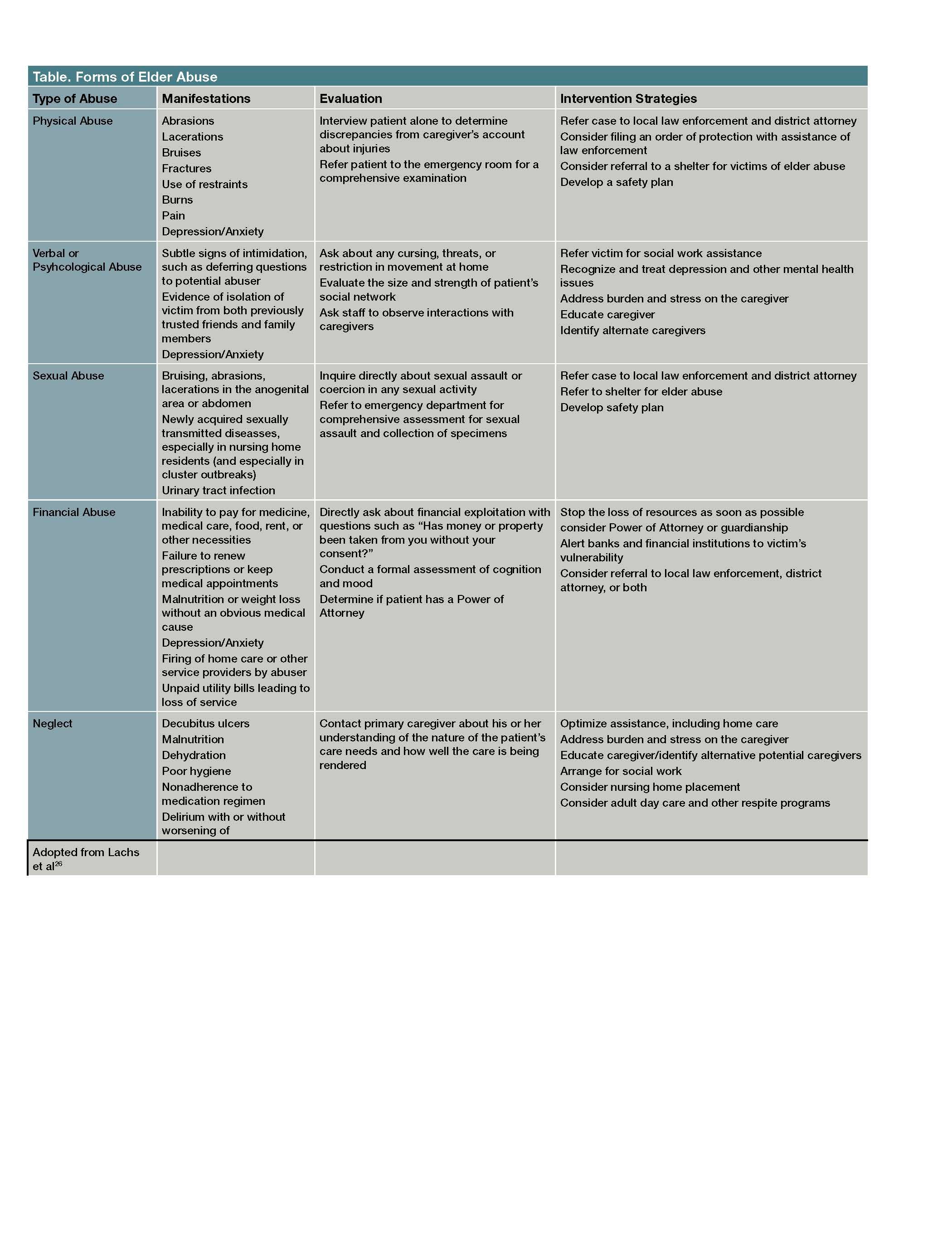
Table 1. Consider these forms of elder abuse, their manifestations, and their appropriate response methods.
Dr Malikis a Professor in the Department of Psychiatry at Johns Hopkins University SOM.DrBurhanullahis an Associate Professor in theDepartment of Psychiatry, Johns Hopkins University SOM.DrLyketsosis
the Elizabeth Plank Althouse Professor and Chairman of the Department
of Psychiatry, Bayview Campus, Johns Hopkins University SOM.
2.
Liu K, Chen Y, Lin R, Han K. Clinical features of COVID-19 in elderly
patients: A comparison with young and middle-aged patients. J Infect. 2020;80(6):14-18.
3.
Wu Z, McGoogan JM. Characteristics of and important lessons from the
coronavirus disease 2019 (COVID-19) outbreak in China: summary of a
report of 72 314 cases from the Chinese Center for Disease Control and
Prevention. JAMA. 2020;323(13):1239-1242. Accessed September 18, 2020. https://jamanetwork.com/journals/jama/fullarticle/2762130
4. Butler RN. Ageism. In: Maddox GL, ed. The encyclopedia of aging. Vol. 1: A–L. New York, Springer Publishing; 2000:38–9.
5. North MS, Fiske ST. Modern attitudes toward older adults in the aging world: a cross-cultural meta-analysis. Psychol Bull. 2015;141(5):993–1021.
7.
Jimenez‐Sotomayor MR, Gomez‐Moreno C, Soto‐Perez‐de‐Celis E.
Coronavirus, Ageism, and Twitter: An Evaluation of Tweets about Older
Adults and COVID‐19. J Am Geriatr Soc. 2020;68(8):1661-1665.
8. Levy BR, Chung PH, Bedford T, Navrazhina K. Facebook as a site for negative age stereotypes. Gerontologist. 2014;54(2):172‐176.
9. Ayalon L. There is nothing new under the sun: ageism and intergenerational tension in the age of the COVID-19 outbreak. Int Psychogeriatr. 2020;1‐4. Published online April 14, 2020.
10.
Ayalon L, Chasteen A, Diehl M, et al. Aging in Times of the COVID-19
Pandemic: Avoiding Ageism and Fostering Intergenerational Solidarity. J
Gerontol B Psychol Sci Soc Sci. 2020. Published online April 16, 2020.
15.
Acierno R, Hernandez MA, Amstadter AB, et al. Prevalence and correlates
of emotional, physical, sexual, and financial abuse and potential
neglect in the United States: the National Elder Mistreatment Study. Am J Public Health.2010;100(2):292-297.
17.
Amstadter AB, Cisler JM, McCauley JL, Hernandez MA, Muzzy W, Acierno R.
Do incident and perpetrator characteristics of elder mistreatment
differ by gender of the victim? Results from the National Elder
Mistreatment Study. J Elder Abuse Negl. 2011;23(1):43-57.
21.
Burnes D, Sheppard C, Henderson CR Jr, et al. Interventions to Reduce
Ageism Against Older Adults: A Systematic Review and Meta-Analysis. Am J Public Health. 2019;109(8):e1‐e9. Accessed September 18, 2020. https://ajph.aphapublications.org/doi/full/10.2105/AJPH.2019.305123
22.
Chrisler JC, Barney A, Palatino B. Ageism can be hazardous to women’s
health: ageism, sexism, and stereotypes of older women in the healthcare
system. J Soc Issues. 2016;72(1):86–104.
23. Briggs R, Robinson S, O’Neill D. Ageism and clinical research. Ir Med J. 2012;105(9):311–312.
24.
Bodner E, Palgi Y, Wyman MF. Ageism in mental health assessment and
treatment of older adults. In: Ayalon L, Tesch-Römer C, eds.
International Perspectives on Aging. Cham, Switzerland, Springer Nature;
2018;19:241–262.
Medical workers load a patient from Andover Subacute and
Rehabilitation Center into an ambulance while wearing masks and personal
protective equipment (PPE) in Andover, New Jersey. After an anonymous
tip to police, 17 people were found dead at the long-term care facility,
including two nurses, where at least 76 patients and 41 staff members
have tested positive for COVID-19. (Eduardo Munoz Alvarez/Getty Images)
The alarming death rate of U.S. nursing home residents due to the novel coronavirus is not a sad inevitability
I left the nursing home nearly six years ago, but I worry about my
friends who still work there, about the residents, about their families.
I worry with good reason. At the time of writing, at least 29,100 people living or working in long-term care in the U.S. have died from COVID-19, but the number is undoubtedly higher. A staggering one-third of coronavirus deaths
across the United States are linked to nursing homes. New Jersey — the
state where I served for seven years as a nursing home chaplain —
reports that nearly 40% of coronavirus-related deaths are linked to nursing facilities.
The latest CDC guidance
states that, given their congregate nature and the resident population
served — older adults often with underlying chronic medical conditions —
nursing home populations are at the very highest risk of being affected
by COVID-19.
While certain age-related biological factors, as well as higher
incidence of underlying conditions, make older people more susceptible
to dying from the coronavirus, the alarming death rate of U.S. nursing
home residents is not a sad inevitability. It reflects the priorities
and prejudices of our larger culture in the United States, which readily views older adults as less worthy of resources and respect than other groups. It reflects policies which fail to provide sufficient services for people to remain in their own homes
and communities, while simultaneously under-regulating the very
institutions in which they must live. It reflects poor pay and
protections for care workers.
Not all old lives suffer ageism's blows equally. If the residents of
55+ communities, planned neighborhoods geared toward younger retirees,
were dying at the same rate as people in nursing homes, responses would
likely take on a greater sense of urgency. The ubiquity of
coronavirus-related nursing home deaths reflects a particular
permutation on ageism — discrimination not only against old age but also
against dependency in old age, most typified by the cognitive limitations associated with dementia.
Given that nearly half of nursing home residents have a diagnosis of
Alzheimer's disease or other dementias, nursing home deaths from
COVID-19 are disproportionately impacting people with brain disease.
Dementia is the fifth most common
COVID-19 comorbidity, outranking respiratory illnesses, including
chronic obstruction pulmonary disease and asthma. Many of the roughly
120 residents at Kirkland's Life Care Center, the suburban Seattle
epicenter of the first U.S. outbreak, were, as the New York Times reports,
"in their 80s or 90s, suffered from dementia and were there for good."
To the ageism that is uncovered and exacerbated by the pandemic, add
dementism — the deeply-ingrained prejudice against the deeply
forgetful.
On my first day, I was given a tour of the facility. When we reached
the dementia unit, my guide told me that I would probably not spend much
time here. The implication was clear: these residents were so far
"gone" that they weren't worthy of my time. He was merely reflecting a
dominant cultural attitude that says people with dementia have
disappeared from themselves, so there's no need to be fully present to
them. The more time I spent with the people on the unit, the more I came
to know them as complex individuals with histories, relationships,
desires — not as undifferentiated "dementia sufferers" lost to their
disease. I witnessed what they too often endured — treated like
children, rushed past, ignored — and became convinced that the social
response to dementia creates as much suffering as the disease itself.
Whether they have dementia or not, frail elders and their care
partners often find themselves forgotten at the exact time when they
need the most care, and the last few weeks have brought that fact into
sharp relief. I have seen it happen again and again, long before the
coronavirus hit America. Friends, family, and even faith communities
quietly withdraw; physicians offer little support outside prescriptions;
public policy neglects care needs. A third of people with dementia have
reported losing friends following a diagnosis, and over a third said
they have felt lonely recently, according to a recent survey by the U.K.'s Alzheimer's Society. The National Council on Aging reports that nearly half of people with dementia have experienced abuse or neglect.
The common language of our time also reflects and generates
prejudice. People do not simply have brain disease; they are imagined as
gone, fading away, vanishing in plain sight. While dementia raises
existential questions in ways other chronic or terminal conditions do
not, we seem to have placed dementia beyond the pale of personhood. So,
if we've already imagined these people as disappeared — and, to some
extent, have treated them as such — then it is no surprise that the
disproportionate vulnerability of people in nursing homes to dying from
COVID-19, has not seemed to be, at the level of state and federal
government, a priority.
Indeed, the huge proportion of deaths in nursing facilities in the
last few weeks, which surely could have been mitigated with proper
planning, precautions and care funding, barely seems to register as a
systemic injustice. The statistics from the last few weeks make clear
that the residents and staff of the kinds of nursing homes I worked at
have been left to fend for themselves against this virus, and have
suffered greater losses than anywhere else in the community. My own
state of New York — where more than 5,300 nursing home residents have
died from COVID-19 — has provided unusual legal cover
for the nursing home industry, shielding them from lawsuits over their
failure to protect residents from infection and death from the
coronavirus.
I hope that the pandemic will lead us to re-examine values and
language that discount people with dementia, and to re-evaluate an
American philosophy and healthcare system that requires so many older
adults — frail in mind, body, or both — to live in institutions that
leave them vulnerable. More than anything, I hope we embrace
dementia-inclusive communities, where people are welcomed and supported
within their neighborhoods, where intergenerational networks thrive,
where the general public is educated about dementia and other challenges
that disproportionately impact the elderly, and where compassion is
valued over cognitive capacity. If that can happen, something positive
and enduring will have come out of this crisis.
Ageism can creep into public policy and negatively affect millions of
older Americans. A prime example: the nation’s failure to prevent elder
abuse despite the upcoming 10th anniversary of the bipartisan Elder Justice Act in March 2020.
Passing that law took seven years. Back then, the struggle to get the
legislation enacted was convincing lawmakers that elder abuse, neglect
and financial exploitation were real issues. Yet there had been more
than 45 years of laws defining the federal response to child abuse and
domestic violence.
Unfortunately, the struggle continues today.
The Underfunding of the Elder Justice Act
The Elder Justice Act has received less than 10% of the funding that
was authorized, especially with respect to achieving its main goal of
dedicated funding for Adult Protective Services. What’s more, major
provisions of the legislation — including the creation of forensic
centers to help in elder abuse detection — have never been funded.
Why is that?
As the national coordinator of the bipartisan Elder Justice Coalition, I believe there are three factors.
The first, and biggest one: denial.
Many policymakers and their staffs still don’t acknowledge elder
abuse and neglect as a problem. So, it is nearly impossible to persuade
them that it warrants new federal money. Yet the Justice Department has
clearly acknowledged the issue, noting that one in 10 people over 60 are
victims and that victims of elder financial abuse can lose up to $3
billion a year.
A second factor for the failure of the Elder Justice Act to be fully
implemented is a lack of reliable data showing the extent of this
problem. In our world today, data drives dollars. Here’s one statistic
worth noting: The Government Accountability Office says the recorded
number of instances of abuse in nursing homes more than doubled from 2013 to 2017.
A third factor is what I call the “friendly fire” problem. Advocates
against domestic violence have done a very effective job getting federal
attention, but they haven’t extended their effectiveness to help
advance elder justice. The irony is that the predominant victim in
domestic violence and elder abuse is a woman.
Any victim of abuse, neglect or exploitation — no matter her or his
age — should be helped. Programs need to be in place that would prevent
and detect abuse and provide needed support systems. This is not today’s
reality. Elder abuse is the last element of our nation’s
inter-generational cycle of abuse and lagging the furthest behind in
terms of a response from policymakers.
Compounding the problem is lax enforcement of laws already in place
for elder abuse prevention and prosecution, especially for victims of
abuse in nursing homes. Earlier this year, in her Senate Finance
Committee testimony, one daughter spoke about the death of her mother
from dehydration caused by neglect at a nursing home which had
previously received the highest 5-star rating from the federal
government.
Champions in Congress and in the Trump Administration
Thankfully, there are a few strong elder justice champions in Congress in both parties.
Sen. Charles Grassley, the Republican chairman of the Senate Finance
Committee, and Sen. Ron Wyden, the committee’s top Democrat, are working
on a new Elder Justice Act. They’ve held two major hearings over the
past few months.
Rep. Peter King (R-N.Y.) and Rep. Suzanne Bonamici (D-Ore.) have
advanced important elder justice legislation in the House. Rep. Rosa
DeLauro (D-Conn.), as chair of the Labor Health and Human Services
Appropriations Subcommittee, has secured the funding that elder justice
has today.
Sen. Susan Collins (R-Maine) and Sen. Bob Casey (D-Pa.) have
ensured the Senate Special Committee on Aging addresses this issue as
well.
There are strong Trump administration advocates working on elder
justice, too, including Lance Robertson, assistant secretary of aging at
the Administration for Community Living and Toni Bacon, who runs the
Elder Justice Initiative at the Department of Justice.
And there are others in Washington. But not enough of them. How long
will it be before the topic of elder justice is raised on the 2020
election campaign trail?
In testimony I delivered before the Senate Finance Committee last
month I said: “…failure to improve the federal response to elder abuse
may be one of the worst examples of ageism in public policy.”
Opportunities for Change
There are real opportunities to change things in Congress, though.
The first is the passage of the two-year budget agreement which will
allow elder justice programs to get needed increases. The House passed
its funding bill and the Senate is expected to in September. (You can
follow my group’s website, ElderJusticeCoalition.com, for details.)
The second opportunity is passage of the bipartisan Elder Justice
Reform Act, a bill that’s expected to be introduced in September. It
will address elder justice issues including: more funding for Adult
Protective Services and the Long-Term Care Ombudsman Program as well as
strengthened criminal background checks of employees at long-term care
facilities.
Anyone who has an older relative, friend or neighbor should demand
the federal government do more to prevent elder abuse. Whether it’s
stopping robocalls and scams or protecting older adults from opioid
misuse and abuse, our voices need to be raised.
The solutions are there. We just need to muster the political will and the outrage to force action.
Faye Kirtley doesn’t appreciate it when store clerks talk down to her and act as if “I don’t know what I’m doing,” she said.
“It’s embarrassing, and I don’t know why they think it’s okay to
treat an older person like that,” added the 88-year old resident of
Bardstown, Ky. “Maybe they have people in their family that they talk
down to, too.”
Barbara Tack, 76, of Exeter, N.H. cringes at diminutives such as
“miss” and “little lady” and has been known to correct a supermarket
cashier on the impact of those monikers.
“I told him, ‘I am not young, and I think it’s an insult to call
attention to my age at all,’” said Tack. “He did seem chagrined, so I
tempered it with something like, ‘It makes me feel bad that all you can
see is my age.’ But I hear that kind of condescending comment way too
often.”
Tack also shared a story about a friend, a 70-year-old man, who was
offended by what he perceived to be very childlike instructions given to
him by a nurse in a doctor’s office: “Sorry, you have to remove your
sweater for me to take your blood pressure. I know it’s cold outside and
you can put it back on right away.”
Elderspeak Reveals Perception
What Kirtley and Tack are describing are signs of what is referred to
as “elderspeak.” It occurs when an older adult is spoken to by health
care workers, service personnel, neighbors or even family members as if
he or she is a child with limited understanding.
In a recent article in The Chicago Tribune,
Anna I. Corwin, an anthropologist and professor at St. Mary’s College
of California in Maroga, noted that elderspeak “sounds like baby talk or
simplified speech” and is, in fact, a symptom of how older adults are
often perceived.
“Americans tend to view and treat older adults as no longer
productive in society. And that’s how we define personhood, as an adult
who is a productive member of society,” Corwin said.
Elderspeak involves talking slowly and at a louder volume, with
pronounced enunciation; it also employs the frequent use of words such
as “sweetie,” “dear” or the pronoun “we” when referring to the older
person (as in, “Do we want to go to dinner now?”).
The Negative Impact of Elderspeak
Not only is this type of speech condescending and disrespectful to
older adults, it can be damaging to their mental health and well-being.
According to Becca Levy, a researcher on a study on the effects of
elderspeak, by Yale University, the practice “sends a message that the
patient is incompetent, and begins a negative downward spiral for older
adults who react with decreased self-esteem, depression and withdrawal.”
Further, those living with mild to moderate dementia can be even more
negatively impacted by this type of language. These people can become
aggressive or uncooperative when elderspeak is used, according to the
Yale report.
The Importance of Respect
In an article about the dangers of ageism by LifeCare Advocates, a
care management practice based in Newton, Mass., one of the tactics
mentioned for reducing the use of elderspeak involves training health
care workers not only to refrain from using diminutives, but to ask the
older adult how he or she wants to be addressed. For some of them, the
automatic use of their first names demonstrates a lack of respect.
Kirtley, who tends not to correct those who speak down to her for
fear of “causing an incident,” still decries the practice of elderspeak.
She’d be happier to always be treated with the respect she said
everyone deserves.
It's not the passage of time that makes it so hard to get older. It's ageism, a prejudice that pits us against our future selves -- and each other. Ashton Applewhite urges us to dismantle the dread and mobilize against the last socially acceptable prejudice. "Aging is not a problem to be fixed or a disease to be cured," she says. "It is a natural, powerful, lifelong process that unites us all."
The 2016 United Nations International Day of Older Persons (UNIDOP) will take a stand against ageism by drawing attention to and challenging negative stereotypes and misconceptions about older persons and ageing.
Ageism is a widely prevalent and prejudicial attitude that stems from the assumption that age discrimination, and sometimes neglect and abuse of older persons is a social norm and therefore, acceptable. It is a reality in some form in all societies, and finds expression in individuals’ attitudes, institutional and policy practices, as well as media representation that devalue and exclude older persons. In 2014, Governments around the world adopted a resolution at the Economic and Social Council that recognized ageism as “the common source of, the justification for and the driving force behind age discrimination.”
Such discrimination shapes how older persons are treated and perceived by their societies, including in medical settings and workplaces, creating environments that limit older persons’ potential and impact their health and well-being. The failure to tackle ageism undermines older persons’ rights and hinders their contributions to social, economic, cultural and political life.
In 1939 the dark comedy play Arsenic and Old Laceopened on Broadway and became an immediate hit. The New York Times reviewer wrote that “It is so funny that none of us will ever forget it.”
Indeed. The plot involves two spinster aunts who lure lonely old men into their home to poison them with glasses of homemade elderberry wine laced with arsenic, strychnine and “just a pinch of” cyanide. Then their nephew, Teddy, (who believes he’s Teddy Roosevelt) buries the bodies in the cellar. The ladies say that they are doing this “for charity.”
Arsenic And Old Lace is based on a notorious serial killer who murdered the elderly for profit. We make no connection to the plight of the elderly victims because the focus is on the killers. In this same sense, because society tends not to focus on the elderly, their victimization is largely ignored. Unless there is obvious evidence of foul play, law enforcement, the health care sector and society in general, have a tendency to believe that the elderly (versus other age groups) always die of natural causes. This often wrong assumption can be partially attributed to something called “ageism.”
Ageism is the tendency to perceive older persons in many negative ways, including being debilitated, unworthy of attention and “less alive.” When an older person forgets a name, they are senile. When a younger person forgets they are forgetful, or are having a “senior moment.”
Ageism perpetuates prejudice, discrimination and mistreatment of elders and psychological studies have found that it actually shortens the lifespans of elders.
Respecting our elders on the other hand, gives them longevity and brings us humility. A Yale University study found that those with positive self-perceptions of aging lived 7.5 years longer and moreover, older adults exposed to positive stereotypes have significantly better memory and balance. And how do we respect our elders? We can be patient, spend time, listen, tell them we love and appreciate them, and look for their wisdom because it’s there, say’s Mark Twain …
“When I was a boy of fourteen, my father was so ignorant I could hardly stand to have the old man around. But when I got to be twenty-one, I was astonished at how much he had learned in seven years.”
Photo: Defying negative impact of ageism in America, intergenerational advocates recently met at the Justice In Aging conference in Washington, D.C.
ORLANDO,
Fla.--The baby boomers, AKA the nation’s silver tsunami, had better pay
as much attention to changing attitudes about aging as they did to
shaking up all those previous social norms. In American culture, old things get replaced with something nice and new: Like the latest smart phone. Apply the concept to people, and it’s called ageism.
It’s as current as Twitter.
Tweeted Ageist Stereotypes
A
team of researchers at Oregon State University took a look at tweets
about people with Alzheimer’s disease and found ridicule, stigma and
stereotypes.
One unpleasant tweet: “Waiting until your grandparents become senile so you can trick them into giving you their money.”
Ageism came up frequently at November’s 68th Annual Scientific Meeting of the Gerontological Society of America,
in Orlando, Fla. The conference brought together science, medical,
social science and behavior experts, as well as policy wonks and other
researchers. I was there on a Journalists in Aging Fellowship, a
program of New America Media and the Gerontological Society, sponsored
by the Archstone Foundation.
Experts from all over the world discussed research into the challenges of the old, the frail and those with dementia.
They
talked about minorities and the poor, who, after a lifetime of being
disadvantaged in our society, will face particular difficulties as they
age, including the need to rely on at-risk safety net and entitlement
programs.
Those in the middle class also face poor nutrition in
“food deserts” and isolation in their cul-de-sac suburban neighborhoods.
Even some retirement communities, built as havens from the hustle and
bustle, are less than ideal places to “age in place.”
Yet, the vast majority of Americans say that’s what they want: to stay in their homes.
Boomers Internalize Stereotypes
This is where baby boomers may face their own internalized ageist stereotypes.
Stephen Golant, author of Aging in the Right Place,
(Health Professions Press, 2015) said Americans are “repeatedly
lectured” about how to “age successfully.” They are told the importance
of remaining young in mind and body: To exercise. To eat right. To
maintain their homes.
This can be pernicious, he said. It
suggests those who are not healthy have only themselves to blame. People
guilt-trip themselves even more when the demands of homeownership make
them feel like life is spinning out of control.
The perceived stigma of giving up one’s home for a “home” can make life an “emotional battlefield,” Golant said.
Meanwhile, society does its best to accent the negative.
Asked
to characterize the aging, some people recorded during on-the-street
interviews dredged up cliches about spry retirees on vacation, but most
talked about decline, disease, dependency.
“Society isn’t betting on them,” said one man.
The FrameWorks Institute did the interviews as part of its work with eight national aging organizations.
The
groups are the Gerontological Society, AARP, American Federation for
Aging Research, National Council on Aging, National Hispanic Council on
Aging, American Society on Aging, American Geriatrics Society and
Grantmakers in Aging.
New Metaphors for Aging
The goal is to find new metaphors for aging, said FrameWorks CEO Nathaniel Kendall-Taylor. He
said the way information is framed has an impact on how people use the
information, which should come as no surprise to those who reframed
cultural norms about race, gender, sex, the environment and
entertainment.
The baby boomers have a lot at stake, and that
includes me. I’m no fan of euphemisms, but I’m all for promoting a
fine-wine view of life. It should get better with age. We should feel
better about aging.
If some creative wordsmithing and mass
marketing helps our society recognize that aging doesn’t diminish value
or humanity, it would be a real contribution to our collective
understanding of who we boomers are.
Linda Valdez wrote this
article for the Arizona Republic, where she is a columnist and
editorial writer. She is the author of the new book,Crossing the Line: A Marriage Across Borders (Texas Christian University Press).
A 95-year-old Finnish woman may have set the record for the world's oldest woman to complete a bungee jump, according to Daily Mail.
Magit Tall, who walks with the assistance of a cane, took a nearly
500-foot plunge, with the aid of a tandem jumper. She said that she
wanted to make the jump before she died. Tall's feat is impressive for a
person of any age, let alone a nonagenarian.
Let's take a look at what it means to age in a society that has mixed views on aging.
Princeton
University researchers have explored the graying of the population as
well as intergenerational tensions in the United States. In seeking
explanations for ageism, or age discrimination, the researchers examined prescriptive ageist prejudices,
which are beliefs about how older adults differ from others. For
example, when older adults do not conform to these beliefs, they are
punished by people who discriminate against them.
Two theories
could explain this phenomenon. First, negative expectations can become
"self-fulfilling prophecies." In other words, when an older person
believes that older people are vital and vibrant, he or she is more apt
to take care of him -- or herself. In contrast, when an older person
believes that aging equates to sickness and infirmity, he or she may
subconsciously become sick and infirm.
Second, genetics may play a
role in people's perceptions of aging. For example, people who
witnessed their parents age gracefully may have inherited good genes and
also developed healthy attitudes and habits.
Baby Boomers Could Redefine What It Means to Grow Old
According to an NBC News
report, whether ageism will become better or worse as more Boomers hit
old age is unclear. To highlight that aging doesn't mean crippling old
age, the report shared the story of a 74-year-old Duke University
professor who has written several books on aging. The professor said,
"One can say unequivocally that older people are getting smarter, richer
and healthier as time goes on."
The professor is living proof
that aging doesn't mean sitting in a rocking chair on a porch; he
skydives, whitewater rafts, cycles, and gets tattoos. "What makes me mad
is how aging, in our language and culture, is equated with
deterioration and impairment. I don't know how we're going to root that
out, except by making people more aware of it," he said.
60 Is the New 40
The
frontiers of aging are not all gloom and doom. After all, 60 is the new
40! Take a look at older female role models: plucky actress, director,
producer, and screenwriter Diane Keaton; age-defying celebrity,
activist, former fitness guru, and W Magazine cover star, at age 77, Jane Fonda; actress and activist Susan Sarandon; and iconic international beauty Sophia Loren.
According to a columnist for The Seattle Times,
Liz Taylor, "most of us age accidentally." Taylor recommends that we
embrace aging. She also thinks we should drop euphemisms for aging, such
as "old," "seniors," "elders," and "older." She adds that Boomers, many
of whom are now seniors, do not respond well to these terms.
Shattering Old Stereotypes to Court the Mature Market
Today's
so-called "mature market" flouts conventional stereotypes. After all,
the image of a frail, grumpy elder is passé. Just take a look at
pharmaceutical advertisements aimed at the mature market. While the ads
focus on common ailments related to aging, such as arthritis, the people
shown in the ads are vital, active, and engaged.
Some companies are reformulating their marketing strategies to attract older consumers. In Ameriprise Financial's "Dreams Don't Retire"
commercial, the late iconic actor Dennis Hopper dispels conventional
attitudes toward retirement. Hopper says, "Your generation is definitely
not headed for Bingo night." The ad then talks about the Ameriprise
Dream Book that offers a financial strategy to make retirement dreams
come true.
Other companies are using cognitive age, or subjective age,
and not chronological age in the development of their marketing
strategies. Consider the American Association of Retired Persons (AARP).
If you've turned 50, the AARP has probably already sent you a direct
mail package aimed at getting you to join. The organization tries to
appeal to a wide audience, which presents an interesting challenge:
communication messages intended for 50-somethings won't resonate with
80-somethings and vice versa. So the AARP developed ads that feature
older adults at various life stages and that explain how the AARP's
lifestyle-oriented information and services fit into their lives.
To avoid ageism in marketing, some companies address consumer lifestyles. Do you remember the Taco Bell Super Bowl commercial, "Viva Young"?
In this fun ad, a pack of rebellious elders sneaks out of their
retirement home to experience a night out on the town. They play pranks,
go clubbing, make out, get tattooed, and, of course, stop for Taco
Bell. The ad demonstrates that you're never too old to stir things up.
Mark Twain said, "Age is an issue of mind over matter. If you don't mind, it doesn't matter." Anyone for bungee jumping?
NPR's Ina Jaffe covers aging. And on a recent program, we discussed a problem that she's encountered on her beat - what to call the people she covers. Now this led to us asking you all for some terms. We polled our listeners, but listen back to what she told us in that first conversation.
INA JAFFE, BYLINE: Maybe, once upon a time, elderly referred to a particular stage in life, but now people think of it as - means you're ailing and you're frail.
MONTAGNE: OK. So what do you call older people?
JAFFE: Older people or older adults. If it's relevant, sometimes I say older Americans. Sometimes I use the term senior, though I've met some older people who don't like that either.
MONTAGNE: So that was from our last conversation, and at the time, we asked you to weigh in and tell us the terms for aging that you love and that you hate. And Ina joins me now again to talk about the results of that poll. Good morning.
JAFFE: Good morning.
MONTAGNE: Let's start with the positives. What terms did listeners say they actually like?
JAFFE: Well, more than 2,700 people responded, and the winner and still champion was older adult, though you can't say there was any real enthusiasm for it among our poll takers. Just 43 percent of them said they liked it.
MONTAGNE: So it was an acceptable term, but was older adult the only term that people would sort of settle for?
JAFFE: Well, almost a third of the respondents liked elder. We received a lot of comments online from people who felt that the term was the most respectful. And about a third thought senior was fine, though if you put the word citizen after it, the favorable rating dropped to less than 12 percent.
MONTAGNE: So senior citizen - forget that. Let's - don't mention it. Which term had the dubious distinction of being the most despised?
JAFFE: Well, first, I should say that the category of dislikes had the most enthusiasm. There were about three and a half times more votes cast for terms that didn't like than for terms that they liked. And I can sum up the overall response by saying that they disliked pretty much everything.
“Right now, we see the elderly as a problem. Why don’t we look at the elderly as a resource? We want to help. We don’t want to just be trying to keep ourselves busy. I hate that. There are important things to do in life and we need to be able to continue being useful. I’m a great believer in being useful.
“We’ve got all these healthy, “young old,” people who go into retirement from 60 to 75 [years old] — and what do they do with themselves? They want something meaningful to do. I think we need to look at ways in which they go into caregiving. They understand it. They’re close to it, they see it. They know that they’re going to be there.”
Myth No. 1: Your genes predetermine how healthy you are. Why it's not true: Although the gene sequence you were born with is fixed, gene expression depends on how you live your life.
Myth No. 2: Getting older means feeling older. Why it's not true: We each have a chronological age and a biological age. Your chronological age is the age on your birth certificate and answers the question, "How many times have you, in this body, revolved around the sun?"
Myth No. 3: Your body gets frail as you age. Why it's not true: Your body doesn't have to get frail when you get older. You can increase both the strength and mass of your muscles and even improve bone density through exercises and weight-training. Within six weeks of beginning to exercise, studies show, there's a 100 to 200 percent increase in strength in men aged 60 to 70.
Myth No. 4: Your brain is destined to deteriorate over time. Why it's not true: If you think you lose brain cells as you get older, and those cells are gone forever, think again. Research shows that some areas of the brain involved with memory and learning continue to produce new nerve cells every day. So while you do lose brain cells every day, you also are constantly replacing brain cells.
Myth No. 5: Your energy decreases as you get older. Why it's not true: Energy levels in the body don't depend on age. They depend on your attitude and are influenced by the quality of your life. Meditation, restful sleep and exercise are the best ways to experience a joyful and energetic body.
Myth No. 6: The older you are, the more unhappy you are. Why it's not true: Happiness has nothing to do with aging. In fact, the later years can be the best time of your life. Many studies have shown that people get happier as they age.
1. A Misconception of Guardianship The first factor that contributes to unnecessary guardianships is a misconception of guardianship itself. The word “guardian” creates a warm and fuzzy image. Guardianship is, however, a severe loss of liberty.
2. Trolling for Clients
Some professional guardians petition the court to have themselves appointed guardian of persons with whom they have no prior relationship. If appointed, the professional guardian becomes entitled to an income stream, i.e. , fees from the person’s assets. This practice has been termed “trolling for clients.”
3. Ageism
Ageism is “prejudice or discrimination on the basis of age.” In the context of guardianship, ageism can influence whether a guardianship is imposed.
4. Court Visitors Recommend the Lawyers
Court visitors also contribute to the imposition of unnecessary guardianships because in many states, the visitor recommends whether the proposed ward should be given a lawyer. The proposed ward does not have an automatic right to counsel. This situation creates a conflict of interest.
5. The Visitor’s Fee Creates Another Conflict of Interest
If the guardian ad litem recommends counsel for the proposed ward, or if the guardian ad litem recommends against the guardianship, the petitioner may object to the guardian ad litem’s fee. The “smart” guardian ad litem, who wants to get paid, is thus under pressure to go along with the petition, not “make waves.” The guardian ad litem is, regardless, more likely to be paid if the guardianship is imposed. This is because with the appointment of a guardian, there is an official person (the guardian) who will be ordered to pay the guardian ad litem’s fee from the ward’s assets.
6. Vague, “Politically Correct” Statutes
In many states, persons subject to guardianship were formerly deemed “incompetent.” To eliminate the stigma, many states passed statutes employing the word “incapacitated” instead. This terminology is also contained in the Uniform Guardianship and Protective Proceedings Act (1998). This change in terminology has caused an implicit lowering of the burden of proof. A judge or jury might think twice about deeming someone “incompetent” to handle his affairs. But deeming someone “incapacitated” or as having “incapacities” is not that big a deal.
7. Sudden Change and Potential Heirs
Another factor that contributes to unnecessary guardianships is sudden change, especially change that threatens potential heirs. More common examples include changing one’s will, selling family property, seeing a younger woman and/or marrying her. Any such action by an older person can result in a petition for guardianship.
8. Court Visitors Are Not Always Neutral
As custody attorneys know, guardians ad litem and evaluators are not always neutral; they instead follow their own value systems or other private criteria. With this situation, custody attorneys often advocate for the appointment of a guardian ad litem/parenting evaluator whose views are compatible with their cases. They may also move for the appointment of a guardian ad litem or parenting evaluator with whom they have an established relationship. The person appointed can be prealigned to one side.
9. Court Visitors Effectively Lower the Burden of Proof
Case law provides that the constitutionally required burden of proof for a guardianship is “clear and convincing evidence.” In many cases, this burden is easily met. The proposed ward is demented. There is no alternative to guardianship such as a power of attorney because the proposed ward is incompetent to execute such a document. In other cases, however, the burden would not be easily met i.e., if the petitioner would actually be required to show clear and convincing evidence. The petitioner, however, is often not required to meet this burden because as a practical matter, he only needs to convince the court visitor.
10. Incentives to Sell Out the Client (No “Dream Team” for the AIP)
Like the guardian ad litem, the “smart” lawyer who wants to be paid will not do anything that causes the petitioner to be unhappy, such as vigorously fighting the petition. The “smart” lawyer will also avoid disagreeing with the court, as the court has direct authority to appoint him, approve fees and order payment. The bottom line, there is pressure on the lawyer to sell out his client. For this reason also, a person may be placed under guardianship when it is not appropriate.
PROPOSALS FOR REFORM
Politically Correct Statutes
Eliminate Court Visitors/Mandatory Appointment of Counsel
Remove the Conflicts of Interest
Public Awareness
CONCLUSION
The law provides that guardianship not be imposed unless there is clear and convincing proof. In practice, this proof is often not required due to the factors identified above: vague, politically correct statutes; the role of court visitors; and in many states, the lack of mandatory counsel for the proposed ward. More broadly, there are numerous conflicts of interest that allow competent individuals to find themselves forced into guardianship. The next time, it could be you.
"Would you tell Picasso he couldn't paint anymore because was too old?"—that's just the type of treatment that older people are faced with in the media these days, says veteran actor Doris Roberts, who was awarded an Emmy Sunday night for her co-starring role as the strong-willed Marie Barone on CBS's Everybody Loves Raymond. Roberts will also be seen leading the cast in The Hallmark Channel's A Time to Remember.
The Parents Television Council recently talked with Roberts about the depictions of seniors in advertising and on television. Why the push towards reaching younger audiences? Roberts feels that advertisers target a young demographic because older audiences consider their consumer choices more carefully than young people. "They don't want an older audience because we have a brain." The message that Roberts wants to give advertisers is "change our minds by working harder—I will buy a different car if you tell me it's safer or give me instructions on how it works better for me." Marketers target youth because they are easier to convince. Ms. Roberts finds the quest by advertisers to target young buyers puzzling when more than three quarters of the wealth in the United States is controlled by older Americans. "Young people can't afford to buy cars. Young people don't buy houses" she asserts. So why then, the push for youth-oriented marketing strategies?
Advertisers are influenced by what Roberts refers to as "image-makers" and this image-consciousness is what leads to the ubiquitous ads featuring young, beautiful woman in advertisements for anything from alcohol, to cars, to magazines. "Nowhere do you see a picture of a woman over the age of 45 on a magazine cover. They're airbrushing us out of society."
The rise of television programming rife with sex and violence is because these image-makers are attempting to draw young viewers in with racy, envelope-pushing content. Clean shows that appeal to older viewers -- such as Diagnosis Murder and Dr. Quinn, Medicine Woman -- even though they may perform better in the ratings, are bushed aside because that's not the image the networks want to project, and that's not the audience they want to attract.
Roberts says that the problem is further exemplified in the portrayals of seniors in television programming. Seniors are not seeing accurate representation of themselves on television. "[Seniors] do not see themselves portrayed and when then do, it's in a demeaning manner. They're referred to as ‘over the hill,' ‘old goats' and ‘old farts'—oh please, ugly ways of talking about us."