PORT CHARLOTTE — The “Free Britney” movement is causing people all
across the country to take a closer look at legal arrangements that give
one person control over another person’s life.
The singer Britney
Spears made national headlines this month trying to fight her
conservatorship in court, but here in Florida, legal guardianships have
been on the books for decades. In some cases, they’re necessary to help
people who struggle with disabilities, but in others, people suffer in
silence, sometimes isolated from friends and family.
We learned about one case like that when the daughter of a man under a
legal guardianship reached out to us, because she didn’t know where
else to turn.
Ashley Leathers tells us her father Ken has been
under that guardianship for 20 years, and she’s worried he may never get
back control of his life ever again.
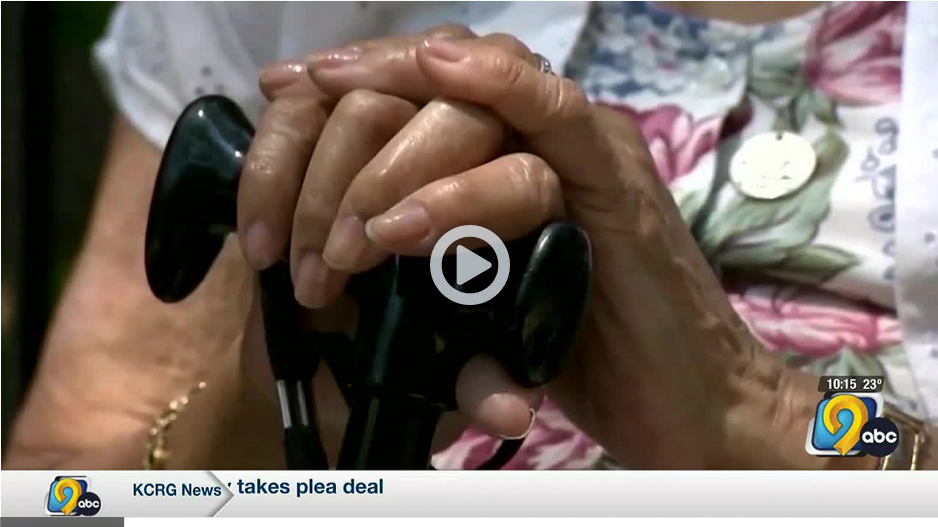
On a sunny day in mid-April, we joined Leathers on a trip to see her father at his care facility in Sarasota.
“If we want to go walk out there, are you allowed to walk out?" Leathers asked her father.
"I don’t, I don’t think we can walk out. I mean, you can have visitors," said Ken Leathers.
Too
often, Leathers said those short talks at the picnic table at Ken's
care facility are all the time she gets with her father. That’s because
Ken is the legal ward of a professional guardian, and needs approval to
meet with family.
We spoke with Leathers back at her home in Port Charlotte about the arrangement.
“If
I request to have him come home, I won’t hear anything back. If I do,
it’s not for the time that was requested," said Leathers. “When he is
home, he is happy he’s content and joking, and when he’s not here, he’s
the exact opposite, and it’s really sad."
But you don’t have to take Leather’s word for it. Ken will tell you himself.
“I’ve been here almost 13 years. I want to know what crime I committed, and why am I here?” said Ken Leathers.
It’s not a crime that keeps Ken in Sarasota, it’s a mental illness.
Leathers
said, when she was only 13, her father was diagnosed with paranoid
schizophrenia. He was separated from his wife at the time and needed
care, so the court appointed a guardian to manage his life.
That
was 20 years ago, but Leathers said she still remembers the old Ken. He
was in the Navy, and was a loving father and husband.
“I thought
nothing could ever stop my dad, and to see him just kind of give up hope
is, I don’t know, there’s no other words for it," said Leathers.
For Leathers, there seems to be only one solution.
“I would like to become the guardian," said Leathers.
But after talking with a member of the Florida Guardianship Association, we learned it’s not that simple.
“When
someone has been appointed, unless they’ve done wrong, they either
choose to resign or they continue in that role," said Lance McKinney, an
attorney at the law firm Osterhout and Mckinney in Fort Myers.
McKinney said, in addition to proving the guardian has done something wrong, Leathers would need expert legal advice.
“To
change, it takes lawyers. Even the new family member has to have a
lawyer. All people serving in the guardianship arena have to have
lawyers, because it has a lot of reporting requirements," said McKinney.
And
while Leathers would have to pay for that lawyer herself, the guardian
is legally allowed to use her father’s money to hire representation.
“The
ward pays for their attorney. The side part is, is that they also will
end up paying for the guardian and the guardian’s attorney," said
McKinney.
We also brought the Leathers' case to Marcia Southwick, a
member of an organization advocating for guardianship reform, called
the National Association to Stop Guardian Abuse.
“Somebody shouldn’t have to do all that to get their loved one out of this thing, I mean it’s crazy," said Southwick.
Southwick speaks with people like Ashley Leathers on a daily basis,
and she’s advocating for reform. Right now, her group is pushing states
to adopt the Uniform Guardianship, Conservatorship, and Other Protective Arrangements Act.
“It says you have to consider all the alternatives first, and judges aren’t really doing that," said Southwick.
Right
now only two states, Maine and Washington, have adopted the law, but
even if Florida did the same, it would only help people in the future.
Southwick said, for people in Ken’s situation, there aren’t many options.
“The only way that they’ve been able to get people out basically is through the press," said Southwick.
When we were at Ken's care facility, Ashley asked him directly where he would like to live.
“You’d just rather come home right?" said Ashley Leathers to her father.
"I’d rather come home," said Ken Leathers in response.
As
Leathers continues to work to try to get her father home for good, she
said she’s contacting her legislators, and the Governor’s office.
“There
has to be a better way to resolve issues like this and help people that
are going through similar situations, or to warn them that this could
possibly be you one day," said Leathers.
In reporting on this
story, we did speak with Ken’s guardian, Sylvia Winters. She directed us
to speak with her attorney, Pamela Keller.
Ms. Keller said they
are declining to comment, because they wanted to protect Ken Leathers’
confidential information, but Ashley Leathers submitted a list of
complaints to the court, and just this month, she was provided with a
response from Ms. Winters and Ms. Keller, and provided us with that
document.
In that document, the Ms. Winters and Ms. Keller allege
that Ken Leathers went out to lunch with Ashley on one occasion and “Mr.
Leathers returned to the facility intoxicated.”
Leathers denies that she ever gave her father alcohol.
Ms.
Winters and Ms. Keller said “There have been no infractions by Sylvia
Winters” and they went on to request “Should the complaints of Ashley
Leathers be (again) unfounded, that the court consider assessing the
costs of addressing her recurring complaints upon Ashley Leathers.”
They have asked the court to set up a conference to discuss all of this, and the date for that has not been set.