A retired police dog named Bear has been honoured with the Thin Blue Paw Foundation's Lifesaver Award after saving a missing man’s life during a walk to celebrate his 12th birthday.

Showing posts with label U.K.. Show all posts
Showing posts with label U.K.. Show all posts
Saturday, January 25, 2025
Retired Police Dog Rescues Missing Elderly Man!


Thursday, September 5, 2024
World’s oldest man born in the year of Titanic disaster shares long life secret
by Ellie Ng

John Tinniswood, the world’s oldest living man, has turned 112 at his care home in Southport, Merseyside.
Mr Tinniswood was born in Liverpool on August 26 1912, the year the Titanic sank, and became the world’s oldest living man in April, saying the secret of his longevity is “just luck”.
Asked how he feels to be turning 112, he told the Guinness World Records (GWR): “In all honesty, no different. I don’t feel that age, I don’t get excited over it. That’s probably why I’ve reached it.
“I just take it in my stride like anything else, why I’ve lived that long I have no idea at all.
“I can’t think of any special secrets I have. I was quite active as a youngster, I did a lot of walking. Whether that had something to do with it, I don’t know. But to me, I’m no different [to anyone]. No different at all.”
On what the biggest difference in the world is over the course of his life, he said: “It’s no better in my opinion, or hardly any better, than it was then. Probably in some places it is, but in other places it’s worse.”
On the secret of his longevity, he told GWR it’s “just luck.”
“You either live long or you live short, and you can’t do much about it,” he added.
Beyond eating a portion of battered fish and chips every Friday, Mr Tinniswood said he does not follow any particular diet.
“I eat what they give me and so does everybody else. I don’t have a special diet,” he said.
Mr Tinniswood lived through both world wars and is the world’s oldest surviving male Second World War veteran. He worked in an administrative role for the Army Pay Corps.

In addition to accounts and auditing, his work involved logistical tasks such as locating stranded soldiers and organising food supplies.
He went on to work as an accountant for Shell and BP before retiring in 1972.
A lifelong Liverpool FC fan, Mr Tinniswood was born just 20 years after the club was founded in 1892, and has lived through all eight of his club’s FA Cup wins and 17 of their 19 league title wins.
Mr Tinniswood met his wife, Blodwen, at a dance in Liverpool, and the couple enjoyed 44 years together before Blodwen died in 1986.
Their daughter Susan was born in 1943.
Since turning 100 in 2012, he received a birthday card each year from the late Queen Elizabeth, who was his junior by almost 14 years.
The oldest man ever was Jiroemon Kimura from Japan, who lived to the age of 116 years 54 days and died in 2013.
The world’s oldest living woman, and oldest living person, is Japan’s 116-year-old Tomiko Itooka.
Full Article & Source:
World’s oldest man born in the year of Titanic disaster shares long life secret
Sunday, March 10, 2024
Dog comes to rescue after owner falls through ice
A P.E.I. man credits his dog for coming to his rescue after falling
through the ice on Shipyard Road outside Kensington. Andrew Lorimer
explains how one dog got him into trouble and the other saved the day.

Source:
Dog comes to rescue after owner falls through ice
Monday, February 26, 2024
Care workers caught by hidden camera abusing elderly woman with dementia
Care workers were caught abusing an elderly woman with dementia after her granddaughters installed a hidden camera in her bedroom.
Four carers have been charged with ill-treatment and wilful neglect thanks to footage collected by sisters Danielle and Rebecca Hinsley, who installed the camera in Beryl Wall’s Wolverhampton care home.
They had become suspicious after noting that Mrs Wall’s behaviour had changed and she had bruises on her body.
Source:
Care workers caught by hidden camera abusing elderly woman with dementia
Sunday, September 3, 2023
UK court rules teen with rare disorder incapable of making decisions about care despite begging to live
'I want to die trying to live' the 19-year-old told doctors

By Kristine Parks
A UK court has ruled a 19-year-old critically ill female patient with a rare disorder cannot make her own decisions about continuing her medical care, as her family battles her doctors' desire to stop treatment and pursue end-of-life care.
The teen, whose identity has been anonymized as "ST" by the court, has a rare genetic mitochondrial disease that is progressively degenerative, according to court documents. Her condition is similar to that of Charlie Gard, the infant whose story drew global headlines in 2017. Charlie's parents lost a bid to bring him to the U.S. for an experimental treatment for his critical condition and he died after the hospital withdrew life-saving care after a months-long high profile legal battle.
Despite previously being a student studying for her A-levels (short for advanced levels), the 19-year-old girl has spent the past year in the ICU, dependent on a ventilator and a feeding tube. She requires regular dialysis due to chronic kidney damage from her disease. "ST" is currently fighting the hospital to be allowed to travel to Canada for an experimental treatment to treat her disease.
The Christian Legal Centre, which is advocating for the patient, argues her case is different than Gard's because she is conscious and able to communicate and argue in her defense.
But her doctor believe "ST" is "actively dying" and has no hope of a cure to resume life outside intensive care. They are asking the court to end her dialysis treatments and pursue palliative care instead. The hospital told the court the 19-year-old is incapable of making decisions about her future medical care because she is under the "delusion" that her death is not imminent.
The teen, who comes from a strong Christian family, confessed she realizes the treatment may not help extend her life but wants to keep fighting.
"This is my wish. I want to die trying to live. We have to try everything," she told clinicians, according to court documents.
Her family has spent their entire life savings to treat the girl, the Christian Legal Centre said, and wants to go to the public to raise funds for the expensive treatment, but cannot due to a "transparency order" requested by the hospital which bars reporting any information which might identify "ST", her family, or the hospital.
The girl's family described the long battle with the hospital as "a year of continuous torture" for them.
"Not only are we anxious about our beloved daughter’s fight for survival, but we have also been cruelly gagged from being able to speak about her situation. We are not allowed to ask people for prayers or for help which she desperately needs. It is a matter of life and death for our daughter to raise money for treatment in Canada, so these arbitrary reporting restrictions are literally killing her," they said via legal representation.
In court this week, a judge determined the teen "is able to communicate reasonably well with her doctors with assistance from her mother and, on occasion, speech therapists." Two psychiatrists assessed the teen was capable of making decisions about her future care for herself.
However, the judge said that, "ST" was mentally incapable of making decisions for herself because "she does not believe the information she has been given by her doctors." The judge ruled that decisions about ST's further care should be determined by the Court of Protection based on an assessment of her best interests.
"We are shocked to be told by the judge that our daughter does not have capacity to make decisions for herself after all the experts have said that she does. We are very distressed by this injustice, and we hope that, by Jesus’s grace, this will be corrected on appeal," the family of the patient said.
Andrea Williams, the Chief Executive of Christian Legal Centre, blasted the transparency order and called the case "profoundly disturbing."
"This profoundly disturbing case demonstrates the urgent need for an overhaul into how end-of-life decisions are made in the NHS and the Courts," she said.
"What can be more natural or rational for a seriously ill 19-year-old than to leave no stone unturned and to take every chance of survival? ST has wanted to tell her story to the world in order to try and access further treatment but has been prevented from doing so by the ironically named Court of Protection," she said in a statement.
The NHS did not respond to a request for comment.
Full Article & Source:
UK court rules teen with rare disorder incapable of making decisions about care despite begging to live
Wednesday, May 3, 2023
Hidden camera reveals abuse by care home staff of dementia patient Ann King
When Ann King, 88, faced worsening dementia, her children considered a dozen care homes and carefully picked Reigate Grange, part of the Signature Senior Lifestyle chain, with annual fees close to £100,000.
Within months, however, they began to worry their mother was being neglected as she began asking them if they were going to throw her out of bed, or the window. The family installed a covert camera on King's bedside table that revealed harrowing abuse.
They have shared some of the footage with the Guardian in the hope of exposing such practices; something they say their mother, a former nurse, would have wanted. Signature apologised to the family and insisted the ''reprehensible' behaviour was 'committed by rogue individuals'.
Source:
Hidden camera reveals abuse by care home staff of dementia patient Ann King
Saturday, March 25, 2023
Shelter Dog Rescues Elderly Owner Shortly After Getting Adopted: 'She Really Is Our Hero'
Ruby, the German shepherd/Labrador Retriever mix, brought help to her owner when the man fainted and fell into a ditch
By Kelli Bender
 |
| Photo: Courtesy Dogs Trust |
After her owner saved her life by adopting her from an animal shelter, Ruby the rescue dog returned the favor and saved her new pet parent.
According to Dogs Trust Salisbury, Peter Bradley and his partner Debbie Ackers from Dorset, England, recently adopted Ruby from the U.K. animal rescue.
It didn't take long for the 5-year-old German shepherd/Labrador retriever mix to prove her worth to her new pet parents. Shortly after her adoption, Ruby and Bradley were out on a walk when Bradley fainted due to low blood sugar.
Bradley fell to the ground and into an 8-foot-deep watery ditch, where he could not get up. Following the incident, Ruby flipped to hero dog mode and stayed beside Bradley while barking for attention.
"I woke up and had no idea where I was or what had happened. I could
feel my boots filling up with water but could not find the strength to
move. I could hear Ruby barking; she was making sure someone found me;
that is a sure thing. Once I found some strength, I tried to climb out,
but I could not as the sides were wet," Bradley said in a statement
recounting the accident.
 |
| Photo: Courtesy Dogs Trust |
Ruby's loyalty and quick thinking worked; someone nearby heard her barking and showed up to check in on the commotion.
"If Ruby had not barked as she did, I could have been there for an awfully long time without anyone knowing I was missing," the man added.
Bradley got out of the ditch with help from those who responded to Ruby's barks. Not long after he fainted and fell, Bradley fainted again, and once again, Ruby stayed by his side.
"I must have fainted again at home, and the next thing I knew, my friend was beside me. He found me out like a light and Ruby lying over me. He called paramedics," Bradley explained.
"Ruby continued to protect me and let the paramedics assist once she knew they were there to help. I did not want to go to the hospital, so thankfully, the nurses treated me at home instead. With the nurses and Ruby continuing to look after me, I am much better now," he added.
After an eventful few weeks with Ruby, Bradley does not doubt that he and the dog are meant to be.
"Ruby has bonded with me and Debbie so well, and it feels like she has always been in our lives. We walk her every day and feel safe with her by our side," Bradley said.
"She really is our hero."
While Ruby has found her home, Dogs Trust Salisbury has plenty of hero pooches searching for families, which animal lovers can learn more about at the rescue's website.
Full Article & Source:
Shelter Dog Rescues Elderly Owner Shortly After Getting Adopted: 'She Really Is Our Hero'
Sunday, February 26, 2023
Researchers Take a Major Step in Alzheimer’s Treatment Through Blood Vessels
By Ergil Ermeno
Initial findings of Alzheimer’s have led to a discovery that it only affects the brain cells. The disease results from a plaque formed by an Amyloid-beta protein, which damages brain cells. However, recent studies have shown that blood vessels are also affected, but reasons are yet to be discovered. It was revealed that blood vessels in the brain undergo changes that may be utilized as a path for new drugs to treat the disease.

The study is led by a team of researchers from the University of Manchester. Their findings are published in an online journal, Proceedings of the National Academy of Sciences. According to the team’s investigation, a smaller version of the protein called Amyloid-β 1-40 clogs the small arteries, which causes irregular blood flow. Due to plaque formation, the brain cannot receive sufficient nutrients to function well. The small arteries that allow blood flow are called pial arteries. These arteries are found on the brain’s surface, which controls blood and oxygen supply. Insufficient blood and oxygen in the brain lead to memory loss.
“To date, over 500 drugs have been trialed as a cure for Alzheimer’s disease. All of them have targeted the nerves in the brain, and none of them have been successful. By showing exactly how Alzheimer’s disease affects the small blood vessels, we have opened the door to new avenues of research to find an effective treatment,” Dr. Adam Greenstein shared. He is the study’s lead researcher and a Clinical Senior Lecturer in Cardiovascular Sciences at the University of Manchester.

Older mice were the subject of their study. After conducting observations, the team found out that mice with Alzheimer’s with too much Aβ1-40 have narrower pial arteries than healthy mice. The narrowing of arteries is caused by Aβ 1-40 switching off a protein called BK in cells lining blood vessels. A BK normally functions when it signals the arteries to widen. The data was gathered by an experiment including BK and Aβ 1-40. Researchers exposed healthy pial arteries for one hour in Aβ 1-40 and then measured signals brought by BK protein. Afterward, it was confirmed that Aβ 1-40 weakened the signals that led to narrowed blood vessels.
“This research is an important step forward in our understanding of Alzheimer’s disease. More than half a million people in the UK are living with the condition, and that number is set to rise as our population gets older. These findings could lead to a desperately needed treatment for this devastating condition,” says Professor Metin Avkiran, Associate Medical Director at the British Heart Foundation. The team is now finding out which part of Aβ 1-40 damages BK protein. These discoveries will be the foundation of newly developed drugs that could help prevent people from acquiring Alzheimer’s.
Full Article & Source:
Researchers Take a Major Step in Alzheimer’s Treatment Through Blood Vessels
Monday, February 20, 2023
High court judge ‘deeply frustrated’ by NHS delays in suicidal girl’s care
12-year-old has been held alone in a locked, windowless room for three weeks because doctors disagree on her diagnosis
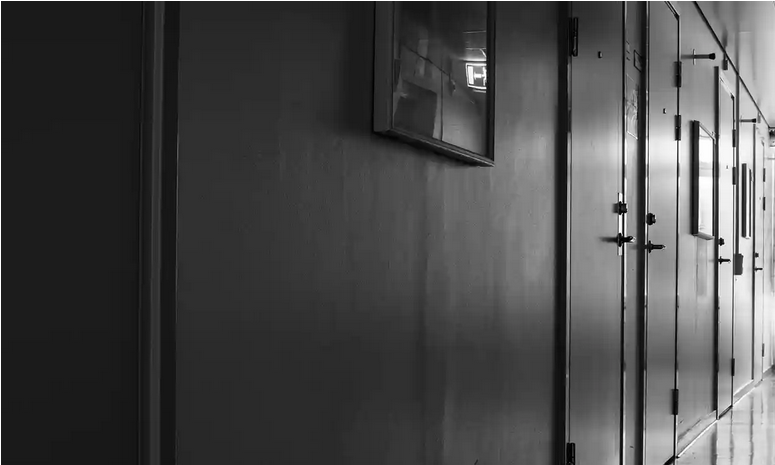 |
| An NHS hospital corridor. The delays caused Mrs Justice Lieven to tell North Staffordshire combined healthcare NHS trust: ‘You are testing my patience.’ Photograph: Anki Hoglund/Alamy |
by Louise Tickle
A high court judge has expressed her “deep frustration” at NHS delays and bureaucracy that mean a suicidal 12-year-old girl has been held on her own, in a locked, windowless room with no access to the outdoors for three weeks.
In a hearing on Thursday, Mrs Justice Lieven told North Staffordshire combined healthcare NHS trust “you are testing my patience”, after she heard that a proposal to move Becky (not her real name), could not progress until a planning meeting that would not be held until next week, and that a move was not anticipated until 2 March.
Three sets of doctors at the hospital trust have disagreed as to Becky’s diagnosis; at her most recent assessment doctors said she was not eligible to be sectioned, which would trigger the protections provided by the Mental Health Act, because her mental disorder was not of the “nature and degree” as to warrant her detention.
In the absence of medical consent to section her, and because of previous incidents of self-harm including an attempt to throw herself from a building on to a motorway, judges have decided Becky must be deprived of her liberty by court order for her own protection.
Becky has been held in a hospital seclusion room since 27 January, her only human contact via a hatch in the door. All parties to the case agree that her deterioration while in hospital is due at least in part to her prolonged isolation in a room that has fewer home comforts than a prison cell.
The idea of moving Becky to a paediatric mental health unit, requiring renovations to make it suitable for her care, had “only recently been floated”, counsel for the trust told the court, “and unfortunately public bodies are required to go through a bureaucratic and procurement process”.
In a robust exchange, the judge demanded: “Where’s the urgency in this … I cannot believe that the life and health of a 12-year-old girl is hanging on an issue of NHS procurement, when you cannot tell me what it is you’re trying to procure.
“If the delay is procurement, I’m not having it,” Lieven continued. “I will use the inherent jurisdiction to make an order. We have a 12-year-old child in a completely inappropriate NHS unit for about three weeks, and it’s suddenly dawned on your client that ‘actually we’ll put her in a Tier 4 unit and we might have to do some [building] work.’”
Sometimes, the judge said, “public bodies have to move faster”.
The trust told the court that cost issues were not a consideration.
When asked to return her iPad to hospital staff last week, Becky broke it and attempted to swallow the glass. After being subjected to what the local authority described as “full restraint” in the course of which she assaulted staff, Becky attempted to make a ligature with a drawstring from her clothing. She was found huddled under a blanket by hospital staff and required oxygen to save her life.
Warning that Becky’s “risk of deliberate or accidental death is very high”, her guardian, who is appointed by the court, pointed out that the state had a positive obligation to protect her life. She also highlighted the state’s positive obligation to protect Becky’s human right not to be subjected to torture or inhuman or degrading treatment.
In a statement that emphasised the court must keep at the forefront of its mind the legality of Becky’s situation, the guardian stated her view that the conditions the child was living in “takes to the extreme what is permissible within the boundaries of article 5 [of the European convention on human rights] within which ‘deprivation of liberty’ authorisation operates”.
Becky’s mother is permitted to speak to the media about her daughter’s case thanks to a transparency order made by the judge.
“It’s four weeks tomorrow since I last hugged her,” she said. “I can only stroke her hair and wipe her tears through the hatch. Even now she’s in hospital seclusion she’s been able to attempt her life. I still fear a knock at the door.”
In the UK and Ireland, Samaritans can be contacted on 116 123 or email jo@samaritans.org or jo@samaritans.ie. In the US, the National Suicide Prevention Lifeline is 1-800-273-8255. In Australia, the crisis support service Lifeline is 13 11 14. Other international helplines can be found at www.befrienders.org.
Full Article & Source:
High court judge ‘deeply frustrated’ by NHS delays in suicidal girl’s care
Friday, February 10, 2023
Man charged following assault on elderly woman
by Lewis Finney
 |
| Man charged following assault on elderly woman (Image: Newsquest) |
A 27-year-old man has been charged following the assault of an elderly woman in Burnley yesterday.
Joshua Simmons, of Low Bank, Burnley, has been charged with grievous bodily harm with intent and a racially aggravated public order offence.
His victim, a woman in her 70s, suffered head and facial injuries after being knocked to the ground on Market Street at around 12.15pm outside New Look on Market Square yesterday, Friday February 3.
A spokesperson for Lancashire Police said: "Following consultations with the Crown Prosecution Service, we have charged Joshua Simmons, 27, of Low Bank, Burnley, with section 18 causing grievous bodily harm with intent and a racially aggravated public order offence.
"He has been remanded to appear before Blackburn Magistrates Court on Monday.
"The investigating team of officers would like to thank the public’s response and help with this case."
Full Article & Source:
Man charged following assault on elderly woman
Tuesday, January 3, 2023
Hospitals in England taking care of record number of patients
by Pamela Duncan and Matthew Weaver
Across country last month, almost 14,000 people were ready to be discharged but could not be sent home or into care
 |
| Hospitals in the south-west, south-east and north-west of England are taking care of a record number of patients. Photograph: Peter Byrne/PA |
More people could be spending the time between Christmas and new year in hospital in parts of England this year than at any time in the past decade, as NHS trusts struggle to find social care places for patients medically fit for discharge.
The latest figures for December to date show an average of 94,200 patients were in hospitals across England, more than 93,000 of them in acute settings, the highest in seven winters.
Hospitals in the south-west, south-east and north-west, the areas with the highest proportion of medically fit patients who cannot be discharged due to an acute lack of social care, are taking care of a record number of patients.
The chief executive of NHS England, Amanda Pritchard, admitted the health service could be facing the “most challenging winter in our history”, even worse than the height of the pandemic.
In a Christmas thank you message to staff she said: “I always thought that, difficult as those initial waves of Covid were, and they really were, actually it would be dealing with the ongoing pressures, that could be even tougher – that combination of recovering services whilst also dealing with continuing Covid and everything else that winter throws at us.
“We’re facing record demand for many services from GP services, to mental health services and of course, urgent and emergency care. But despite these pressures, NHS staff are rising to the challenge every single day.”
The figures, which reflect the situation in the weeks to 18 December, show the scale of the challenge facing trusts, which were asked to undertake a “rapid discharge of medically fit patients” before last week’s ambulance strikes.
The NHS is experiencing a winter of discontent, with strikes by nurses and ambulance staff and multiple pressures affecting the service, including record ambulance delays, ever growing waiting lists and thousands of beds required for flu patients, as the virus has begun circulating widely after the Covid pandemic.
Across England 13,697 patients were ready to be discharged but could not be sent home or into other care settings in the week to 18 November, according to the NHS, equivalent to around one in seven people in hospital.
In the same week last year that figure stood at 10,694, meaning the number has risen by more than a quarter (28%) according to figures provided by the NHS.
However, the south-west – where more than one in five patients are stuck in hospital despite being medically fit to leave – is particularly badly affected, with 44% more patients taking up beds than the pre-Covid average.
Almost two-thirds (64%) of the region’s 14 acute hospital trusts had higher occupancy rates than the English average in December, while close to half experienced their highest levels of occupied beds for at least the past decade.
An NHS spokesperson said: “There is no doubt the NHS is under considerable pressure – the latest figures show 19 in 20 beds occupied amid rising numbers of flu cases in hospital and that’s on top of record A&E demand, increasing staff absences and over 13,000 patients each day in hospital despite being medically fit for discharge.
“Thanks to the efforts of staff and our recent drive on this there has been a reduction in the number of delayed discharges within NHS control, and the NHS continues to work closely with social care colleagues to ensure as many patients as possible can make it home in time to spend Christmas and new year with their loved ones.”
The British Medical Association doctors’ union said patients deserved better. Prof Philip Banfield, its chair of council, said: “Christmas should be a time people can spend with their families and loved ones and the thoughts of doctors and nurses will be with those who remain in hospital.”
He added: “With years of chronic underfunding and dreadful workforce shortages across the NHS and social care, this sadly comes as no surprise. There simply isn’t the capacity in the system to efficiently discharge people who could otherwise be cared for at home or in other settings.
“In 2023 the government can’t afford to bury its head in the sand, ignore healthcare workers and expect patients to put up with the NHS, once the envy of the world, collapsing around them.”
The NHS Confederation, which represents hospitals, predicts fewer patients will be kept in beds this Christmas than the figures suggest.
Its chief executive, Matthew Taylor, said: “There will undoubtedly be patients stuck in hospital this Christmas due to unavailability of social care packages, where they could otherwise be moved back home or into a residential setting.
“Some NHS leaders are telling us today that the strikes have led to a slowdown in patients being discharged from hospital. The strikes aren’t helping, but this has been a longstanding issue.
“That said, significant and effective preparatory work went into discharging those who no longer need to be in NHS beds ahead of the strikes. Although there has been a slowdown since the strikes, we think and hope that the situation may be better than what is outlined in these latest figures.”
But Taylor said more investment in social care would be needed to help free up hospital beds in future. He said: “The NHS and social care are working closely together to improve discharge rates but this is an ongoing challenge.
“We welcomed the
government’s recent extra investment in social care, but that now
urgently needs to be converted into more care packages for vulnerable
people who desperately need social care support. Otherwise they will
continue to suffer and the NHS will continue to have too many patients
occupying beds that don’t need to be stuck in hospital.”
Full Article & Source:
Hospitals in England taking care of record number of patients
Making the care environment more dementia-friendly
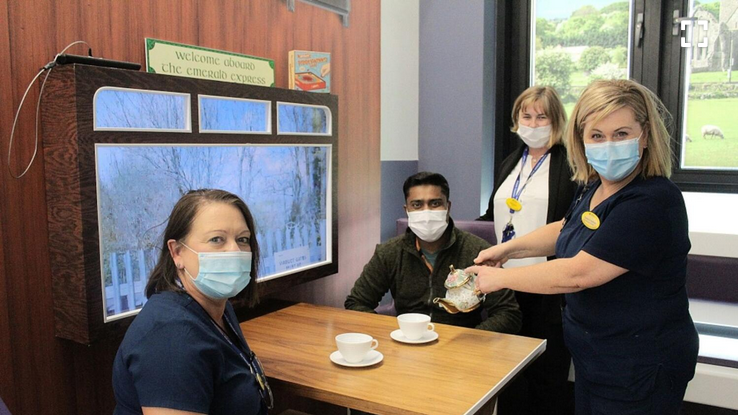 |
| Pictured on a simulated train journey on Medical Ward 1 in Nenagh Hospital were Siobhan Toomey, CNS Patient Flow, Nenagh Hospital; Vimal Mathai, CNS ICPOP, Thurles; Celia Dwan, ADON, Nenagh Hospital, and Elaine O’Sullivan, CNM2 Medical Ward 1, Nenagh Hospital. This quality improvement project for people uses reminiscence therapy to improve the experience of patients with dementia in Nenagh. |
Nenagh Hospital's innovative train project
A project focused on the needs of people with dementia is improving the patient experience at Nenagh Hospital.
Patients are invited to take a simulated train journey through the interactive RemPods platform, which has been in use in care homes and hospitals in the UK for a number of years.
An LCD screen displays footage of rolling countryside, pulls through tunnels and into stations along the journey, facilitating reminiscence to reduce anxiety and stimulate positive memories in older patients with cognitive impairment.
Vimal John Mathai, Clinical Nurse Specialist in the Integrated Care Programme for Older Persons in Thurles, said this quality improvement project for Nenagh met a need where acute hospital environments were not as well set up for persons with dementia as care homes.
Mr Mathai has a specialist interest in dementia and has led out on the RemPods/ Reminscence Therapy project in Nenagh.
“A quarter of all patients admitted to Nenagh Hospital have dementia. I have worked in Nenagh myself and all the team there are focused on what we can do to improve things for this older group of patients. It’s fair to say that the clinical environment in an acute hospital is not as dementia-friendly as in a nursing home, for example.
“Admission to an acute hospital can be confusing and frightening for a person with dementia. Even though they need to be in hospital, the stay might also have a negative impact on their physical, mental and cognitive abilities. How acute hospitals are designed very often doesn’t meet the needs of people with dementia. Signage can be confusing; lighting can be poor; the environment can be cluttered with inadequate space for visiting,” Mr Mathai said.
TRAIN PROJECT
The train project in Nenagh, which has now opened on Medical Ward 1, focuses in particular on the different care needs of people with dementia. The initiative has been supported by management and ward staff, including ward manager, Elaine O’Sullivan.
Patients will board the train while having a meal, while welcoming a visitor for hospital or while waiting to be transferred or discharged. Feedback has been very positive from patients, families and staff to date, Mr Mathai said.
Through the RemPods platform, patients are encouraged to share their life experiences, memories and stories from the past. This is known as reminiscence therapy.
“Typically, a person with dementia is more able to recall things from many years ago than recent memories, so reminiscence draws on this strength. In many cases, recent memories deteriorate first for people with Alzheimer's and other forms of dementia. By sharing memories from the past through reminiscence therapy, people with dementia can develop more positive feelings while reducing stress and agitation,” explained Mr Mathai.
“Reminiscence therapy encourages discussion of memories that have been stored away. It helps stimulate those memories through sensory organs. This causes the brain to react differently than usual. Those reactions can impact emotions or behaviour. Studies have shown that reminiscence therapy can help older adults become more engaged.”
Commenting on the new project, Prof Michael
Watts, Consultant Physician, UL Hospitals Group, said: “This is yet
another example of Nenagh Hospital adapting to the challenges of
providing care for the patients of UL Hospitals Group. Congratulations
to Elaine, the staff on Medical 1 and to Vimal for all of their work.”
Full Article & Source:
Making the care environment more dementia-friendly
Monday, August 8, 2022
Archie Battersbee: 12-year-old boy dies hours after hospital ends life support against parents' wishes
By Lawrence Richard
A 12-year-old boy who was comatose in the United Kingdom has died after a lengthy legal battle ended with the determination that doctors could remove him from life support.
Archie Battersbee, 12, died at a London hospital around noon on Saturday, about two hours after doctors discontinued treating him. Young Archie has been in a coma since April 7, when he was initially found unconscious in the family’s home.
Ella Carter, the fiancée of Archie's eldest brother, Tom, said the family watched the boy’s final moments.
"He went completely blue,'' she said. "There is absolutely nothing dignified about watching a family member or a child suffocate. No family should ever have to go through what we’ve been through. It’s barbaric."
 |
| Archie Battersbee, 12, died Aug. 5, 2022, after British courts rejected the family’s request to transfer him to a hospice. (Hollie Dance via AP, File) |
Battersbee’s situation became the latest legal feud that pitted the will of parents against the advice of doctors.
His parents advocated for keeping their son alive by extending treatment or moving Archie to a hospice, while doctors said it was in Archie’s best interest to be taken off of life support.
Doctors at the Royal London Hospital argued Archie was brain-stem dead and should be allowed to die. They pushed to end the treatment that kept him alive, which included artificial respiration, medication to regulate his bodily functions and round-the-clock nursing care.
The hospital also testified that Archie’s condition was unstable and that moving him would hasten his death.
His family objected and said they would not give up hope.
On Friday, High Court Judge Lucy Theis sided with the doctors, against the parents' wishes, ruling Archie should remain in the hospital and for his treatment to be withdrawn.
He died hours later.
 |
| Journalists' cameras are lined up at the entrance to the Royal London Hospital in London, Friday, Aug. 5, 2022. (AP Photo/Frank Augstein, File) |
"Their unconditional love and dedication to Archie is a golden thread that runs through this case,″ Theis wrote in her decision. "I hope now Archie can be afforded the opportunity for him to die in peaceful circumstances, with the family who meant so much to him as he clearly does to them." The European Court of Human Rights refused to intervene in the case.
A tearful Hollie Dance, Battersbee’s mother, said she was "the proudest mum in the world.''
"Such a beautiful little boy and he fought right until the very end,'' she added outside of the Royal London Hospital in Whitechapel, following the boy's death.

Hollie Dance, mother of 12-year-old Archie Battersbee, speaks to the media outside the Royal London Hospital, on Aug. 3, 2022. (James Manning/PA via AP)
The case continues a widely debated topic in the U.K. around how such cases should be handled and if the court should have any say in the situation — or if such disagreements should be decided away from the courts.
In 2017, a legal battle over the life of Charlie Gard, an infant with a rare genetic disorder, made headlines around the world. In the case, the will of the parents was again pitted against those of medical professionals. The parents pushed for their son to undergo experimental treatment before a court sided with doctors, who argued for ending life support.
British law allows for courts to intervene when parents and doctors disagree on a child's medical treatment, and a judge is then tasked with determining the best interests of the child.
Battersbee has been unconscious since April 7. His parents believe he may have been taking part in an online challenge that went wrong.
A viral "blackout challenge" on TikTok has led to the deaths of other
children, including a 9-year-old girl in Wisconsin and an 8-year-old
girl in Texas, whose parents are suing the social media platform.
Full Article & Source:
Thursday, February 4, 2021
‘It’s almost like he slept through the whole pandemic’: Teen in coma for 10 months wakes up

Joseph Flavill, 19, was in a serious car accident that left him with a traumatic brain injury on March 1 of last year — before much of the world locked down to the COVID-19 pandemic, Staffordshire Live first reported. When Flavill awoke nearly 11 months later, the teen had no knowledge of the pandemic.
“It’s almost like he slept through the whole pandemic,” his aunt, Sally Flavill-Smith, told Staffordshire Live.
Flavill caught COVID twice while in the hospital, once while in a coma and a second time while awake, though he recovered each time.
“When he comes out of this, life will not be as he knows it at all,” another aunt, Kate Yarbo, told CNN. “How do you describe it? I think it’s going to be a shock. We’re all still processing it — I’m not sure you can actually ever describe how this pandemic feels.”
Since awaking, Flavill’s “progress has been rapid,” according to CNN. Though he can’t yet speak clearly, he’s beginning to gain control of his limbs and is starting to laugh at jokes.
“We are also very excited to report that Joseph has started to emerge slowly from his stage-two coma, and is beginning to respond to simple commands and stimulation,” the family wrote on the teen’s recovery website, Joseph’s Journey.
They have raised nearly $40,000 to help with costs associated with Flavill’s care after he leaves the hospital.
Full Article & Source:
Wednesday, June 10, 2020
It feels impossible to protect residents in our care home if we loosen lockdown
 |
| ‘We have watched the devastating consequences of the virus in other homes with horror.’ Robin Hall at the Home of Comfort nursing home in Southsea, Hampshire. Photograph: Simon Czapp/Solent News & Photo Agency/Solent News |
As
the lockdown rules loosen, friends and family members of
our nursing home residents, who have been so supportive through this
crisis, are nurturing hopes of a relaxation in our visiting policy.
It was on 17 March – only 11 weeks ago, though it feels like a lifetime – that we decided with the heaviest of hearts to close our doors to almost all visitors. When the country went into lockdown that decision seemed a prudent, if painful one; the home is normally full of the laughter and joy of up to 30 residents and their visitors, who are usually such an important presence. Deprived of their company, many of our residents have become more anxious, confused or both, in spite of our best efforts to maintain connections using technology.
It was on 17 March – only 11 weeks ago, though it feels like a lifetime – that we decided with the heaviest of hearts to close our doors to almost all visitors. When the country went into lockdown that decision seemed a prudent, if painful one; the home is normally full of the laughter and joy of up to 30 residents and their visitors, who are usually such an important presence. Deprived of their company, many of our residents have become more anxious, confused or both, in spite of our best efforts to maintain connections using technology.
By the end of March, 16 out of 58 staff members were isolating because they or a family member was sick, or shielding, meaning
it has also been a day-by-day struggle to make sure we have had enough
people on duty, not to mention supplies of food and personal protective
equipment (PPE). Thankfully our local authority has provided support on
all fronts, which helped us through the most turbulent initial weeks,
and we’ve since managed to find new suppliers and recruit new
staff alongside those who have been able to come back to work.
We have watched the devastating consequences of
the virus in other homes with horror. Our own numbers make painful
reading, with 11 deaths in as many weeks, but we think we have actually
been lucky; most of those have been the culmination of a long illness,
or new admissions to us from our local hospital for end-of-life care.
Initially only three residents were tested so we won’t know for sure –
and we try not to drive ourselves crazy wondering – but, although one of
those three positive patients has sadly died, the other two, including a
lady in her 90s, appear to have made a full recovery.
The
rollout of the promised weekly testing of all care home residents and
employees is painfully slow. Our first full set of tests arrived on
Sunday 17 May, with a 30-hour window of opportunity to carry out tests
before the prearranged collection; miraculously we managed to test 72
people, including all but three of the staff who weren’t on duty over
those two days. When the results arrived two days later, a resident and a
member of staff – neither of whom had experienced any symptoms – had
tested positive. By chance, that staff member hadn’t been at work for a
few weeks, but it brought home how important testing is, and how badly
we need to repeat it regularly. Disturbingly, we still have no idea when
that will be possible.
Current guidance states that the PPE that staff wear will protect them from transmitting the virus, and we can only hope this is the case, because our converted premises, which give us a lovely homely atmosphere, make social distancing impossible – even if two people washing and dressing the same resident could keep two metres apart. The guidance at least means we won’t lose half the staff team as the result of a single positive test – as the PPE is supposed to protect us – but given how Covid-19 has spread in other homes, all the PPE and infection-control processes in the world don’t give us confidence that if we have another case, we will be able to contain it.
And that is why, despite the easing of restrictions, and the government’s seemingly spontaneous last-minute decision to allow the “extremely vulnerable” to leave their houses, we are not yet comfortable with even the most socially distanced of visits. The only piece of official guidance, issued to care homes on 15 May, advises that face-to-face visits should only take place at the very end of a resident’s life, and under strict conditions (no more than two visitors, no kissing, PPE to be worn). It hasn’t been updated, leaving homes to navigate this minefield for themselves.
Current guidance states that the PPE that staff wear will protect them from transmitting the virus, and we can only hope this is the case, because our converted premises, which give us a lovely homely atmosphere, make social distancing impossible – even if two people washing and dressing the same resident could keep two metres apart. The guidance at least means we won’t lose half the staff team as the result of a single positive test – as the PPE is supposed to protect us – but given how Covid-19 has spread in other homes, all the PPE and infection-control processes in the world don’t give us confidence that if we have another case, we will be able to contain it.
And that is why, despite the easing of restrictions, and the government’s seemingly spontaneous last-minute decision to allow the “extremely vulnerable” to leave their houses, we are not yet comfortable with even the most socially distanced of visits. The only piece of official guidance, issued to care homes on 15 May, advises that face-to-face visits should only take place at the very end of a resident’s life, and under strict conditions (no more than two visitors, no kissing, PPE to be worn). It hasn’t been updated, leaving homes to navigate this minefield for themselves.
Portsmouth
has had lower infection and death rates than many parts of the country,
but as people start to mix we know that the local infection rate is
likely to go up, making it more likely that any visitor brings more than
they intend with them. It is a short step from there to another
outbreak in the home, and we can’t count on being so lucky next time.
So for the time being, we are keeping our doors closed and trialling meetings between a resident inside the conservatory and a visitor outside who will be able to see and speak to each other through the glass double doors. We are also puzzling over how to provide chiropody, and when hairdressing and worship can resume in the home.
In spite of the severe symptoms some of our colleagues suffered, we have for the most part stopped worrying about becoming ill ourselves. Protecting our residents feels like our most important task. It also feels like an impossible one.
So for the time being, we are keeping our doors closed and trialling meetings between a resident inside the conservatory and a visitor outside who will be able to see and speak to each other through the glass double doors. We are also puzzling over how to provide chiropody, and when hairdressing and worship can resume in the home.
In spite of the severe symptoms some of our colleagues suffered, we have for the most part stopped worrying about becoming ill ourselves. Protecting our residents feels like our most important task. It also feels like an impossible one.
Full Article & Source:
It feels impossible to protect residents in our care home if we loosen lockdown
Tuesday, September 10, 2019
Lonely Lives: Alarming Number Of Seniors Go Entire Week Without Talking To Anyone

According to the survey of 1,896 seniors over 65 in the United Kingdom, more than one in five (22%) will have a conversation with no more than just three people over the span of an entire week! That translates to nearly 2.6 million elderly folks who don’t enjoy regular human contact on a daily basis. Perhaps most alarming though is researchers say an alarming 225,000 individuals will go a week without talking to anyone face-to-face.
“A friendly ‘hello’ or ‘how are you?’ is something most of us take for granted – it’s just part of every day life, but these latest figures show that hundreds of thousands of older people in the UK will spend today and the rest of this week alone, with no one to share even a few simple words with,” says Caroline Abrahams, charity director at Age UK, which partnered with Cadbury Dairy Milk to commission the research, in a statement.
The survey also revealed that 38% of seniors admit to feeling lonely at times as they’ve aged, with 12%, or about one in eight, agreeing that loneliness has kept them from leaving their home.
“Loneliness is a huge problem because retirement, bereavement and ill health mean many older people find they are spending a lot less time enjoying the company of others than they’d like,” says Abrahams. “Loneliness can affect your health, your wellbeing and the way you see yourself – it can make you feel invisible and forgotten.”
About 40% of seniors say they’d feel more confident to head out each day if they knew their neighbors. Just the thought of someone stopping to chat with them brightens their outlook: 54% of respondents agree that even a short conversation with a neighbor or acquaintance would greatly improve their day overall. And a quarter of older adults say it makes them feel good when someone smiles or acknowledges them while waiting in line at places like the bank or grocery store. One in five would be thrilled if someone stopped to ask them how their day had gone.
Meanwhile, another survey of 2,000 people ages 16-45 in the UK shows that 55% of younger folks admit to worrying about being lonely in their elder years. With that in mind, two-thirds of this segment say they’re willing to do something to help boost the confidence of a lonely senior, but 37% worry that such a gesture wouldn’t be well-received. Another 30% feel too shy to spark up a conversation with seniors, 27% admit they aren’t sure how to help, and a quarter say they’re simply too busy themselves.
To help in that area, Cadbury and Age UK have launched a new campaign called “Donate Your Words” to help cheer up lonely seniors. The campaign encourages people to help fight loneliness by pledging to stop and chat with elders in their communities.
The surveys were conducted on behalf of the campaign by OnePoll.
Full Article & Source:
Lonely Lives: Alarming Number Of Seniors Go Entire Week Without Talking To Anyone
Sunday, September 8, 2019
This Nursing Home Requires Night Staff to Wear Pajamas to Encourage the Elderly to Sleep

Caring for the elderly is a fulfilling but sensitive duty. Nursing homes have to constantly devise new means to keep the elderly comfortable and happy. It’s not always easy to get them to follow a daily routine that’s suitable for their current state of health. A lot of elderly people who are admitted into care facilities suffer from dementia, with Alzheimer’s accounting for about 60 to 80 percent of all cases [1]. They suffer a decline in memory and the inability to perform daily functions efficiently. They are sensitive to certain sights, sounds, and environmental conditions. Dementia can’t be cured but can be managed by therapy and changes to lifestyle.
Administering sedatives every day can be potentially harmful to the patients, and it’s much safer to come up with natural means to get them to sleep at the right time.
Everyone gets in their jammies
The Old Vicarage Nursing Home in the United Kingdom came up with a very simple idea to help their beloved patients sleep easier, and it’s been working effectively so far. The care home works on with the Butterfly Model of Care, a system that’s focused on empathy and where the emotions and feelings of the aged residents are considered before everything else. The staff is required to dress in warm clothes to avoid provoking, terrifying or upsetting the elderly.
“The uniform requirements are that I give staff 30 (pounds) to buy a range of casual clothing which may not be abusive or have scary images on them,” said Kamal Siddiqi, owner of the care home to Hello Care [3]. “Night staff buy dressing gowns and pajamas. The idea came from staff attending training by David Sheard’s Dementia Care Matters model of care.”It’s easier for the residents to get ready for sleep when the staff is doing the same. They don’t have to be cajoled or persuaded so much. The pajama strategy serves as a reminder that it’s time for everyone to get in their warm, comfy sleepwear. Psychological therapy is part of the care routine for dementia patients, and visual cues are great for helping patients perform daily activities more easily.
A cardboard statue of a man brushing his teeth in the morning, a wallpaper of a lady at the sink washing her hands after using the bathroom, and playing a short clip of people getting into soft, comfy beds when movie night is nearly over – visual cues are a powerful way to help patients suffering from memory decline to live a more normal life.
Happy in their new home
According to Kamal, the no-uniform policy downplays the unhappy feeling of being in an institution on the elderly, enabling them to relate better with the staff.
“Wearing casual clothing is part of a method of de-institutionalizing the environment in which the residents live,” said Kamal. “It means that the care home doesn’t feel like an institution for both staff and residents, which helps to reduce the kind of behavior that can occur in an institutional environment. We found it was easier to encourage residents to go back to bed in the evening when staff were wearing dressing gowns and pajamas.”Everyone at the care home, both staff and residents took to the idea immediately and fell into place with it. The families of the elderly were happy with the administration for constantly working out ideas to keep their loved ones happy and healthy.
Care homes don’t necessarily have to go for high-end technology to help the elderly get around better. If the funds are available, there’s nothing wrong with bringing in soft, human-like robots to cradle the residents when it’s time to sleep (the care facility would then become ridiculously expensive). However, the simplest and most cost-effective changes can go a long way to make life better for everyone. Something as minor as wearing a pair of pajamas during the night shift is cue enough for the residents to go get ready and turn in for the night.
“I would say the resident’s favorite thing about the old vicarage is the range of activities we do and the fact it doesn’t feel like a care home,” said Kamal. “The staff enjoy trying new ways of making the residents feel better and happier.”
Full Article & Source:
This Nursing Home Requires Night Staff to Wear Pajamas to Encourage the Elderly to Sleep
Wednesday, July 3, 2019
These commonly prescribed medications may increase your risk of dementia, study finds

The drugs — particularly antidepressants, bladder antimuscarinics, antipsychotics and antiepileptic drugs — resulted in nearly "50% increased odds of dementia," according to the observational study published Monday in the peer-reviewed JAMA Internal Medicine journal.
Anticholinergic drugs help contract and relax muscles, according to Mayo Clinic. They can also be used to treat ulcers and prevent nausea. This is done by blocking a neurotransmitter in the brain, acetylcholine, from entering the nervous system.
Doctors prescribe these kinds of drugs to treat a variety of conditions, including chronic obstructive pulmonary disease, bladder conditions, allergies, gastrointestinal disorders and symptoms of Parkinson's disease.
The risk is only associated with 1,095 daily doses within a 10-year period, which is equivalent to an older adult taking a strong anticholinergic medication daily for at least three years.
"The study is important because it strengthens a growing body of evidence showing that strong anticholinergic drugs have long term associations with dementia risk," said study author Carol Coupland, professor of medical statistics in primary care at the University of Nottingham.
"It also highlights which types of anticholinergic drugs have the strongest associations. This is important information for physicians to know when considering whether to prescribe these drugs," she told CNN. "This is an observational study so no firm conclusions can be drawn about whether these anticholinergic drugs cause dementia."
The study warns people against stopping any of the medications listed without consulting their doctors.
The researchers found no significant increases in dementia risk associated with antihistamines, skeletal muscle relaxants, gastrointestinal antispasmodics, antiarrhythmics, or antimuscarinic bronchodilators, but associations were found among other classes of anticholinergic drugs.
An estimated 47 million people worldwide were living with dementia in 2015, while in the United States around 5.7 million people have Alzheimer dementia, according to the study.
Anticholergenic drugs include, but are not limited to, Artane, Bentyl, Oxytrol, Neosol, Symax and Vesicare. A full list can be found at Mayo Clinic.
Full Article & Source:
These commonly prescribed medications may increase your risk of dementia, study finds
Wednesday, December 5, 2018
The number of homeless pensioners is the highest it’s been for a decade

A total of 2,520 people aged 60 and over were classed as ‘without a safe and secure home last year’ – the highest number for over a decade.
The government figures for January to March of this year also uncovered a 54 per cent rise in single parent families forced to turn to temporary accommodation.
There has been a three per cent increase on the number of families waiting for a permanent place to stay with 79,880 altogether in hostels and B&Bs. This figure has risen by 56 per cent since the onset of austerity measures in 2010.
The total number of those living in B&Bs had actually fallen by 10 per cent to 5,940, but is still up a staggering 190 per cent from the levels seen eight years ago.
Responding to the figures, Polly Neate, Shelter CEO, said: “It’s clear that our country is in the firm grip of a housing crisis as these figures starkly show, with older people and single parents both bearing the brunt. If we want to protect more people from the ravages of homelessness, the government must come up with a bold new plan for social housing and in the short term, ensure housing benefit covers the actual cost of rents.”
But it is not just the elderly and single-parent families that are at risk of homelessness. The statistical release also highlighted non-violent breakdown of a relationship with a partner, naming it the fifth-most common reason for loss of last settled home.
Chris Sherwood, chief executive at relationship support charity Relate, has proposed for councils to offer free relationship counselling to tackle the issue.
“It’s good to see local authorities taking positive steps to prevent homelessness
such as finding temporary accommodation for at risk groups, but we also
need to pay closer attention to the root causes,” he said. “With non-violent relationship breakdown
being the fifth most common cause of homelessness, local authorities
should consider offering free relationship counselling to families and
individuals who may be at risk if they haven’t already done so.
Full Article & Source:
The number of homeless pensioners is the highest it’s been for a decade
Friday, May 18, 2018
82-Year-Old Woman With Dementia Gets Her Memory Back After Changing Her Diet
Recently, an 82-year-old woman who
suffered from dementia, who couldn’t recognize her own son has
miraculously got her memory back after changing her diet.
Sylvia had lost her memory and parts of
her mind, she had even phoned the police once accusing the nurse who
were caring for her of kidnap.
A change in diet, which was comprised of
high amounts of blueberries and walnuts, has proven to have had a strong
impact on Sylvia’s condition that her recipes are now being shared by
the Alzheimer’s Society.

Sylvia also began incorporating other health foods, including broccoli, kale, spinach, sunflower seeds, green tea, oats, sweet potatoes and even dark chocolate with a high percentage of cacoa. All of these foods are known to be beneficial for brain health.
Mark and Sylvia devised to diet together
after deciding that the medication on it’s own was not enough, they
looked into the research showing that rates of dementia are much lower
in mediterranean countries and copied a lot of their eating habits.
According to Mirror.co.uk“
“She didn’t recognise me and phoned the police as she thought she’d been kidnapped.
“Since my dad and brother died we
have always been a very close little family unit, just me and my mum, so
for her to not know who I was was devastating.
“We were a double act that went everywhere together. I despaired and never felt so alone as I had no other family to turn to.
“Overnight we went from a happy family to one in crisis.
“When she left hospital, instead of prescribed medication we thought we’d perhaps try alternative treatment.
“In certain countries Alzheimer’s is virtually unheard of because of their diet.
“Everyone knows about fish but there
is also blueberries, strawberries, Brazil nuts and walnuts – these are
apparently shaped like a brain to give us a sign that they are good for
the brain.”
There were also some cognitive
exercises that Mark and his mother would do together like jigsaw puzzles
crosswords and meeting people in social situations, Sylvia would also
exercise by using a pedaling device outfitted for her chair.
Mark said,
“It wasn’t an overnight miracle, but after a couple of months she began
remembering things like birthdays and was becoming her old self again,
more alert, more engaged..
“People think that once you get a
diagnosis your life is at an end. You will have good and bad days, but
it doesn’t have to be the end. For an 82-year-old she does very well,
she looks 10 years younger and if you met her you would not know she had
gone through all of this.

The Body’s Ability To Heal Is Greater Than Anyone Has Permitted You To Believe
This story just goes to show how
resilient our bodies really are if given the right environment. Most of
these types of diseases are often related to diet in the first place so
that means that they can indeed be reversed with a proper diet. Sure,
some of them are genetic and you might be a carrier of the gene, but
that is not a guarantee that it will become active, there are things you
can do to minimize the risk. Our health is our greatest wealth. We have
to realize that we do have a say in our lives and what our fate is.
In an article titled, Strong evidence linking Aluminum to Alzheimer’s, recently published in The Hippocratic Post website, Exley explained that:
“We already know that the
aluminium content of brain tissue in late-onset or sporadic Alzheimer’s
disease is significantly higher than is found in age-matched controls.
So, individuals who develop Alzheimer’s disease in their late sixties
and older also accumulate more aluminium in their brain tissue than
individuals of the same age without the disease.
Even higher levels of
aluminium have been found in the brains of individuals, diagnosed with
an early-onset form of sporadic (usually late onset) Alzheimer’s
disease, who have experienced an unusually high exposure to aluminium
through the environment (e.g. Camelford) or through their workplace.
This means that Alzheimer’s disease has a much earlier age of onset, for
example, fifties or early sixties, in individuals who have been exposed
to unusually high levels of aluminium in their everyday lives.”
His most recent study, published by the Journal of Trace Elements in Medicine and Biology in December 2016, titled: Aluminium in brain tissue in familial Alzheimer’s disease, is
one of the many studies that he and his team have conducted on the
subject of aluminum over the years. However, this study in particular is
believed to be of significant value, because it is the first time that
scientists have measured the level of aluminum in the brain tissue of
individuals diagnosed with familial Alzheimer’s disease. (Alzheimer’s
disease or AD is considered to be familial if two or more people in a family suffer from the disease.)
According to their paper, the
concentrations of aluminum found in brain tissue donated by individuals
who died with a diagnosis of familial AD, was the highest level ever
measured in human brain tissue.
Professor Exley wrote:
“We now show that some of the
highest levels of aluminium ever measured in human brain tissue are
found in individuals who have died with a diagnosis of familial
Alzheimer’s disease.
The levels of aluminium in
brain tissue from individuals with familial Alzheimer’s disease are
similar to those recorded in individuals who died of an
aluminium-induced encephalopathy while undergoing renal dialysis.”
He explained that:
“Familial Alzheimer’s disease
is an early-onset form of the disease with first symptoms occurring as
early as 30 or 40 years of age. It is extremely rare, perhaps 2-3% of
all cases of Alzheimer’s disease. Its bases are genetic mutations
associated with a protein called amyloid-beta, a protein which has been
heavily linked with the cause of all forms of Alzheimer’s disease.
Individuals with familial
Alzheimer’s disease produce more amyloid beta and the onset of the
symptoms of Alzheimer’s disease are much earlier in life.”
The First Step Towards Change Is By Raising Awareness
As more and more awareness grows
involving the true causes of these neurodegenerative brain disorders,
the more we can do our part to prevent and even treat them and
hopefully, eventually eliminate things such as aluminum and other
chemicals in our foods to prevent this disease from happening
altogether.
Full Article & Source:
82-Year-Old Woman With Dementia Gets Her Memory Back After Changing Her Diet
Subscribe to:
Posts (Atom)