Showing posts with label visitation restrictions. Show all posts

Monday, December 28, 2020

Now That Grandma Has Been Vaccinated, May I Visit Her?

The start of a mass coronavirus vaccination campaign at U.S. nursing homes has brought hope to many families. But it may be a while before restrictions loosen. Here are answers to common questions.

Credit...Joe Raedle/Getty Images

A watershed moment has arrived for many families: This week health care workers from CVS and Walgreens, under contract from the federal government, will fan out to nursing homes across the country to begin vaccinating residents against the coronavirus. The shots not only will help protect the nation’s elderly and infirm — and the staff who care for them — but they raise the prospect of ending the devastating isolation many residents have felt for months.

Family members are hopeful that before too long, they will return to visiting parents and grandparents, aunts, uncles and other loved ones regularly again. We checked with experts on some common questions.

Probably not in a big way. Restrictions vary by state, and the federal government’s guidance on what it considers safe stands for now. They already allow visits under certain conditions. The Centers for Medicare & Medicaid Services, or C.M.S., recommended in September that outdoor visits with residents be allowed and indoor visits, too, if the facility has been free of cases for 14 days.

Some medical experts have said that those guidelines are too lax and that visits should be severely restricted, even banned. However, some of these experts are now saying that the vaccine changes the equation, somewhat.

“Once all residents are vaccinated, it opens the door for loosening of restrictions,” said Dr. Michael Wasserman, the immediate past president of the California Association of Long Term Care Medicine, a geriatrician and former executive at nursing home chains.

To allow visits, Dr. Wasserman recommends all residents of a nursing home should be vaccinated (unless they have some condition or allergy that would discourage vaccination on medical grounds); all staff members should be vaccinated; and the nursing home should have the ability to ensure that visitors test negative for the coronavirus and have been disciplined about wearing a mask in public settings.

The clinical trials of the Pfizer and Moderna vaccine included people over 65, and results showed it to be safe and to work as well in older people as in younger ones.

“This vaccine has gone through testing and clinical trials to ensure it meets the highest safety standards. It also is safe to get if you already had the virus,” says a campaign to encourage people to get the shots by the American Health Care Association and National Center for Assisted Living, a combined trade group representing nursing homes and assisted-living communities.

The lead administrator for C.M.S., Seema Verma, reinforced the confidence in the shot for older patients, including those with health conditions, in a statement last week: “I urge states to prioritize nursing homes and vulnerable seniors in their distribution of the vaccine.”

The point is echoed by Dr. Sabine von Preyss-Friedman, chief medical officer of Avalon Health Care Group, which operates nursing homes, who said the new vaccines appear “safe and effective.”

The Pfizer and Moderna vaccines both require two injections — the initial shot and a booster three or four weeks later. Dr. von Preyss-Friedman recommends waiting at least two weeks after the second shot to have a visit.

“You hope these vaccines work, but these are elderly patients,” she said. “You want to err on the side of protection.”

She said that, ideally, the visitor would also be vaccinated as well. Since shots won’t be widely available for a few months, it may be best to wait until you get your vaccine. Until then, she believes nursing homes should consider visits on a case-by-case basis.

Absolutely, medical experts said. This is particularly true if they are not vaccinated, but even after they are vaccinated “until rates in the community go down,” said Dr. Joshua Uy, a geriatrician and associate professor at the University of Pennsylvania Medical School and the medical director of Renaissance Healthcare & Rehabilitation Center, a nursing home in Philadelphia.

Dr. Uy said that he hopes that the federal government would supply enough personal protective equipment so that all visitors and residents could be properly gowned for such visits.

The combined nursing-home and assisted-living trade group has started a program aimed at helping nursing homes and other care facilities to explain to residents the essential need to get the vaccine. The campaign, #getvaccinated, notes: “The elderly population has a much higher risk for getting very sick, being hospitalized, or dying from Covid-19. The vaccine has been shown to provide a great deal of protection against serious illness due to Covid-19.”

But the people they love most may have more effective persuasive powers. Families can help, Dr. Uy said, by encouraging their parents and grandparents in nursing homes to get vaccinated.

“The vaccine,” he said, “is going to be our way out.”

Full Article & Source:

Thursday, November 19, 2020

Pulled from care homes during pandemic, these seniors thrived — highlighting 'urgent' need for change: expert

Pandemic creates new issues in personal care homes, highlights old ones, experts say


by Caitlyn Gowriluk  

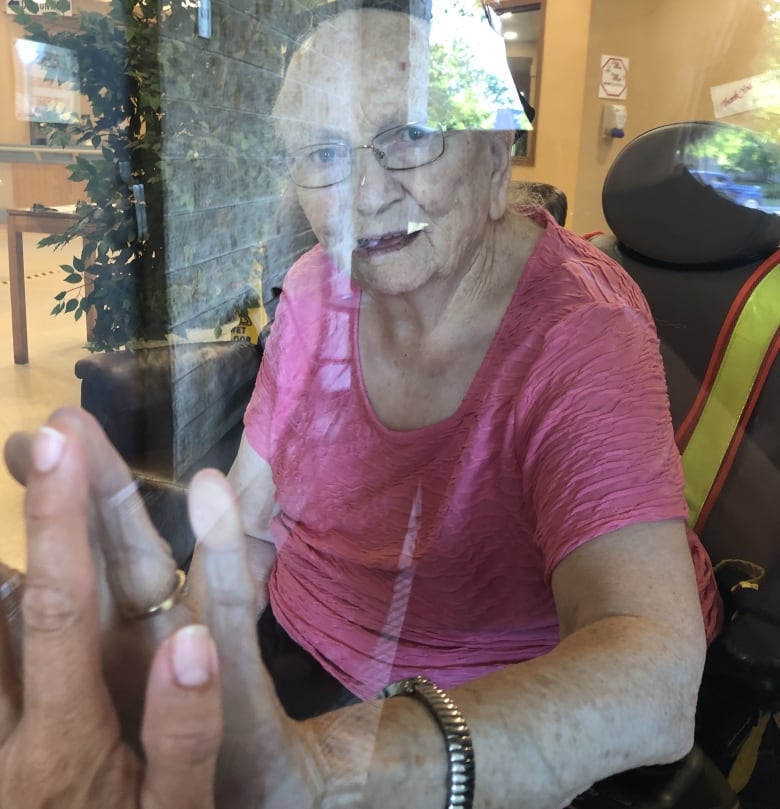
Sharon Webb pulled her grandmother, Mary Goertzen, out of Winkler's Salem Home this summer. (Sharon Webb/Submitted)

On a hot July day that was supposed to be one of her last, Mary Goertzen's grandchildren climbed one by one up a ladder to say goodbye through the window of her Winkler personal care home.

With visitor restrictions in place to stop COVID-19 from making its way into Salem Home, it was the only way most of Goertzen's family could see her for the last time.

"Everything about it was wrong," said Goertzen's granddaughter, Sharon Webb. "It was heart-wrenching to watch."

Days later, the care home's rules tightened again to only allow Goertzen one visitor every 12 hours. That meant her family would need to work in staggered shifts, keeping a meticulous schedule to make sure the 85-year-old wouldn't be alone.

But Webb saw another option. She and her husband decided to bring her grandmother home to live her last days with them — but what happened when she got there, Webb said, was nothing short of miraculous.

"Mentally, emotionally, spiritually, she just completely turned around," she said. "[She] just had this will to stick around."

Most of Mary Goertzen's family had to visit her through the window of her personal care home this summer, after staff at Salem Home told her family that Goertzen likely didn't have much longer to live. (Sharon Webb/Submitted)

About four months earlier, Lois Coleman Neufeld made the same decision for her mother, just as sites across Manitoba started restricting visits when the first cases of COVID-19 were detected in the province.

After one of their weekly Sunday outings — spent at church then at her house for lunch — Coleman Neufeld was walking her mother back into Parkview Place when a worker at the Winnipeg care home stopped them.

"[They] said, 'You can't come in. We're in lockdown,'" Coleman Neufeld said. 

"So we started asking questions about, 'Well, would we be able to come and visit tomorrow? Would we be able to take her out again?' And of course, it was new for everybody, so nobody had any answers."

In the meantime, she decided to bring her mom home to live with her. But over the next few days, it became clear what the new rules would mean for someone with dementia.

"I knew that if I left mom there, it would be like condemning her to a slow, painful death," she said.

Lois Coleman Neufeld brought her mom, Joy Coleman, home to live with her this past spring, after the personal care home where she was living brought in new COVID-19 restrictions. (Robert Neufeld/Submitted by Lois Coleman Neufeld)

And within a month of having her mom back at home, Coleman Neufeld said she also started seeing changes. The 91-year-old who could once only walk a few hundred metres before getting tired was now some days walking well over a kilometre.

It was a stark change from the woman living in Parkview Place who, unable to participate in most activities, was left in her room, discouraged and depressed.

"For the first time in years and years and years, I saw her cry. She's a very strong woman. She doesn't cry," Coleman Neufeld said, voice trembling. "So the question of taking her out wasn't a huge issue, in a way, to resolve. The biggest issue was, can I manage it?"

A difficult decision

While the improvements Webb and Coleman Neufeld saw were undeniable, so were the challenges they faced — and the sacrifices they had to make.

Webb, who is self-employed as a wedding planner, was able to take time off to become her grandmother's full-time caregiver.

And while she initially set her grandma up on a bed in her living room so she could spend her final days with a view outside, it eventually became clear that the arrangement needed to be more permanent. Webb and her husband moved to their basement while Goertzen moved into their upstairs bedroom.

Meanwhile, Coleman Neufeld was already on long-term disability, and her partner went down to part-time work to help her manage the new role. The shift also means she has less time for things that were usually part of her life, like camping, volunteering and seeing her grandchildren.

Lois Coleman Neufeld out for a walk in August with her mom, Joy, and her dog, Mulan. (Robert Neufeld/Submitted by Lois Coleman Neufeld)

"I think acknowledging the difficulty is a really important step," said Coleman Neufeld, "and to always try to keep your pulse on the issues or the developments or how you're feeling, how the caregiver is feeling."

The decision to pull out of a care home

As care homes across Manitoba report COVID-19 cases, and as some report outbreaks and deaths, pulling family members out can seem like a good option — but not everyone is equipped to do that, said Michelle Porter, director of the Centre on Aging at the University of Manitoba.

"It is really important for people to be — if they are going to contemplate making this decision — that they are [as] informed as they can be in making the decision so that they are able to handle the load," Porter said.

There are many factors to consider before taking that step, Porter said.

Those include considering whether a family or individual can provide the kind of care needed, whether their home is safe and whether — if things don't work out — they'll be able to readmit their loved one to their place of choice.

Care home beds in the Winnipeg area, for example — where Coleman Neufeld's mother's former care home is — are only held for social leaves, not full discharges, said a spokesperson for the Winnipeg Regional Health Authority (though clients are given a long-term care contact who will try to help facilitate readmission to their facility of choice if a bed is available). 

In the Southern Health region — where Webb's grandmother's former care home is — social leaves are allowed for up to 21 days, a spokesperson said, but after that the person would have to restart the panelling process to be placed back in a care home.

The pandemic has also shone a light on longstanding issues in long-term care, said Porter, including shared rooms that have made infection control nearly impossible and inadequate staffing that means many residents aren't getting the level of care they need.

While there's no comparing the care a person would get in a facility to the one-on-one attention they might get at home, the current recommendation of 3.6 care hours per resident should be increased to 4.1, she said.

"We certainly know that staffing should be changed so that we can have more full-time positions that are better paid that would enable people to be working in one place, building relationships with residents," she said.

"If they're running from one place to another because they can only get so many hours at each place, that's obviously not good for the staff, but it's also not good for residents."

And while Manitoba now seems to be taking steps to address some of its more glaring issues within long-term care, it remains to be seen whether those efforts will be adequate, said Laura Tamblyn Watts, CEO of CanAge, a national seniors advocacy group.

"Do I believe that the Manitoba government, over the course of this first wave and now entering the second wave, knows the ingredients in the recipe for change? I do. The question is: will they actually move quickly enough?" she said.

"Every day that these issues are not addressed are days that lives are lost. It is, in my view, the most urgent situation that we have in Canada in the time of COVID-19."

Politicians 'shrug their shoulders'

Pulling their family members out of care didn't solve everything: Webb's grandmother still sees a palliative home care nurse and gets regular care for bedsores, and Coleman Neufeld's mother still requires help with things as simple as eating. But the thought of what may have happened otherwise is enough to make them grateful they were in a position to make that choice.

"Had we not pulled my grandmother out, I know she would not be here today. And I think it would have wrecked all of us," Webb said. "I think we would have just all been so wounded by that, I don't know as a family where we would be today."

Coleman Neufeld, whose mother lived in a care home that has since become the site of Manitoba's deadliest COVID-19 outbreak, is also haunted by what might have been.

"I think about it all the time. When the news came out, I felt so bad for the staff members and I felt bad for the families as well as the residents, that they're being isolated, that families feel abandoned, not being able to do what they feel is their responsibility to care for their parents," she said.

"I think I would have died.... I can only imagine the angst that families are feeling."

Both Webb and Coleman Neufeld are frustrated — even angered — by what they see as a general indifference from the people who are supposed to be solving problems in long-term care.

"I don't have any easy solutions, but neither do I hear discourse in amongst the politicians or in the care home setting," said Coleman Neufeld. "They mostly shrug their shoulders. 'Well, what can you do?'"

Reflecting on stories she's heard from families across the province, Webb agrees.

"I don't think the general public has even a glimpse of the things that are happening right now," she said. "And if we knew, nobody would want to put their loved one in a care home."

Full Article & Source:

Saturday, October 17, 2020

Families take their nursing home message to the State Capitol

Families who have loved ones in nursing homes across the state take their frustrations and voices to the State Capitol.

Posted By: Gary Liberatore 

Albany, N.Y. - The group called Take Back our Nursing Homes made a passionate plea at the State Capitol in Albany on Wednesday.

The group included a Utica woman, Karla Abraham Conley, who lost her mother Rosie recently during the COVID crisis and never got the chance to say goodbye due to the state's restrictions on visitation.

Some at the rally haven't seen their loved ones in months, others, like Karla, lost loved ones without seeing them before they passed away.

Those involved with the rally are not happy with the Governor's executive order stating that a nursing home or long term care facility can not allow visitors unless the facility has been COVID-free for 14 straight days, something that not many nursing home have been able to achieve since the pandemic began in march.

An attorney for the families urged them to go to the facilities and demand to see their loved ones, and if they aren't allowed, get an attorney and file a case against the state.

Abraham Conley says she's all for that, "That's something I think should happen. We have rights, we have our constitutional rights, civil rights, or human rights, the Bill of Rights, the senior rights, all kinds of rights and nobody is allowed to take those away from us and they have been, and I made the announcement today that if Cuomo doesn't sign this into executive order, walk in there go back and take your nursing home back."

Asemblywoman Marianne Buttenschon of Marcy was at the rally and supports allowing families to see their loved ones, but doesn't think having them go to the facilities is a good idea until the Executive Order is changed, "I do not recommend or support any individual taking actions that could upset the care and well being of our nursing home residents. The state has an obligation to work with nursing homes, families and residents to develop safe visitation policies and ensure residents are cared for and able to thrive. We must work on this using a regional approach, by assessing each region's COVID-19 data at any given point in time and by working with infectious disease prevention staff within each nursing home to provide the safest care for the residents."

In regards to overturning Governor's Executive Order, Buttenschon said the following on Wednesday, "The initial COVID-19 response demanded an ability for the Governor to respond quickly to the rapidly changing crisis. In May, after it was clear some of the Governor's directives were too broad and confusing, Senator Joseph Griffo and I introduced legislation (A10502/S8387) which would ensure the Legislature plays its rightful and equal role throughout emergency declarations by making the Governor's actions subject to review every 30 days. A governor should be able to do what is necessary to keep the people of their state safe in times of emergency, but this power should not be unlimited. This legislation would ensure that New Yorkers have a say in how the state deals with disasters and I will continue to advocate for it within the Assembly."

Senator Joe Griffo of Rome was also at Wednesday's rally and is also in support of overturning the Governor's Executive Order.

Griffo says he has called for the legislature to return to Albany and undertake its role and responsibility to be a co-equal branch of state government.

We contacted the Governor's office to get a response, but so far have not heard back.

 
Full Article & Source:

Friday, October 16, 2020

Minnesota Eases Visits To Long-Term Care Facility Residents


MINNEAPOLIS (AP) —
Minnesota health officials rolled back rules Monday that prevented many families from visiting their loved ones in nursing homes and assisted-living facilities because of the coronavirus pandemic.

The new guidelines from the Minnesota Department of Health allow indoor visitations at most senior homes that have not had new infections in the preceding two weeks and when the infection rate in the surrounding county is no more than 10%. The state still recommends that long-term care facilities limit how many visitors a resident can have at once and the duration of indoor visits.

The new guidance significantly eased the restrictions that had been in place since March, when nursing homes and assisted-living complexes locked down and barred family visits in an attempt to protect vulnerable residents, the Star Tribune reported. Advocates for residents and their families have been clamoring for relief, noting that many elderly residents have suffered anxiety, depression and physical decline because of the social isolation.

“We are really looking to make sure that we do everything that we can to have the residents and families be able to connect with one another,” said Lindsey Krueger, director of the department’s Office of Health Facility Complaints.

But officials cautioned that rising community spread of the virus could still prevent many senior homes from opening their doors. Nearly 250 long-term care facilities have had at least one positive case of COVID-19 in the last two weeks, meaning they generally will remain barred to indoor visits. Two counties, Martin and Redwood, have infection rates of greater than 10%, so visitations in those counties will remain restricted under the new guidelines.

The department reported nearly 1,200 newly confirmed infections Monday after a weekend where confirmed case counts rose by nearly 3,000. Hospitalizations in the state are approaching record levels for the pandemic.

The department on Monday also reported 14 new cases among people who attended recent political rallies in Minnesota.

Kris Ehresmann, the department’s infectious disease director, said the number of confirmed cases linked with President Donald Trump’s outdoor rally in Bemidji on Sept. 18 had risen to 16, up from nine as of Friday, including four people who attended a protest. Three cases have been reported among people who attended Trump’s outdoor rally in Duluth on Sept. 30. Three people tested positive after attending a rally Sept. 24 with Vice President Mike Pence in a Minneapolis-St. Paul International airport hotel ballroom, including one who was among the Duluth rally cases. Two individual cases have been reported among people who attended Joe Biden campaign events in Duluth on Sept. 16 and Brooklyn Park on Sept. 22.

Full Article & Source:

Tuesday, October 6, 2020

‘It Is Abuse:’ Indiana Caregivers Say Nursing Home Visitation Policies Don’t Put Residents First

By Brock E.W. Turner

Trilogy Health Services did not comment on what happened at its Delphi facility. The company cited privacy concerns. (Brock E.W. Turner, WFIU/WTIU News)

Trilogy Health Services did not comment on what happened at its Delphi facility. The company cited privacy concerns. (Brock E.W. Turner, WFIU/WTIU News)

For months, thousands of residents in Indiana nursing homes have been isolated. What began as an early-pandemic protection is now eroding their quality of life. 

Despite forming an essential and compassionate caregiver program, the Indiana State Department of Health (ISDH) has deferred much of the oversight and management to facilities themselves. Caregivers are caught in the middle and often left powerless.

Vickie Ayres fights back tears as she remembers her mother, Carolyn, who died just last month after a stay in at St. Elizabeth Healthcare Campus in Delphi.

“She loved to travel and eat out and we would take her out several times a week for outings, and when they locked down that was over,” Ayres said. “They wouldn’t even take them out in the facility bus for a drive around or anything. They took everybody and made their worlds that were small, even smaller.” 

Allegations Of Mistreatment At An Indiana Nursing Home

St. Elizabeth Healthcare Campus is owned by one of the Midwest’s largest nursing home operators—Trilogy Health Services. When the pandemic began, Ayres says she considered moving her mother out of the facility and to her home, but she was concerned because there wasn’t an accessible bathroom in her farmhouse. 

“I didn’t feel like I was set-up properly in my home to be able to have her here,” Ayres admits. “Six months later, knowing what I know, do I wish I had done that? Yes.”

Ayres's mother, Carolyn, emjoyed travel, eating out and attending worship services at her church. (Photo Provided)

The place where her mom’s bathroom would have been is still unfinished down the hall from her home office. Contractors have been hard to find, she said.

But Ayres believes caregivers shouldn’t have to make that decision—seeing a loved one or leaving them in a place where extra care can be provided.

The situation quickly spiraled. Ayres says staff at St. Elizabeth Healthcare kept her mom isolated in the facility’s COVID-19 wing for weeks—even after she tested negative. 

The company—which is one of the largest nursing home operators in the Midwest declined an interview, and refused comment on the facility’s polices in a provided statement.

“Out of respect for the privacy of our residents and their families, we cannot comment on specific details regarding those in our care,” the company wrote.

According to Ayres, it gets worse, she says her mother and other residents went months without receiving proper showers.  She alleges staff restricted visits—even window visits—from her and other caregivers because “they were too dangerous.”

 
Ayres says she made the decision to move her mom due to the lack of visitation and her declining health.  She would eventually test positive for COVID-19 leading Ayres believe her initial test was a false positive. 

The facility’s owner, Trilogy, wrote it will, “continue to work closely with the ISDH, pursue transparency, provide quality care, and put our residents and their families first, just as we always have.”

Carolyn died on August 26 at the age of 81 due to complications of COVID-19.

Guidence Shifts Power To Facilities Instead Of Caregivers

Andrea Smothers is the ombudsman who serves the area, she says nursing homes across Indiana have been forced to interpret vague guidance and that’s leading to significant visitation variation. 

“The guidance that they were given pretty much from our perspective as advocates gave a lot of control to those facilities on how or when, or under what circumstances they would allow visitors,” she said.

That visitation guidance from the Indiana State Department of Health (ISDH) was updated to reflect the latest federal recommendations from the Centers for Medicare & Medicaid Services.  It outlines clearer procedures, but sets a high bar for indoor visitation.

For example, a facility is not recommended to resume visitation unless it has had no new cases for 14 days, its county positivity rate remains low, and residents are notified.

Yet, multiple ombudsmen—who serve as advocates for caregivers and their loved ones—say facilities are doing a poor job communicating these visitation policies and updating caregivers on changes. 

Those changes and that lack of communication, I think build the distrust by the caregivers,” she said.

However, a state program designed to increase access to facilities is plagued with problems of its own.

senior center bus
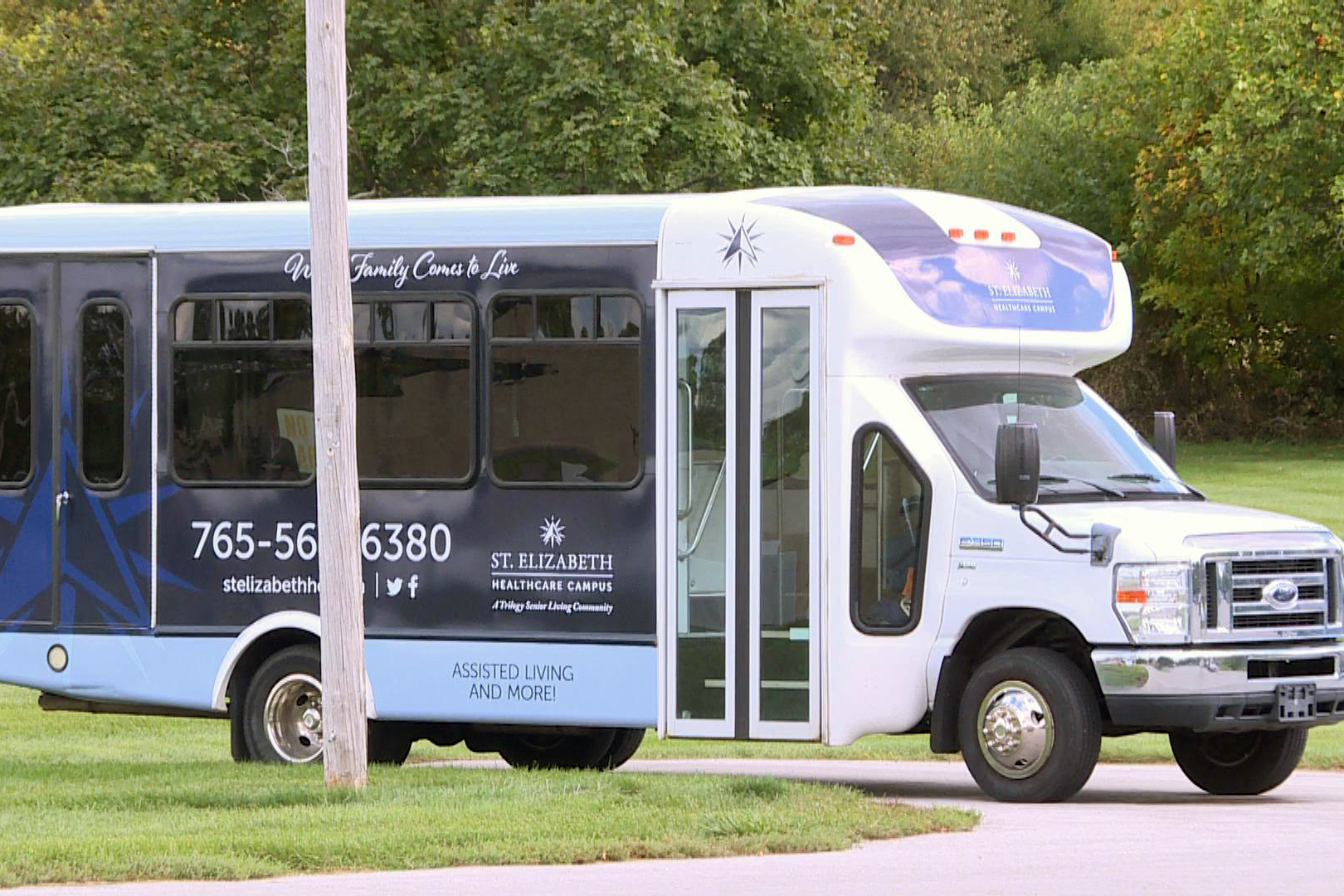
The bus at St. Elizabeth Healthcare Campus was parked earlier this week. Caregivers and advocates say the facility has denied window vistation. (Brock E.W. Turner, WFIU/WTIU News)

 Instead of creating uniform visitation protocols, Indiana’s essential and compassionate caregiver program has produced a patchwork of guidance that experts and caregivers say is poorly communicated, while also giving facilities too much discretion.

The department declined an interview, but provided a statement saying, in part, “Recognizing the importance of this [essential caregiver] role, we have encouraged this in facilities.”

 Experts say the difference between “encouraging” and requiring is important. Under the current language, ISDH effectively lacks enforcement or oversight.

“Applications are not required to be submitted to the state Department of Health, so we do not have any data on the number of applications accepted or denied,” the department wrote.

During the state’s weekly COVID-19 briefing, Dr. Lindsay Weaver, Chief Medical Officer for ISDH, said caregivers can still file a complaint with ISDH if they feel a facility has wrongly denied their application or isn’t meeting visitation requirements.

“Our infection preventionists work very closely with the long-term care associations we have biweekly phone calls work with them to really work through what does visitation look like and how we can do it safety,” she said the department works with facilities and trade groups to determine what is feasible.

“Of course, we always take family complaints or concerns and we’ll follow up on those,” Weaver said.

However, that process also favors facilities according Smothers.

“When I filed complaints on behalf of residents and their families who couldn’t get in, as an essential family caregiver, I got a very length, nice email from the surveyor saying, well, it’s up the facility, and there’s nothing more I can do.”

Misaligned Priorities

Families with loved ones in long-term care facilities know their time is limited. They’re tired how it is, and many don’t have the resources or time to file complaints with facilities or the state.

Nearly everyone interviewed, agrees tightening visitation at the beginning of the pandemic was the right decision, but few see the rationality six months later.

“What we’re doing is wrong,” Ayres said. “And it’s wrong to an extent that I don’t think many people are aware of.”

Smothers agrees.

“How do we justify that?  There may have been no on-on-one interaction that wasn’t supervised,” she said.

Mary Swinford, the Deputy Director of the state’s long-term care ombudsman program understands the initial hesitancy, but believes now is the time to find a solution.

“We do owe it to our seniors, our residents to continue to advocate for them to have these visits. These visits are vital to residents.”

Ayres has a hard time understanding why more people aren’t outraged a policy made out of necessity months ago remains in effect when rapid testing capacity is available for athletes, college students, and other populations.

“It is abuse,” she said. “At this point it is abuse because it is long-term. It isn’t the short-term health crisis solution to the pandemic.”

And that’s why she and others say they’re going to keep advocating for visitation.

“[Facilities and the state] could make it work, and it’s not that they can’t,” she said. “It’s that they won’t.  And that’s wrong,” Ayres said with tears in her eyes. “Even though my journey is over with my mom, I have to speak for those people that are left.”

Full Article & Source:

Monday, October 5, 2020

'We sprang Grandma from the care home'

By Andrew Bomford


The decision to place an elderly relative in a care home is a difficult one at the best of times, but the coronavirus pandemic and the restrictions on visiting make it even harder. For one family it seemed like the best solution before the virus arrived - but early last month they reversed their decision and brought 95-year-old Rita home.

It's late on a Saturday night, and a private ambulance pulls up outside a care home in Norwich. Rita Perrott, a frail 95-year-old, is helped out of the home in a wheelchair.

"Grandma!" shouts her granddaughter, Anna, delightedly. They give each other a long hug and a kiss. It's the first time in months such normal physical contact has been possible.

Anna appears almost giddy with the audacity of what they're doing.

"We've stolen grandma!" she proclaims.

"A kidnap?" Rita asks, playing along with the joke.

"It's a heist!" says Anna. "We've come late at night to steal grandma back!"

"I think they noticed," observes Ethan, one of the ambulance crew. The care home, of course, has agreed for her to be discharged.

Rita in the ambulance

Anna gently tells Rita they're on their way to the home of her daughter-in-law, Sue - Anna's mother. She adds that the reason for the move is that it had become almost impossible to visit her in the care home.

Rita is surprised by the late-night raid - they had no time to warn her in advance - but delighted that she will be able to spend more time with her family.

"Your poor mother!" she jokes.

Rita has dementia, and has grown increasingly weak and frail. She can no longer walk and even finds standing up painful.

Sue and the rest of the family are going to care for Rita now. The doctors say Rita is reaching the end of her life and the family could not bear the thought of her dying alone in the care home.

Even the ambulance crew is struck by the incongruity of what they're doing. "We only ever take people into care homes," they tell Anna and her mum. It's the first time they've taken anyone out of one.

Short presentational grey line

Rita had been in the home, Homestead House in Norwich, since the start of the year. It began as temporary respite care, but morphed into a permanent arrangement. Then coronavirus came along, and scuppered all the family's hopes for the part they would play in Rita's care in her final years.

With the home in lockdown, at first visitors could get no further than the car park, with Anna and Rita separated by a glass door, speaking to each other by telephone.

Later, visits were limited to one person visiting every two weeks, at a distance of 2m and wearing full personal protective equipment (PPE).

It was a far cry from Rita's early weeks in the home, when Anna had even been able to help bathe her grandmother.

Although it had been an agonising decision for the family to place her there, Rita agreed it was the best care option for her, because everyone in the family was leading such busy and complicated lives. And she says she enjoyed living in the home, and making friends with the other residents.

For years she'd been cared for by her son, John, Anna's father, but he developed serious health problems and eventually had to have a leg amputated. For a while he struggled even to look after himself. A spell in hospital for Rita also exacerbated her problems; it was noticeable that her dementia was growing worse. 

Anna, Rita and John in March, discussing the future with a representative of the county council

At one point mother and son were both in hospital at the same time. When Rita was discharged, she was sent to Homestead House while a more permanent care solution was arranged, with Norfolk County Council agreeing to fund her social care.

Short presentational grey line

"Well, you just keep a troshin'," Rita says a few days after the heist, lying in her newly delivered hospital bed in Sue's spare room, and being waited on by the family. Rita has a wealth of old rural Norfolk sayings. "Keep a troshin'" means to carry on threshing.

Rita is carrying on gamely. Basking in the warmth of her family's love and care, she has rallied to some extent and has been sipping sherry from a straw, along with lots of tea and cake. She has a wicked sense of humour and says, with a glint in her eye, that she's looking forward to watching the Tour de France later.

"She likes their legs, you see," explains Anna. "She's only human."

Anna, Rita and Sue

For 95 years Rita has been at the heart of a close family.

Anna's mum, Sue, who is divorced from Anna's father, says Rita practically brought up her three grandchildren - Anna, Elly and Rachel.

"We had some good times all together," Sue recalls. "Lots of laughs."

"Very happy memories… It's been lovely," agrees Rita.

"This is so nice, thank you all," she says, taking quick, short shallow breaths.

"And I do appreciate all you have done. It's such a lovely feeling being loved, and loving back.

"Isn't that nice when you can look back on a happy time, with a dear little family, who've made me so welcome, and so much appreciated. And I thank you all," she says. Then she punctures the moment before it gets too maudlin: "Speech over…"

The family says they understand that care homes have to be strict about visiting, in order to keep coronavirus out. They have no criticism of the care Rita received.

But as her health deteriorated they found the restrictions on visits increasingly intolerable.

Rita lost a lot of weight in the home, and as she grew weaker she was taken to hospital for a few days. And there, it turned out, visiting arrangements were much more flexible.

"We were delighted when she went into hospital, because we could go and see her," says Anna. "It was really lovely."

But within a few days the doctors said they couldn't help her. She was at the end of life, they said, and would need to return to the care home.

Anna, Rita sipping sherry, and Elly

Anna asked about the home's visiting arrangements when someone is dying and was told that one family member could visit twice a week for just 20 minutes a time. Again, they would have to wear full PPE and remain at a distance of 2m.

"You're not even able to hold your loved one's hand when they're dying," says Anna. "And the chances are you'd miss it anyway. The idea of her being on her own to die just sounded barbaric and very cruel, not how we'd planned for that to happen."

"The most important time of grandma's life, being with her family was taken away from us," says Sue. "That's why we made our decision for her to come here."

Sue recently retired as a nurse, so feels confident that she can care for Rita. But she says she's aware that many families in a similar situation would not have the space, time, or experience to do the same thing.

Rita's son John, her ex-husband, agrees. Despite the divorce, the family has remained close.

Rita, Anna and John earlier this year

"My greatest fear was that Mum would have passed away and we would not have been able to see her," he says. "I think there needs to be more flex in these arrangements. We support care homes in what they're doing, but at the same time it's a huge tension."

The so-called heist was planned in a hurry, out of a fear that the care home might lock down completely, and not let any of the residents out.

Now the family is concerned that restrictions on household mixing will become tighter.

Since Rita came home, other relatives have also been able to visit Rita, and will continue to do so as long as the rule of six remains in place. They are determined to make the most of the time they have together.

The family thinks Rita would have probably died by now had she remained in the home and they believe her days are numbered even now she is with them. It's something they have been coming to terms with over the last few weeks, and they speak openly and honestly with Rita about it.

"It's not just about dying, but dying well," says Anna.

"We're waiting for a chair upstairs," says Sue. "It's standing room only in heaven but Grandma needs a chair."

"We'll know when it's time," adds Rita.


I asked her how she feels about dying.

"It's fine with me. Everything has worked out ever so well. You only live once don't you?"

"Will you be sad when she dies?" Anna asks her sister, Elly.

"Yes, but I am the person I am because of her and what she did for me as a child," says Elly. "It would just be the end of a lovely life. It will be tainted with sadness because I can't imagine life without Grandma. But it's ending how she would have wanted it to end."

On cue, Grandma suddenly breaks into an old song.

"Now is the hour for me to say goodbye…"

"Oh blimey," exclaims Anna.

"Soon I'll be sailing far across the sea," Rita continues.

"While I'm away, oh please remember me…

"And I can't remember the rest!"

The family breaks into laughter. It will no doubt be a good way to go.

Full Article & Source:

Thursday, October 1, 2020

New Yorkers Desperate To See Loved Ones In Nursing Homes Say Visitation Rules Do More Harm Than Good

By Ross Barkan

Outside Cliffside Nursing Home in Queens in May. John Minchillo/AP/Shutterstock

Sandra Monahan has not seen her 93-year-old mother in person since the beginning of March. While other New Yorkers have been reuniting with family in the months after the end of the statewide COVID-19 lockdown, Monahan has not been so lucky.

Her mother, who she visited every day before the pandemic, is isolated in a nursing home in a Rochester suburb. Once upbeat and highly alert, she is now losing weight and experiencing depression.

Monahan has not been able to see her because the nursing home, in the town of Pittsford, never went 28 full days without a coronavirus case from a resident or staff member.

“I’ll wear a hazmat suit, I don’t care,” Monahan said, anguish rising in her voice. “I feel like I’m at a loss. I don’t know what else to do.”

Monahan is part of a small but increasingly vocal number of New Yorkers who are desperate to see their friends and family in nursing homes again. They have formed an organization, NY Families for Visitation Now, to lobby Governor Andrew Cuomo and his Health Department to relax guidelines to allow for far more frequent visits.

Their argument is simple: while coronavirus still poses a threat, sustained isolation worsens health risks like dementia and failure to thrive. The pandemic has led to a surge in Alzheimer’s deaths nationwide.

Monica Ryser, a member of the organization, said her 97-year-old mother’s dementia has worsened since March, her appearance and ability to speak drastically declining in their Zoom calls.

“She thinks we’ve abandoned her,” said Ryser, whose mother lives in a Rochester nursing home. “I don’t want my mother to die, to be honest.”

On Tuesday, the families of nursing home residents won a concession. The Department of Health announced the 28-day period, instituted in July, would be reduced to 14 days and socially-distanced visits would be allowed.

The announcement follows a change in DOH policy that expanded visitation policies for pediatric nursing homes and adult care facilities.

“DOH understands how painful it is for families to not see their loved ones, and the challenges facilities face as they work to protect residents from the asymptomatic spread of COVID-19 while trying to reopen to outside visitors,” said Jeffrey Hammond, a Department of Health spokesman. “The number of nursing homes that are eligible to reopen to visitors, and the number that have taken the next steps, shows they are being smart and cautious.”

Visitors would have to present a negative coronavirus test within seven days of entering the nursing home. The number of visitors to the nursing home must not exceed 10 percent of the resident population at any time and only two visitors will be allowed per resident at a given time.

Visitors must undergo temperature checks and wear face coverings. Children under the age of 18 are prohibited from making visits.

Nursing homes allowing visitors would be required to send their visitation plan to DOH and show that they are following the rules.

The problem, however, is that some family members of nursing home residents had served, pre-pandemic, as de facto caregivers, helping to feed, dress, and groom them. Touch will still not be permitted.

Even with protective gear, negative coronavirus tests, and temperature checks, visitors won’t be granted the same privileges as staff. Some nursing homes may still not be able to meet the two-week coronavirus-free threshold.

In neighboring states, visitation restrictions for nursing homes have been less strict for a longer period of time.

Pennsylvania announced at the end of June nursing home could accept visitors after a 14-day period of no positive cases. New Jersey expanded its visitation policy for indoor visits in early August. Without a 28-day restriction, Connecticut began allowing socially distanced visits in June.

None of these states have experienced an apparent spike in nursing home cases or deaths related to the relaxing of visitation rules so far.

“Everyone except the Health Department believes strongly that the visiting regulations are imposing serious harm on nursing home residents,” said Assembly Richard Gottfried, the chairman of the Health Committee. “It doesn’t just make them feel bad. It endangers their health because being without visitors can impair your health. When you’re in a nursing home, having family come to visit makes the staff take better care of the resident and enables the family to see problems that need taking care of.”

Cuomo does have reasons for proceeding with caution. More than 6,600 New Yorkers died in nursing homes from COVID-19, the most in the nation, though the numbers could be far higher due to the unorthodox way New York counts nursing home deaths.

In March and April, nursing homes across the state were epicenters for the pandemic, as staff and vulnerable residents were rapidly infected. Some nursing homes lacked protective equipment and others were faulted for their mismanagement in the early days of the crisis.

Cuomo has drawn criticism for his March directive, later reversed in May, that forced nursing homes to readmit residents with coronavirus who were discharged from hospitals but may have still been recovering. His administration argued the policy was put in place because of fears that local hospitals wouldn’t have the capacity to handle these patients.

Meanwhile, families and advocates are hoping their loved ones, having survived the worst of the pandemic, can stay alive and active in isolation, even with visitation restrictions still in place.

“I feel helpless for my mother,” Monahan said. “It breaks my heart.”

Full Article & Source: