Tuesday, March 16, 2021

Conservatorships should be a last resort


By Zoe Brennan-Krohn

Imagine that someone else could make every single decision about your life for you. Maybe that person is a parent, maybe they’re a stranger, maybe they’re someone you don’t like very much, and they can decide what you eat, who you see and spend time with, where you live, what medications you take, what job you do, and how you spend your money. This is the reality of being in a conservatorship or guardianship for untold thousands of people in the United States.

Sometimes people seek conservatorships in an effort to protect a loved one with a disability. However, conservatorships carry real risks and can cause real harm. Because of this, conservatorships should be as a last resort, imposed sparingly, lifted promptly, and overseen diligently.

Unfortunately, this is not the reality in the United States today. Too often, conservatorships are granted as a “first resort” when a person with disabilities reaches adulthood or encounters difficulties, or experiences age-related disabilities. Instead of so many conservatorships, we should have systems in place for people with disabilities — like people without disabilities — to live their lives with support and without losing their rights.

Conservatorships are a systemic disability rights issue because of the ease with which disabled people can be stripped of their rights under conservatorships, and the extraordinary difficulties they face getting those rights back.

In a conservatorship or guardianship, a judge takes away the civil liberties from one person and gives someone else the power to make these choices instead. It is the court weighing into the person’s life and saying you, as a person with a disability, are no longer free to make decisions about yourself and livelihood — such as where you live and how you support yourself — and we are putting someone else in charge of making those decisions.

There are many less intrusive, less dangerous ways for people to access the support they need without being placed under a conservatorship. Conservatorships should be the last resort, when all other support options have been tried. Sadly, this is too rarely the case.

Recently, there has been increased public attention around conservatorships because of Britney Spears’ case. We don’t know the details of Britney Spears’ conservatorship, which has been in place since 2008, but while Spears’ conservatorship has gotten attention because of her fame, her conservatorship appears, in many ways, very typical of the experiences of untold people across the country.

We see people nationwide who get into conservatorships and cannot get out of them. Spears is just one of the estimated 1.5 million people with disabilities nationwide who have lost their rights to make choices about their money, their medical choices, whether they can access the internet, among other day-to-day life choices, and who have almost no chance of getting those rights back.

People end up under conservatorships or guardianships based on a wide range of disabilities, including psychiatric disabilities, developmental or intellectual disabilities, age-related disabilities like dementia, and other types of disabilities. But there are many less invasive, more protective systems for people with disabilities to get support in their lives without giving up their rights or putting their fate in the hands of strangers. These alternatives to conservatorship include powers of attorney, advanced medical directives, releases to share medical and educational information, and supported decision-making.

All of these alternatives allow people with disabilities to get support in directing their own lives, just like people without disabilities do. We all ask friends for advice, we research issues, we talk through pros and cons. People with disabilities should have the same opportunity to use these systems, with assistance and support, and without a sacrifice of their civil rights and liberties.

The ease with which people get trapped in conservatorships is particularly troubling because of the risks and harms of conservatorships. People under conservatorships are at risk of financial, physical and emotional abuse, neglect and exploitation. And even when there isn’t abuse, conservatorships limit a person’s ability to advocate for themselves, to learn from their decisions and mistakes, and to grow and develop. There is a harm in being told that your opinions, your likes and dislikes, don’t matter. It actually makes it harder to protect yourself from abuse or neglect. So in any conservatorship, we would want to know that the real risks (and benefits) of both conservatorship and its alternatives have been seriously weighed.

All people with disabilities have a right to lead self-directed lives and retain their civil rights, and to access support, education and guidance in doing so. We must fight against the unnecessary and dangerous removal of disabled people’s civil rights, and ensure conservatorships are imposed only as a last resort.

Full Article & Source:

Britney Spears' Dad 'Would Love Nothing More' Than for Conservatorship to End, Lawyer Says

Christopher Polk/Getty Images for iHeartMedia
Britney Spears performs at the 102.7 KIIS FM's Jingle Ball 2016 on Dec. 2, 2016 in Los Angeles.
By Heran Mamo

Britney Spears' father Jamie Spears has publicly declared his wish to see his daughter's court-ordered conservatorship over the last 12 years come to an end.

His attorney Vivian Lee Thoreen, who recently appeared in the Framing Britney Spears documentary, shared Jamie's statement with CNN on Friday. The New York Times documentary has caused renewed interest in the ongoing conservatorship that has controlled the pop superstar's life and career for more than a decade and subsequently sparked the #FreeBritney movement.

"[Jamie] would love nothing more than to see Britney not need a conservatorship," Thoreen told CNN. "Whether or not there is an end to the conservatorship really depends on Britney. If she wants to end her conservatorship, she can file a petition to end it."

She continued: "Jamie is not suggesting that he is the perfect dad or that he would receive any 'Father of the Year' award. Like any parent, he doesn't always see eye-to-eye on what Britney may want. But Jamie believes every single decision he has made has been in her best interest."

Britney's court-appointed attorney Samuel Ingham III reminded Judge Brenda Perry during a Feb. 11 hearing in Los Angeles Superior Court that his client didn't want her father as her conservator. Jamie serves as the co-conservator of Britney's $60 million estate with Bessemer Trust Company, the bank the 39-year-old singer originally requested to oversee her finances instead of her father. Ingham also told the judge that he wanted to make sure Bessemer had equal decision-making powers to Jamie or else "the appointment of Bessemer Trust would be rendered meaningless," according to court papers he filed.

"Jamie never contested or objected to Bessemer being appointed as his co-conservator. And at the last hearing, it was reported that Jamie was trying to get more power than his co-conservator, and that is completely inaccurate," Thoreen added. "What we were arguing is that Jamie and his co-conservator should have equal power; that was always consistent."

Penny declined to suspend Jamie from his central role in the conservatorship in a Nov. 10-dated hearing, after Ingham said Britney fears her father and will pause her musical career as long as he remains in charge of it.

Even though Jamie told CNN in December that he hadn't spoken to his daughter in months, Thoreen told the publication last week that the entire Spears family quarantined together in their Louisiana home at the beginning of the COVID-19 pandemic. CNN obtained videos of the family from the two weeks they spent together, which revealed the pop superstar riding bikes and playing in the yard alongside her father, mother Lynne Spears, younger sister Jamie Lynn Spears, and her nieces.

Jamie was first appointed by the court to oversee Britney's estate and person in 2008 after she suffered serious mental health issues that were publicly exacerbated by media and the paparazzi, as seen in Framing Britney Spears.

Samantha Stark, the documentary's director and producer, told Billboard that she originally requested Thoreen to appear in the documentary for her expertise in conservatorships before she began working with Jamie. "We wanted somebody who believed in the system to tell us why. And we knew she had worked on the case for three months in 2008, when Britney was getting her temporary conservatorship," Stark said. "We were surprised that soon after that interview, she rejoined Jamie’s legal team. And we asked her several times if she'd wanted to update us because now she knows different information, but she declined."

Billboard has reached out to Britney's reps for comment.

The next court hearing in Spears' conservatorship case is set for March 17.

Full Article & Source:
 
See Also:

WV caretaker charged with credit card fraud

Courtesy: Boone County Sheriff’s Facebook

by: Bailey Brautigan 

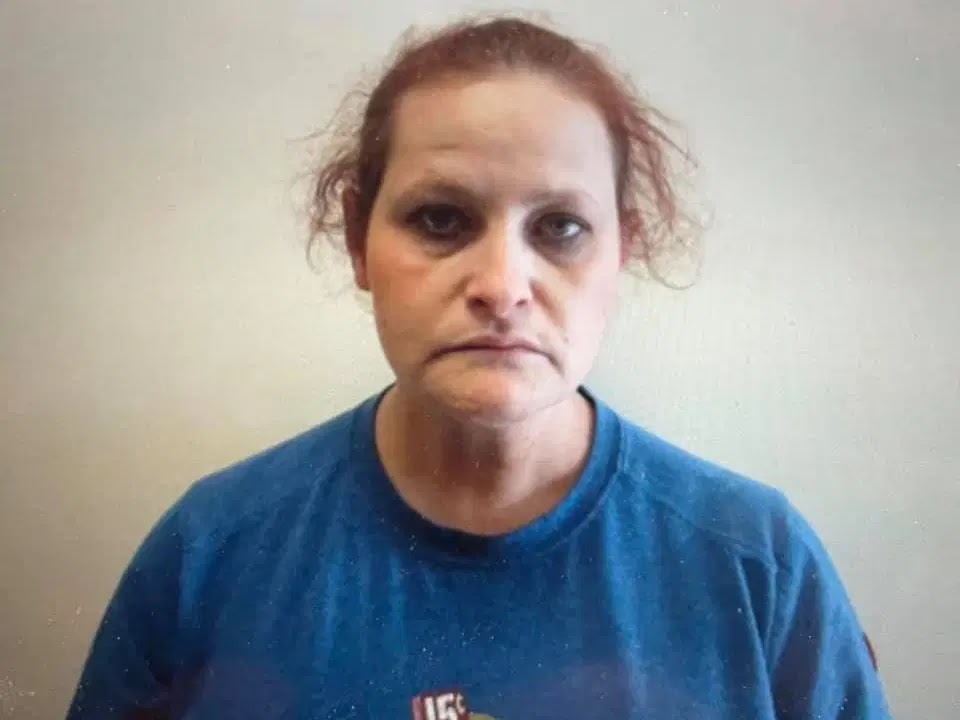
BOONE COUNTY, WV (WOWK)—On Saturday, Boon County Deputies arrested 41-year-old Carrie Graley Dolin of Madison on charges of illegally using credit cards which belonged to a family she was helping to care for.

According to police, the victim was physically incapacitated because of advanced cancer, and the defendant allegedly charged around $7,000 worth of personal items in less than a month.

She was charged with eight counts of Fraudulent Use of an Access Device (also known as credit card fraud) and one count of Financial Exploitation of an Incapacitated Adult. More charges are thought to be forthcoming as this is still an ongoing case.

Full Article & Source:

Monday, March 15, 2021

Maggots, Rape and Yet Five Stars: How U.S. Ratings of Nursing Homes Mislead the Public

Nursing homes have manipulated the influential star system in ways that have masked deep problems — and left them unprepared for Covid-19.

 
Credit...Jessica Ebelhar for The New York Times

By Jessica Silver-Greenberg and Robert Gebeloff
 
Twelve years ago, the U.S. government introduced a powerful new tool to help people make a wrenching decision: which nursing home to choose for loved ones at their most vulnerable. Using a simple star rating — one being the worst, five the best — the system promised to distill reams of information and transform an emotional process into one based on objective, government-blessed metrics.

The star system quickly became ubiquitous, a popular way for consumers to educate themselves and for nursing homes to attract new customers. During the coronavirus pandemic, with many locked-down homes unavailable for prospective residents or their families to see firsthand, the ratings seemed indispensable.

But a New York Times investigation, based on the most comprehensive analysis of the data that powers the ratings program, found that it is broken.

Despite years of warnings, the system provided a badly distorted picture of the quality of care at the nation’s nursing homes. Many relied on sleight-of-hand maneuvers to improve their ratings and hide shortcomings that contributed to the damage when the pandemic struck.

More than 130,000 nursing-home residents have died of Covid-19, and The Times’s analysis found that people at five-star facilities were roughly as likely to die of the disease as those at one-star homes.

The ratings program, run by the U.S. Centers for Medicare & Medicaid Services, relies on a mix of self-reported data from more than 15,000 nursing homes and on-site examinations by state health inspectors. Nursing homes receive scores based on how they fare in those inspections; how much time nurses spend with residents; and the quality of care that residents receive. Those three grades are then combined into an overarching star rating for each nursing home.

To evaluate the ratings’ reliability, The Times built a database to analyze millions of payroll records to determine how much hands-on care nursing homes provide residents, combed through 373,000 reports by state inspectors and examined financial statements submitted to the government by more than 10,000 nursing homes.

The Times obtained access to portions of the ratings data that aren’t publicly available from academics who had research agreements with the Centers for Medicare & Medicaid Services, or C.M.S.  (Click to Continue Reading)

Full Article & Source:

Girl With Down Syndrome Asked Him to the School Dance; Now They’re Planning the Wedding

(Courtesy of Jake Pratt)

By Jenni Julander

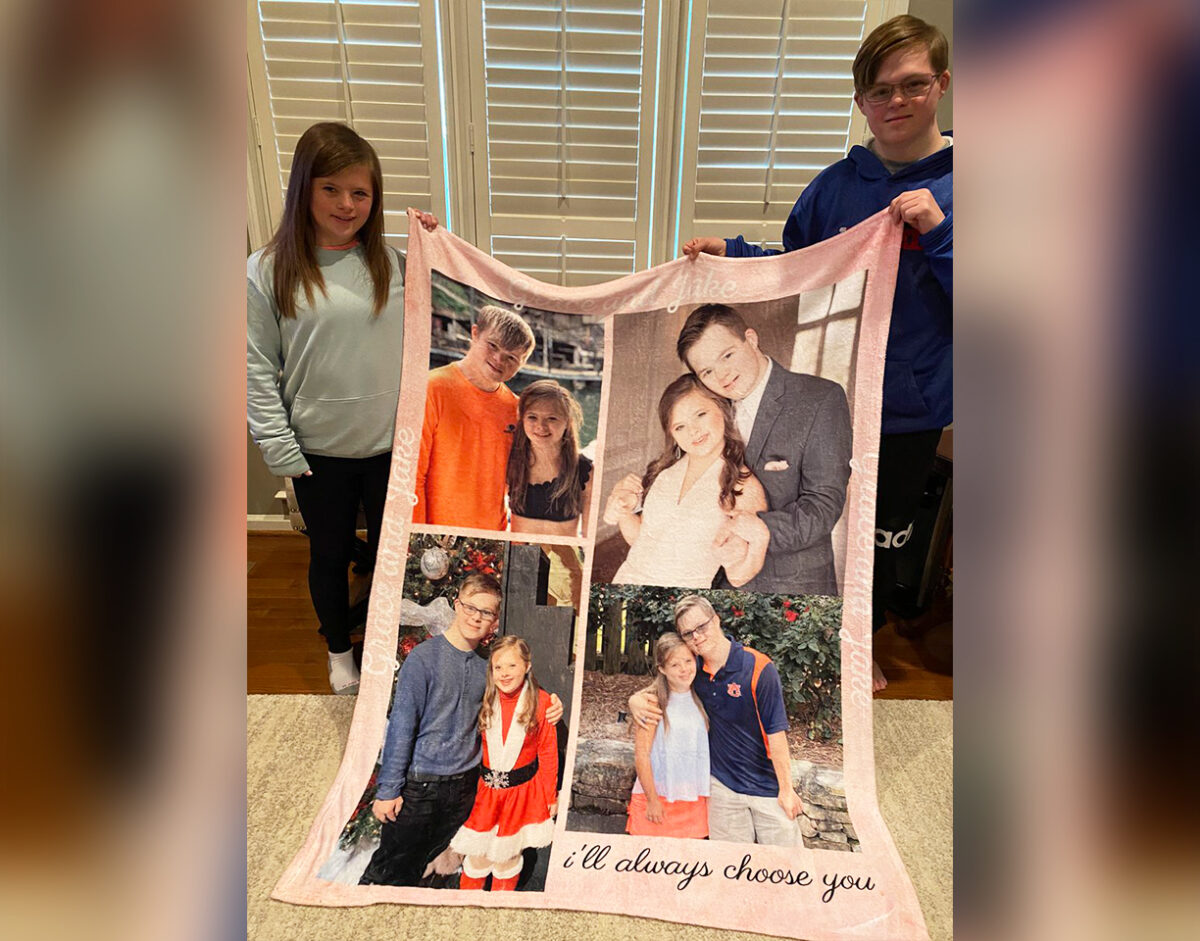
Last year, a 21-year-old man with Down syndrome attracted media attention for “defying the odds,” graduating from college and landing a job at UPS. Now, he and his girlfriend, who also has Down syndrome, are serving as a source of inspiration for special needs communities.

Jake Pratt, now 22, and Grace Davies, 19, met at their Alabama high school. Their first date was a Sadie Hawkins dance in January 2017, after Grace asked Jake out.

“Our first date was a group date with some other friends,” Jake told The Epoch Times. “We went to dinner and to the school dance. Grace made a poster and brought me donuts to ask me to the dance.”

They had a good time. “I asked her to be my girlfriend not long after that,” he adds.

The Facebook group Positive About Down Syndrome shared a photo of Grace’s poster, which reads, “Roses are red, donuts are tasty. Do me a favor and go with me to Sadie!”

Epoch Times Photo
(Courtesy of Jake Pratt)

The organization, which aims to support parents of children with Down syndrome, also shared the couple’s inspirational story.

“[Four] years later, their love is still going strong,” they wrote on Jan. 15. “Jake graduated from the Clemson Life program last spring and is now working and saving for their future. … Grace is still currently attending her college life skills program.”

They added that the young couple are busy dreaming and planning for their next steps. Jake is saving for an engagement ring. Grace is happily planning their eventual wedding.

“Jake and Grace have the same dreams as any young couple: to eventually get married and live independently,” the organization shared. “For now, they are making the most of their time together during Grace’s breaks from college and talking on FaceTime daily when she’s away.”

The group’s post went viral with over 14,000 likes and 3,200 shares.

Epoch Times Photo
(Courtesy of Jake Pratt)

Social media users had glowing words for the young couple, and many found their story inspirational.

“Oh [how] sweet is this,” wrote one mother of a young girl with Down syndrome. “I am excited to see how our Cora will grow. These two are great role models!”

“So this is where my child will be in the future,” said another parent. “Would love to hear what all the parents did for them to have such a successful life.”

In fact, when Jake was born, his parents decided to treat him just like any other child. According to a viral tweet posted by Jake’s sister, Amy, it’s a mentality that gave Jake the confidence to pursue his dreams.

Nor do their dreams stop with graduating college, building careers, and getting married.

Epoch Times Photo
(Courtesy of Jake Pratt)
Epoch Times Photo
(Courtesy of Jake Pratt)

Jake told The Epoch Times that he hopes to teach Grace to drive one day so she can pursue her dream job of working in a fashion-related industry. The couple want to get an apartment together after Grace graduates, and they hope to buy a home together one day, too.

For now, Jake’s job at the local golf course is fairing well. While his other position at UPS, which made headlines earlier, is over for the season, Jake has applied for a permanent post and is hoping to hear back soon.

The couple hope their story will strengthen the idea that anyone can achieve the life they want if they believe in themselves and are willing to work hard.

Epoch Times Photo
(Courtesy of Jake Pratt)

“If you love each other, you can overcome anything,” Jake said.

For any young couples working to build a future together, he added, “Make sure you are making time for each other and always make each other feel important.”

Meanwhile, the world is cheering them on.

“They are a shining example of the fact that individuals with Down syndrome are just like anyone else and can live full and productive lives,” Positive About Down Syndrome wrote on social media.

Followers of the group concurred. “I hope we get more updates on their future,” one commenter said.

“This brought a huge smile to my face in a much gloomier time,” said another. “Congrats and may your future be as bright as both your beautiful faces!”

Full Article & Source:

Suspect accused of stealing $63,000 from 88-year-old Sarasota man with Publisher’s Clearing House scam

Courtesy: Sarasota County Sheriff's Office

SARASOTA, Fla.
- Deputies arrested Donte Johnson, 25, of Plantation, after they say he scammed an 88-year-old Sarasota man out of $63,000.

According to the Sarasota County Sheriff’s Office, the victim believed he was paying taxes for Publisher’s Clearing House winnings in advance and deposited $63,000 into two separate bank accounts. His family contacted law enforcement in October 2020.

With the help of surveillance video, detectives investigating the case identified Johnson as the suspect using the victim’s identity to withdraw money. 

While executing a search warrant on Johnson’s home with help from the Broward County Sheriff’s Office and Plantation Police Department, detectives discovered more than $17,000 in cash, a stolen firearm and several electronic devices. 

Johnson was arrested and faces charges of criminal use of personal identification and bank fraud. The Broward County Sheriff's Office also charged him with grand theft of a firearm. 

Detectives believe Johnson stole more than $300,000 from 17 victims across the country. Additional charges are pending.

"It is with credit to our Special Victim’s Unit that this criminal is behind bars," said Sarasota Sheriff Kurt A. Hoffman. "These detectives work hard to protect our most vulnerable populations, but it is on all of us to look out for our elderly and one another. The message here is to take caution for both yourself and the ones you love. Remember, if it seems too good to be true, it probably is."

According to the Publishers Clearing House website, no payment, fee, tax, or any amount is ever required to claim or receive a prize in a PCH giveaway.

Full Article & Source:

Sunday, March 14, 2021

Federal judge to rule on daughter's racketeering, trafficking suit against Houston judge


By David Yates

HOUSTON - A federal judge is set to rule on whether to dismiss a physician’s lawsuit against a Harris County probate judge who allegedly turned a blind eye to the estate trafficking and elder abuse of her 91-year-old mother who was under a court-appointed guardianship when she died, a press release states.

Owens-Collins v. The Honorable Judge Michael Newman is currently pending before U.S. District Judge Lynn Hughes and Magistrate Peter Bray in the Southern District of Texas in Houston.

Dr. Sheila Owens Collins, a pediatrician, sued Harris County Probate Judge Michael Newman last year alleging he violated her mother Mrs. Hattie Owens’ rights under the U.S. Constitution and the Americans with Disabilities Act.

“Although Judge Newman employs the defense of judicial immunity in an attempt to absolve himself of the estate trafficking and racketeering that occurred under his purview, gross negligence is at play," Owens Collins wrote in her March 11 response in opposition to Judge Newman’s Motion to Dismiss. "Section 1201.003 of the Texas Estates Code specifically states that a judge is liable on a Judge's bond to those damaged if damage or loss results to a guardianship or ward because of the gross neglect of the judge.” 

As previously reported in the Southeast Texas Record, Judge Newman disputed the allegations of estate trafficking and racketeering while invoking the doctrine of judicial immunity. But Owens Collins alleges in her reply opposing dismissal that when the defendant judge repeatedly funneled money out of Mrs. Hattie Owens’ estate and into the pockets of probate court insiders and the coffers of the Court, he committed gross negligence in handling the guardianship and assets of Mrs. Hattie Owens.

“Judge Newman’s gross neglect and breach of duty of care resulted in the unnecessary depletion of the estate of Hattie Owens by $93,000.00,” Owens Collins stated.

After graduating from Prairieview A&M University, Mrs. Hattie Owens and her husband Emiel Owens amassed a modest fortune that included two student housing properties in Prairie View, Texas, a 5,000 square foot home in Houston's medical center worth half a million dollars, two Mercedes Benz vehicles, and a Porsche, according to a press release.

“The temporary guardian, Dana Drexler, requested fees of $53,468.00,” said Owens-Collins in her pleading. “An expert witness noted that Drexler billed either $350 or $100 per hour for a minimum of 15 minutes regardless of the actual time required for a task. The expert witness testified to each and every page of the 36 pages of records and identified charges that were not reasonable or necessary.”

Mrs. Hattie Owens became a ward of the state under guardianship after her granddaughter, Aisha Ross, allegedly made a false report with Adult Protective Services against Owens Collins who was her mother's power of attorney at the time.

“The volume of guardianship proceedings in Harris County not only supports specialized probate courts, but it also supports counsel with practices that derive significant funds from court appointments in various roles in guardianship proceedings,” Owens Collins stated. “This case illustrates the failure of judicial supervision to ensure that counsel fulfill their statutory duties, including diligently investigating and seeking to carry out a client’s desire to avoid guardianship.”

The physician plaintiff isn’t the only American disputing a high-profile court-appointed guardianship. Popstar Britney Spears’ conservatorship was the subject of a New York Times documentary expose, which lead GOP Congressmen Jim Jordan of Ohio and Matt Gaetz of Florida to request a hearing before the House Judiciary Committee to review and examine the plight of those trapped unjustly in conservatorships, which are also known as guardianships.

“If the conservatorship process can rip the agency from a woman who was in the prime of her life and one of the most powerful pop stars in the world, imagine what it can do to people who are less powerful and have less of a voice,” Congressman Gaetz said in a statement online.

Once appointed by a Judge, a guardian of an adult or senior citizen, such as Britney Spears or Mrs. Hattie Owens, is empowered to liquidate their assets, sedate the individual with physician-prescribed psychotropic medication, to deny choice of food, marital status, health insurance, medical care and even ban visits with friends and family members.

“Mrs. Hattie Owens was forced into hospice,” Owens Collins states. “Her early death was preventable. Dr. Owens Collins blames the court, the judge, the guardian, and the guardian's attorney who conspired and colluded in actions that caused the loss of life for Mrs. Hattie Owens and the loss of a mother for Dr. Sheila Owens-Collins.”

Full Article & Source:
 
See Also: 
 

State Bar casts doubts on Girardi’s Alzheimer’s diagnosis, suggests charges are coming

State Bar lawyers say they are poised to file disciplinary charges against Tom Girardi, shown here with his estranged wife, “The Real Housewives of Beverly Hills” star Erika Jayne.
(Bravo)

 Harriet Ryan, Matt Hamilton

The State Bar of California cast doubt Friday on troubled lawyer Tom Girardi’s diagnosis of Alzheimer’s disease, suggesting it was a possible case of malingering and likely igniting a battle over his mental competency.

Lawyers for the bar raised the questions in a Superior Court filing that also revealed the agency is preparing to move against Girardi’s license. The bar regulates attorneys in California.

Bar investigations and disciplinary proceedings are normally confidential, but the agency disclosed “imminent” charges against Girardi in an attempt to stave off conservatorship proceedings that would impede its ability to prosecute him.

Girardi’s younger brother is seeking appointment as his permanent legal guardian, with a hearing set for Monday, and has offered as evidence the opinion of a Long Beach psychiatrist who examined the lawyer last month and diagnosed him with “Alzheimer’s disease with late onset.” The psychiatrist said Girardi has short-term memory loss, delusions and “severely disorganized thinking.”

An attorney for Girardi’s temporary conservator, Nicholas Van Brunt, said, “No comment to make, except that we will be responding to the filing.” The Long Beach psychiatrist, Nathan Lavid, did not return messages seeking comment.

James J. Chang, a bar attorney, questioned the legitimacy of the conservatorship proceedings as coming “under highly unusual circumstances” and “only after [Girardi] became enmeshed in mounting legal troubles and as he is facing imminent State Bar discipline.”

He wrote that facts “belie allegations that Girardi is now incapable of caring for himself,” noting that the lawyer had speaking engagements until late November. The bar’s top prosecutor, interim chief trial counsel Melanie Lawrence, listed two appearances Girardi made last fall, including a Nov. 21 event for the Consumer Attorneys of California.

“Mr. Girardi moderated a 1.5-hour long continuing legal education panel discussion ... regarding how to conduct a jury trial and engaged conversantly with the four other attorney panelists,” Lawrence wrote.

The bar lawyers urged the judge overseeing the conservatorship case, Daniel Juarez, to order an independent examination of Girardi by a neuropsychologist.

Girardi’s firm, Girardi Keese, imploded in December after evidence emerged that he had misappropriated millions of dollars in client settlement money. A federal judge referred him for criminal investigation, and creditors subsequently forced him into bankruptcy.

The turn of events stunned the legal community, where Girardi was among the nation’s most renowned and well-connected civil lawyers. Many outside the law knew him as the real-life attorney from the film “Erin Brockovich” and from his appearances on “The Real Housewives of Beverly Hills” alongside his wife, pop singer Erika Jayne.

A Times investigation found that Girardi maintained a spotless record with the bar for decades despite more than 100 suits against him and his firm, including numerous claims of legal malpractice and misappropriation of funds. Girardi cultivated close relationships with bar officials, the newspaper found.

The bar on March 5 notified Girardi that it planned disciplinary action against him. In its filing Friday, the bar said the charges against Girardi alleged that “he has willfully misappropriated client funds and refused to obey a court order.”

Full Article & Source:
 
See Also:

CDC updates guidance on long-term care visits, but families say it is not enough


by  Harry Croton

SPRINGFIELD (WEEK) --- Friday, more than 20 members of the group Caregivers for Compromise took to the state capital to push for easier access to visit loved ones in care facilities.

Two key federal agencies, including the CDC, released guidance this week that loosens restrictions for visits. But many still aren't satisfied.

"(Facilities) are going to say they aren't ready until IDPH tells them they can use that," Caregivers for Compromise spokesperson Carrie Leljedal said. "They also risk that if they put it in place today and IDPH walks in tomorrow, IDPH can technically tag them. Because (the department) hasn't signed off on it yet."

The CDC is allowing more intimate visits at long term care facilities. Vaccinated residents can meet even with people who haven't gotten a shot yet.

Ann Cheverton, Senior Vice President of resident services for Bickford Senior Living, says guidelines and safety precautions are still in place, but the new CDC information is a big step in the right direction.

"The new guidelines give us a little bit of a wiggle room to allow for that hug to occur," Cheverton said. "They can wear a mask but they can have some close contact for a short period of time. But again, trying to limit that exposure if possible."

Cheverton says the focus right now is on new COVID variants that could increase risk of illness in these facilities.

But she says a return to complete normalcy may be closer than some think.

"I think it's going to be towards the end of the year - maybe fall into early winter," Cheverton said. "The reason why maybe not a bit sooner, is just where the play is going with these variants."

For now, care facilities will continue to keep an eye on updates from local and federal health departments.

Full Article & Source: