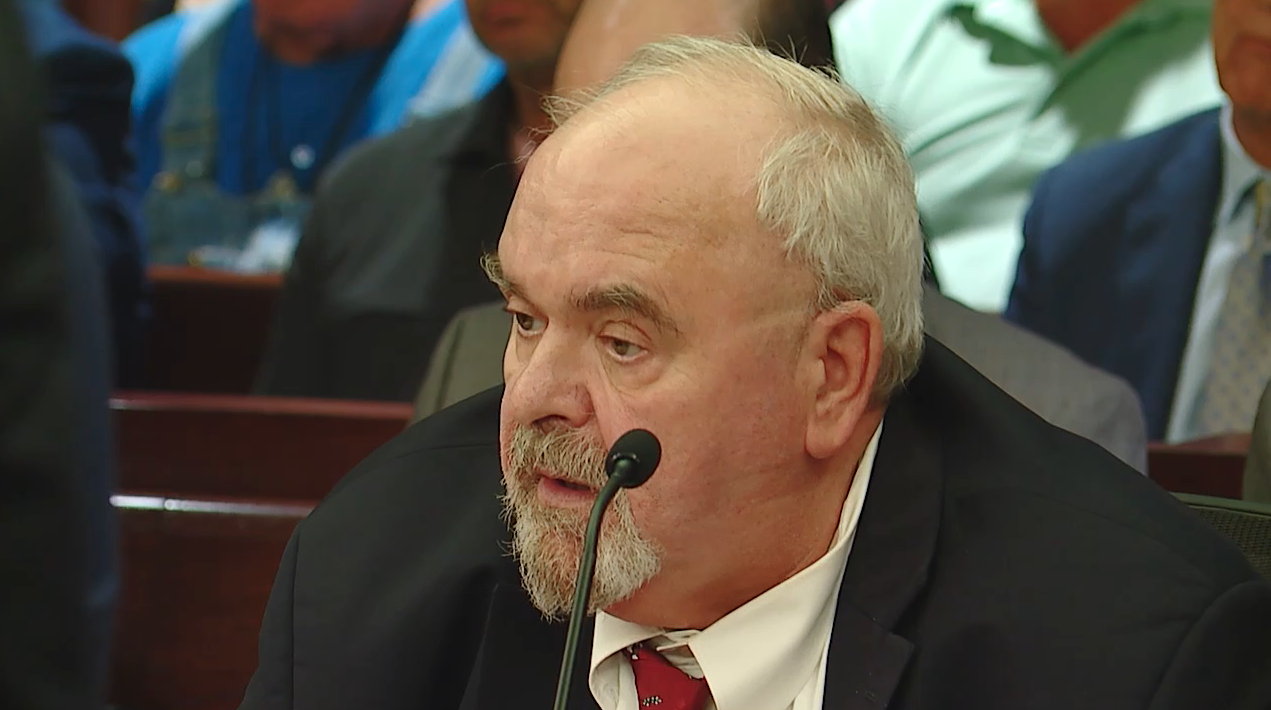
Showing posts sorted by relevance for query I feel like I'm in jail. Sort by date Show all posts

Thursday, August 27, 2009

"I feel like I'm in jail"

A court is keeping Isabelle Jessich in a nursing home even though a doctor says she's sane, sober and fit to leave. Is this how guardianship laws should work?

Last summer, incapacitated by malnutrition and a prolonged bout of heavy drinking, Isabelle Jessich was removed from the filthy bed in her Edina home and taken to a nearby hospital. A month later, with no improvement in her mental condition, the state courts took over Jessich's life, making all decisions on where she would live and how she would get better.

These days, Jessich bears little resemblance to the disheveled woman who refused to leave her bed. She lives in a nursing home, where she is able to eat, dress herself and use the bathroom without assistance. Though she still uses a wheelchair because of persistent dizziness, she exercises each day on a recumbent stepper machine. She has been sober and well fed for a year. In May, her neurologist pronounced her healthy enough to move back home.

Yet three months later, Jessich remains at the Robbinsdale nursing home, her future in the hands of a court-appointed professional guardian. Jessich, 56, has discovered a painful fact about the Minnesota guardianship system: It's set up for permanent oversight of people no longer able to make decisions for themselves. In fact, the more Jessich tries to take control of her life, the harder the system has fought to keep her a ward of the state.

"I'm not saying I didn't make mistakes," Jessich says. "Is that a crime? What the heck am I doing here?"

Jessich's deepest concern is not for herself, but for her teenage daughter, Allison. Since Jessich went into institutional care last year, her 16-year-old daughter has mostly fended for herself, depending on friends, relatives and neighbors for a place to sleep and something to eat. Her mother has come so far since last year, Allison says, that she is ready to be a parent again.

"Just let my mom come home," Allison says. "If she could prove to them there's a reason she has to be locked up like she is, then let her prove it."

Full Article and Source:
I feel like I'm in jail

Thursday, June 24, 2021

Britney Spears Compares Conservatorship To “Sex Trafficking,” Asks Judge To Free Her During Hearing

LOS ANGELES (CBSLA) — At a hearing Wednesday in Los Angeles that took place virtually, Britney Spears asked a judge to release her from a conservatorship primarily controlled by her father.

The conservatorship — also called a guardianship in some states —  sparked the #FreeBritney movement. It was put in place after Spears’ had a mental health crisis in 2008.

According to California law, a conservatorship is put in place for people who are “unable to provide properly for his or her personal needs for physical health, food, clothing, or shelter,” or for someone who is “substantially unable to manage his or her own financial resources or resist fraud or undue influence.”

Speaking by phone, Spears referred to the conservatorship as “abusive” and said, “The only thing comparable is sex trafficking,” according to the court transcript.

The last time Spears addressed the court was in 2019 and she said she didn’t feel that she was heard at that time.

In an emotional and sometime profanity-laced statement, the pop star condemned her father and others who have been in charge of the 13-year long conservatorship and asked to be released from the arrangement without an evaluation.

“I feel ganged up on, bullied and alone. I need your help,” Spears told the judge.

Spears’ statement went on for about 30 minutes and shed light on issues previously kept out of the public sphere by the court.

A particularly dramatic moment occurred at one point in the hearing when Spears shouted after an attorney representing the co-conservatorship suggested any medical information revealed in the transcript be kept private. Spears insisted that her words be public.

According to Spears, after she disagreed with a piece of choreography that was supposed to appear in her 2019 Vegas residency that was ultimately cancelled, she was forced to take lithium. She made a point of adding that she’s not a slave to anyone and is allowed to say no to a dance move.

A crowd of fans and supporters of the #FreeBritney movement could be seen outside the courthouse. Many held signs that read “Get out of Britney’s life” and “Free Britney now!”

After a brief recess, Vivian Thoreen provided a statement on behalf of James Spears, the pop star’s father.

“He is sorry to see his daughter suffering and in so much pain,” the attorney said. “Mr. Spears loves his daughter, and misses her very much.”

The pop star said that her father loved to control her life and that she believes her family has done nothing to help her. She also said she’d like to sue them.

“After I’ve been telling the world I’m okay…I’m not. I’m not happy. I can’t sleep. My dad and anyone involved involved in this conservatorship…they should be in jail,” Spears said. “I shouldn’t be in a conservatorship if I can work and earn money. I have worked since I was 17-years-old. I truly believe this conservatorship is abusive. I don’t feel like I can have a full life.”

According to court records, Spears’ estimated wealth is around $50 million. California law requires Spears prove that she is competent in order to be released from the conservatorship.

Attorneys and all parties agreed during the hearing that they will meet and come up with further dates for future proceedings.


Full Article & Source:

Friday, November 15, 2024

‘I’m kidnapped.’ Vietnam veteran fighting Michigan guardianship system


By: Heather Catallo , Johnny Sartin

SOUTHFIELD, Mich. (WXYZ) — Prosecutors have called court-ordered guardianship a superhighway that you can’t exit from and that’s exactly what one Macomb County combat veteran says has happened to him.

Gerald F. Harten says he survived the horrors of the Vietnam War only to now feel like he’s been captured by the enemy decades later. But this time, he says the enemy is Michigan’s guardianship system.

Harten admits he’s fully into his golden years and he’s not quite as physically capable as he once was, but he insists he is not mentally incapacitated. Harten says he wants his voice to be heard by the American court system that he fought for so many years ago.

“This is not right. This is illegally keeping me. Might as well go to jail — at least got more people there to talk to. Get three squares there, they'll give you your medicine. I've been in ‘jail’ for a year. That's the way I feel,” Harten told the 7 Investigators.

The 77-year-old Army veteran’s journey into guardianship started last November after he had back surgery and other health complications.

According to court records, his wife, Mary, had power of attorney to make Harten’s medical decisions, but she was hospitalized at the same time, so she could not care for him.

“I was in a hospital and my boy stepped up to be my overseer of the medicine,” Harten said.

Harten’s son became his legal guardian. When a judge approved that petition for guardianship, Harten was declared legally incapacitated.

“The court says I'm not allowed to go to the bank, take any money out or do anything,” Harten said.

If a judge appoints a guardian and conservator for you, you lose your rights, meaning you can no longer make your own medical or financial decisions, you can’t get married, you can't get divorced or decide where to live.

Harten says his son did a good job taking care of him at his home in Madison Heights after his surgery, but as Harten and as his wife both got better, Harten says he started asking to go back to his own home in Harrison Township.

“I was a millwright by trade. Worked seven days a week for 31 years. And I had everything paid for — my house. I have… three motorcycles, the pool in back, jacuzzi. I was made for my retirement. I'm not allowed to go home,” Harten said. “It’s just been a nightmare.”

Things in court then got messy. According to court records, Harten’s wife tried fighting the guardianship, his son hired a lawyer and there are allegations Harten’s wife ignored court orders and refused to pay for Harten's care. The judge later terminated the wife’s power of attorney over her husband.

In May, the judge put Macomb County professional guardian George Heitmanis in charge of Harten’s life.

Harten says he was furious Heitmanis kept him at his son’s house, even though police records show that the family started feuding so much that officers were called to the home repeatedly last summer.

“I'm kidnapped. I am really kidnapped,” Harten said about his guardianship.

Through their attorney, Harten’s son and his family declined to speak to the 7 Investigators, but police records show they alleged that Harten was often the aggressor during their conflicts.

According to court records, the allegation that Harten has dementia has been used to justify the need for guardianship.

The doctor’s note filed with the court that was used to start the proceedings last fall says Harten was suffering from “likely underlying vascular dementia …”

A report later ordered by the court that was conducted by a gerontologist who also works as a professional guardian states Harten’s “need for a guardian and conservator... has been clearly noted by four different evaluators.” For at least two of those evaluations, court records show Harten was on opioid pain killers, and he alleges those were the cause of his confusion at the time, not dementia.

“Do you think you are mentally deficient,” 7 Investigator Heather Catallo asked.

“No! Just no,” Harten said. “I remember everything.”

Whether he’s been talking to the 7 Investigators or the police, Harten consistently insists he’s not mentally incapacitated and he says to anyone who will listen that he just wants to go home.

“Do you remember the last time we talked,” one officer asked Harten while his body camera was recording back in August.

“I sure do. I don't have dementia,” Harten said.

Harten later told the officer while he was in the back of the police car, “It is a real bad situation. I don't want to be there.”

In the police bodycam footage, as officers moved Harten to the hospital, the video shows him remembering the officer who’s a fellow veteran from past police runs to the house.

“You’re the Army guy,” Harten said.

“Yeah, yeah,” the officer said.

After that exchange with police in August, Harten was evaluated by more neurologists at the hospital, and doctors regularly noted in his records that he was alert and oriented to person, place and time. Doctor’s notes indicate there had not been an “outpatient workup for dementia ...”

In September, Harten arranged his own transportation to get to the Veterans Affairs Hospital in Detroit to meet his regular doctor who wrote a letter saying “... Mr. Harten is competent and able to make his own decisions ...” and that Harten understands “the consequences of his actions.”

“Everybody that I know would say that I'm not crazy,” Harten said.

Harten’s guardian eventually transferred him from the hospital to a group home, which he says he’s not happy about. And other than one hearing on Zoom in July, Harten says he has not been allowed to attend his own court hearings.

“They always get me away from court deals. And that's what made me mad. I said, ‘what? I can't see the judge?” Harten said.

Harten has written two letters to Macomb County Judge Sandra Harrison asking to be heard in court, and his fellow veterans have filled the courtroom to support him even though he says he has yet been allowed to attend in person. Instead, his guardian speaks for him.

“Mr. Harten has significant neurological issues,” Heitmanis said at a September hearing.

Regarding a ward’s attendance at court, “It's not up to their guardian. It's not up to their loved ones. It's not even up to their doctors. Only that person gets to make that call," Michigan Elder Justice Initiative attorney Nicole Shannon said.

Shannon says someone who’s under guardianship has the statutory right to attend key hearings, and she’s helped write new legislation to reinforce that right for anyone facing guardianship.

“This is not just a legal technicality. This is a very substantive, important right that folks need to exercise. And if somebody is prohibited from attending their own hearing, it can have devastating consequences,” Shannon said.

“I am really almost crying out for desperation. I want to go home,” Harten said.

On Tuesday, the 7 Investigators reached out to both Harten’s professional guardian and his court-appointed lawyer. Within hours, a new hearing was scheduled on the court docket to discuss a new petition to terminate the guardianship.

Heitmanis told the 7 Investigators, the court wants Harten to go home as long as it can be made safe.

The hearing to terminate the guardianship will be held in December.

On Thursday, the Michigan state senators are expected to discuss proposed guardianship reforms during a committee hearing. Those reforms include increasing access to court hearings for people under guardianship, and other safeguards.

Full Article & Source:
‘I’m kidnapped.’ Vietnam veteran fighting Michigan guardianship system

Thursday, September 3, 2009

Editorial: Protective Services, Outdated

The case of Isabelle Jessich illustrates a system that lags the direction in which people -- and policy -- want to go.

According to the Star Tribune ("'I feel like I'm in jail,'"Aug. 23), Isabelle Jessich, nursing home resident and ward of the state, could not get permission to return to the community despite her strong preference and the opinions of her doctor and court-appointed guardian that she no longer needed to live in a nursing home. Once turned on, guardianship was almost impossible to turn off. Worse, the premises of the system were out of sync with the trends toward community-based long-term support services in the United States.

In its 1999 Olmstead decision, the U.S. Supreme Court ruled that keeping individuals in institutions just to meet their health needs violates the Americans with Disability Act. In 2001, the presidential New Freedom Initiative reinforced the goal that persons of all ages, with all types of disabilities, have the fullest range of life choices possible. Since then, the federal government has awarded more than $300 million in grants to help states implement community care. Most states, Minnesota among them, have developed extensive community programs, including consumer-directed community supports (a fancy way of saying the care recipient controls the money).

So given this background, what are the implications of the Jessich story?

Full Article and Source:
Rosalie Kane: Protective Services, Outdated

See also:
"I Feel Like I'm in Jail"

Monday, October 13, 2025

Arizona man stole $150K from his elderly mom. Then a probate judge asked to hug him


by Robert Anglen
Arizona Republic

Even veteran litigators say they cannot unsee what transpired inside a Maricopa County courtroom.

In the span of a nearly hour-long hearing, a Superior Court commissioner befriended a man fresh out of prison who was convicted of financially exploiting his 97-year-old mother.

She told him how young and wonderful he looked. She offered career advice and personal growth tips. She talked favorite concerts, weight gain, bucket lists and the quality of In-N-Out french fries. She also coached him on ways to secure visits with his mother.

Then Probate Commissioner Vanessa Smith asked if she could step down from the bench and give him a hug.

“Your honor, I would very much enjoy that,” convicted fraudster Karl Edmark III said.

Two of Edmark's siblings called the scene "bizarre" and "appalling." They said Smith seemed to abandon objectivity and professionalism, becoming personally invested in their brother's case — and his cause.

"It was a surreal situation," Rick Edmark said. "Why should a victim have anything to do with her abuser?"

The case illustrates the insular nature of probate court, where a tight-knit group of judges and lawyers hold sway over the health and wealth of people unable to care for themselves.

Hearings regularly take place in near-empty courtrooms without the public scrutiny or attention given to criminal prosecutions. Nevertheless, decisions on individual freedom and finances can be as consequential as a life sentence, with or without parole.

Commissioners in probate court have many of the same powers as judges. Among other duties, they monitor cases of people ruled to be incapacitated, whose bank accounts, property, possessions and continued care are turned over to third parties known as legal guardians.

Lawyers and legal scholars described Smith's conduct in Edmark's hearing as troubling, with potentially serious ramifications for both the case and the court.

"We are seeing bizarre sympathy for predators," said William Black, associate professor of economics and law at the University of Missouri. "You never, ever do this. ... You don't hug him."

Black, a white-collar criminologist who served as a visiting scholar at the Markkula Center for Applied Ethics, said Smith's hearing appeared to subvert fundamental judicial training and etiquette. He said she should face sanctions.

"This was completely unethical, front to back," he said.

Superior Court officials did not respond to repeated requests for comment. Smith, through a court spokesperson, declined to discuss the case.

Tasya Peterson, the court's communications director, said Smith was ethically prohibited from talking about an ongoing case. Peterson would not answer any questions about the hearing on the record.

This isn't the first time Smith's behavior on the bench has come under scrutiny. Phoenix probate lawyer Tom Asimou filed a judicial conduct complaint in March, accusing Smith of using a racial slur to describe a man seeking to become his adult son's guardian.

A judicial panel dismissed the complaint, but not before Asimou said Smith targeted the man in subsequent hearings, treating him with a "patronizing demeanor."

Asimou was not in the courtroom April 25, when Smith hugged Edmark. He represented the private fiduciary charged with overseeing the physical and financial well-being of Edmark's mother, Mary Miller, who spent the last months of her life in hospice.

Miller was the former wife of Karl William Edmark, a cardiovascular surgeon who gained international fame for developing the modern defibrillator. He died in 1994.

When Karl Edmark III, their oldest son, got out of prison in March, he immediately sought to see his mother in person.

Miller's fiduciary for months fought to prevent Edmark from visiting his mother without strict supervision. Allowing him to do so risked putting Miller at the mercy of someone who once "used his positions of trust and confidence to his mother to obtain and use her assets for his own benefit," Asimou said in court filings.

"I have spent my entire career helping the most vulnerable," Asimou told The Arizona Republic. "The overarching function of the probate court is to protect vulnerable adults. Mary Miller deserved those protections."

Miller lapsed into a coma and died Oct. 1. It was unclear if she was aware of the legal battle her oldest son was waging to see her.

'I always refer to you in my head as Karl'

Smith lacked the authority to grant Edmark rights to visit his mother. Under the rules of the court, she had little say in who got to see Miller.

That didn't stop her from trying to help him — and using her position on the bench to give Edmark pointers on how to legally make it happen.

"I would very much appreciate any assistance to clear the way to visit my biological mother before she passes," Edmark said in April.

Smith acknowledged Edmark's conviction, referring to "allegations of theft from a vulnerable adult."

She suggested including a letter from the probation department indicating it did not object to Edmark visiting his mother in an emergency petition to the court.

"I certainly would hope we could reach some sort of agreement so Karl could see his mom," Smith said.

Five days later, on May 1, Edmark's representatives filed an expedited petition for contact with Miller.

Judges and commissioners don't typically address people appearing before them by first name. But Smith told Edmark she felt as if she could relate to him.

"Your case has been around a long time; I always refer to you in my head as Karl," she said.

Courts in 2021 first ruled Edmark was unable to care for himself. Smith's role in the case is limited to making sure lawyers and fiduciaries managing his case are acting in his best interests.

Representatives for Edmark did not respond to interview requests.

Smith couldn't grant Edmark visitation rights to see Miller, whose case is overseen by a separate probate court judge.

Miller's court-appointed lawyer had argued in favor of letting Edmark have supervised visits with his mother.

"Karl never physically harmed his mother," Scottsdale lawyer Yvette Banker said in an April 28 email to Asimou. "Allowing Mary to see her child, at least once, before she dies, should be allowed."

Banker said she "didn’t care" what Edmark's siblings thought, telling Asimou it was not their call.

Banker did not respond to multiple interview requests. But court documents show Banker previously said Miller felt betrayed by Edmark, who had wasted her assets. Having visitors also overwhelmed the nonagenarian, Banker said.

Although the April 25 hearing had nothing to do with Miller, Edmark repeatedly steered the conversation to visitation while the commissioner questioned him about his probation status and rehabilitation.

Smith expressed empathy for Edmark.

"I cannot imagine coming out of a system where I'm confined, and I have to follow the rules and I'm handcuffed and I can't even pick out my own clothes," she said.

Probate commissioner gets personal — and up close

Edmark clung to Smith's words like a lifeline as her observations became more personal and they exchanged anecdotes.

They talked diet and exercise:

Edmark: "It makes me feel very terrible, being that heavy, because it is so high above my desired weight."

Smith: "I'll tell you, Karl. I am identifying with you because I don't move from this desk all day long, and I need to. What are you doing about it? Are you walking?"

Age:

Edmark: "I'm actually 70-plus."

Smith: "I know, but you don't look it at all."

Edmark: "That's a very nice compliment, your honor."

Smith: "I know you're stressed about that. I get it. But I think you look wonderful. I'm just glad to see you in person."

Fast food:

Smith: "What's the first thing you did when you got out?

Edmark: "Had my cousin take me to In-N-Out hamburger for lunch."

Smith: "I don't like their french fries. Do you?"

Jobs:

Edmark: "I am a hard-working individual. I would really like to get a job with a local chip manufacturer."

Smith: "I love it. I think if that's a real possibility, then go for it. Have you updated your resume recently?"

They also talked about concerts (Smith saw U2 at the Sphere in Las Vegas; her kids are obsessed with Taylor Swift); hobbies (Edmark enjoys model rocketry and scientific journals); podcasts (Smith recommended "Ear Hustle" about adjusting to life outside prison); and inventions (Edmark wants to develop a blood monitoring device).

Smith said it was "the best hearing I've had in a while," and just before wrapping it up, she told Edmark, "I'm so glad you came to visit." Then she asked if she could hug him."All right, you just made my day, Karl," she said.

Rising to greet Edmark in the gallery, Smith appeared to acknowledge her unorthodox behavior, if only to herself. The microphone caught her trailing words: "I realize I probably violate judicial behavior code every day ..."

Fraud, theft and a last-minute brain injury claim

Edmark in 2021 took a plea deal and admitted to stealing more than $150,000 from his mother while acting as her guardian.

He was hours away from sentencing in Maricopa County Superior Court when his estranged wife filed a petition with the court saying Edmark needed a guardian of his own; that he was unable to care for himself.

She claimed Edmark suffered from Alzheimer's disease, dementia and aggressive behavior. By way of explanation, she included a doctor's report saying a car accident years ago had left Edmark with a subdural hematoma on the right side of his brain.

The injury was self-reported, and the doctor later acknowledged basing her assessment on a phone call with Edmark's wife, court records show.

"Despite apparently knocking his head into a rental car windshield in 2016, Karl appeared to live an otherwise normal life until his criminal conduct began to have real consequences," Asimou wrote in a June 2025 objection to Edmark's petition to see his mother.

The injuries did not prevent Edmark from using his mother's money to book an $80,526 world cruise in 2017, Asimou said.

"Despite his 'forgetfulness' and 'mild cognitive impairment' he was able to navigate the use of Mary's credit cards to purchase and ship hundreds of goods to his home ... none of which were for Mary's benefit," Asimou said.

Edmark, 70, is the oldest of six siblings. He has a bachelor's degree in electrical engineering from the University of Colorado at Boulder and worked for some of the biggest names in technology, including Intel, Microsoft and HP, according to court documents.

Edmark's father made millions on his development of the defibrillator. In 1995, Edmark's five siblings successfully contested their brother's inheritance, claiming he manipulated their father into changing his will.

But Edmark in 1997 won on appeal and gained control over the bulk of his father's estate, court records show. His siblings said they could no longer afford the legal costs to continue fighting.

Three of his siblings offered a blistering personal indictment of their brother during his sentencing in their mother's case. They said he ripped off family members for decades. First their grandmother, then their father and now their mother, they told the judge.

"For 50 years, our eldest brother, Karl Edmark, has demonstrated a repeated pattern of predatory behavior towards the finances of our elderly family members," Rick Edmark said.

"He became our father's enabler and drug dealer, helping to procure drugs and alcohol to keep our father intoxicated and dependent upon him," Rick Edmark said. "He leveraged our father's drug-induced paranoia to gain access to his finances and cajole expensive gifts for himself, such as airplanes, a jet, a helicopter, lavish vacations and homes."

The siblings came armed with a 1995 opinion from a probate court judge in Washington, who found "Karl's behavior was motivated by greed and callous indifference to his father's needs."

Rick Edmark said his brother in 2017 began "preying upon our mother's multimillion-dollar retirement fund" and later got himself named as the successor trustee on his mother's trust, where most of her assets were held.

He argued Karl Edmark was completely competent to stand trial and asked the judge to give him up to five years in prison.

"His siblings know him as a brother who lacks love and a conscience when it comes to his family," Rick Edmark said.

It was all just an honest mistake, Karl Edmark said when it was his turn to take the stand — one that he regretted.

"I deeply apologize for all of this trouble that's it's alleged that I have — have caused, and I deeply apologize," he said. "And I want the court to know that I am not a predator."

Karl Edmark said there was no instruction book on how to act as a power of attorney for his mother. He painted himself as a dutiful son who helped both his father and his mother in their waning years. None of his siblings would step up and assume the responsibility for Miller's care and finances, he said.

"All I did was everything in my power to do everything for my mother," he said in court. "I was her surrogate husband — surrogate spouse, and I did everything in my power to do the very best for her."

The judge didn't buy it.

Criminal case ends in withering rebuke

Superior Court Judge Timothy Ryan excoriated Edmark in his ruling.

"I didn't hear you say a single thing about the harm you caused," Ryan said. "You're patting yourself on the back like you're some standup guy, and that's just not what I see."

He described Edmark as a taker — "a person who helped himself, helped himself over and over again" — and said it was embarrassing.

Ryan put the emphasis on restitution, ordering Edmark to repay his family, giving him a deferred jail sentence and three years' supervised probation. He warned Edmark failure to make payments would land him in jail.

Edmark did end up in prison. But it had little to do with the fraud case and a lot to do with his wife.

That world cruise? It was while globetrotting that Edmark met his wife, a 37-year-old Polish national who managed the ship's spa, court records show. He proposed to her in 2018 with an $80,000 platinum ring. At 63, Edmark gave up bachelorhood.

After Edmark was sentenced, his wife dropped her petition for guardianship, court records show. She also appeared to drop Edmark, at least on paper. She moved out of their Scottsdale home but periodically returned for visits, including one in 2022.

They went on a date. They got into an argument. Police were called. Officers found a gun in his house. Edmark was arrested in May of that year and was locked up in jail for violating his probation. As a convicted felon, Edmark was not legally allowed to possess a firearm.

Edmark pleaded guilty to the gun charge in 2023 and went to state prison for about two years. While incarcerated, court records show, Edmark reported that he was suffering from seizures and petitioned the court to appoint a guardian.

His wife, meanwhile, got a lawyer and access to hundreds of thousands of dollars in Edmark's accounts, records show.

Asimou, in court filings, called it "poetic justice."

Edmark was released from prison in March. A month later, he was discussing hamburgers with Smith and beseeching the probate commissioner to help him see his mother.

Commissioner accused of using racial slur

Smith, without apparent notice — or explanation — removed herself from several cases in August, all involving Asimou.

Asimou declined comment on Smith's recusal, saying only that he had no idea what prompted it.

The complaint he filed against Smith was dismissed in July. He accused her of demeaning a person of color during an exchange about prior court rulings. Transcripts and recordings captured what was said in the Jan. 7 hearing.

Asimou: "Not my circus, not my ring, but."

Smith: "Monkeys."

Asimou: "I wasn't going to say that because I think that's disrespectful."

Smith continued the hearing as if nothing had transpired. The phrase originates from a Polish proverb that historically is meant to mean, "not my problem." But it also has been described as racist.

Pool Roy, who is of Indian descent, took it as a slur. He was appearing before Smith to assume care of his incapacitated adult son and get the court's approval to move him to Maryland.

"As a man of darker complexion and with English as my second language, I found it deeply offensive and disheartening," the retired university professor said in a declaration. "In my experience, this term has historically been used to dehumanize people of color."

The utterance made him second-guess whether he was being treated fairly. Roy said he feared speaking out would cause the commissioner to retaliate.

"This experience left me feeling marginalized and discriminated against in a setting where I expected fairness and justice," he said.

Asimou accused Smith in the complaint of continuing to mistreat Roy. During a follow-up hearing, Smith was condescending, raising "concerns" about his intentions, Asimou said.

"The court appeared to assume that Pool Roy would not be able to obtain appropriate services for his son in Maryland — which is clearly contrary to Pool Roy's testimony and training as a guardian," Asimou wrote.

Smith ultimately signed off on putting Roy's son into his father's care.

Commissionersin Maricopa County are chosen by a committee of judges and lawyers and appointed by the court's presiding judge. Their roles are limited compared with judges. But probate court commissioners are given wide latitude to oversee cases.

Smith graduated from law school in 2004 and worked for most of her career in the Maricopa County Office of the Public Defender, according to her biography on the court's website. She became a commissioner in 2022.

She got high marks in her 2024 performance review, with litigants and court staff giving her 100% in surveys on a range of categories.

Her highest scores among attorneys were for maintaining control of the courtroom (96%), knowledge of evidence rules (94%) and clearly written legal decisions (94%). Her lowest score was for "judicial temperament" and being respectful to all individuals (82%).

Smith declined comment on Roy's case. Former Maricopa County Superior Court Presiding Judge Joseph Welty in March disregarded Asimou's complaint as "frivolous" while acknowledging he had not yet reviewed it.

"No reasonable person who understands the context of the statement could find it to be racially motivated or racially insensitive," he said in a statement to The Republic. "My office takes such accusations seriously, but this is a frivolous accusation against a court commissioner who was recently awarded for her integrity.”

Lawyers who complain can put cases at risk

Judges and commissioners are rarely held to account for misconduct in their courtrooms, said Black, the legal and ethics scholar.

But those who are most likely to witness such misconduct are lawyers whose cases are on the line, he said. They run the risk of antagonizing the judge and jeopardizing their reputations and, more importantly, their clients' cases.

"Most of the folks who observe it are lawyers who have to practice in front of the judge," he said.

Smith's behavior in the Edmark case should be called out, he said. Fawning and hugging someone whose case you are presiding over goes against the most rudimentary judicial training.

Former State Bar of Arizona President Ed Novak agreed Smith's behavior raises questions.

"It is unusual behavior, I will say that," Novak said. "Judges have been disciplined for less."

 Novak has taught ethics at Arizona State University and has served on the Arizona Supreme Court Committee on Character and Fitness. Some of Smith's questions of Edmark could be explained away as part of a careful interview process by the commissioner to gauge his state of mind, he said.

For instance, the exchange about where he went to eat after being released from prison could reveal his awareness of time and place, Novak said.

But other questions and actions, including the hug, were inexplicable, he said.

"That seems inappropriate to me," he said. "I don't know if it necessarily violates the code of judicial conduct."

Novak said he was familiar with Smith and her handling of cases. Asked if he had any opinions on her conduct, Novak replied: "None that I want to be quoted on." 

Full Article & Source:
Arizona man stole $150K from his elderly mom. Then a probate judge asked to hug him 

Tuesday, March 14, 2023

In the Name of Protection, Part 2: The Judges: Judge’s Errors, Jail Threats Haunt Georgia Family’s Guardianship

Illustration: Jonathan Hurtarte/Bloomberg Law. Photographer: Stephen Morton/Bloomberg

by Ronnie Greene

GUYTON, Ga. – In the three years Kalei Bulwinkle was under guardianship, the local judge improperly revoked her right to vote, erected hurdles on her ability to drive, barred her from having a debit card or writing checks, and banned her from spending over $500 without judicial consent.

As Kalei’s mom Victoria Vermillion challenged the rulings and hired a lawyer to extract her daughter from the system, the judge put the mother in contempt of court and threatened her with jail time.

The probate case of Kalei Hope Bulwinkle bears all the hallmarks of a guardianship calamity, with a family initiating the process with the best intentions only to confront a world of restricted rights and deep trauma. But the saga that unfolded in this small city 30 miles from Savannah includes another wrinkle: The probate judge deciding Bulwinkle’s fate had taken the bench without a law degree, and then proceeded to issue a series of rulings that would be invalidated only after the family fought them.

At least six states permit probate judges and other public officials who aren’t lawyers to issue adult guardianship orders. Georgia is among them, allowing such judges in any county of 90,000 or fewer people to take the bench without a law degree. Effingham County, home to Guyton and population 66,741, qualifies.

The county’s probate judge, Beth Rahn Mosley, is a former real estate agent and department store buyer who sought the post after serving as guardian for her brother-in-law. She campaigned door to door in 2008 to first win election. In an interview from her office at the county courthouse, Mosley said she thoroughly researches cases and uses common sense to reach just outcomes.

Though she discussed her path to the bench with Bloomberg Law, Mosley said she would not address Bulwinkle’s case or answer questions about it. “I refuse to talk anything about that,” she said.

The family, by contrast, said it was important to discuss its journey through the system.

“We want to educate people,” said Vermillion, a special education high school teacher. “We don’t want anyone else to go through what Kalei went through. … It’s a complete nightmare.”

Bulwinkle said she felt invisible in the process.

“I felt like the judge wasn’t treating me like a human being. She wouldn’t ever talk to me or acknowledge me,” Bulwinkle said. “I didn’t like that she was trying to take everything away from me.”

Kalei Bulwinkle’s rights to vote and spend money were improperly restricted when she was under guardianship.
Photographer: Stephen Morton/Bloomberg

Judges play central roles in guardianship cases. And a Bloomberg Law six-month examination found that judicial oversight can exacerbate an already fraught system, with judges providing scant oversight – or, as in the Georgia case, issuing orders that improperly restrict the already limited rights of adults under their watch. The case also shows how difficult it is to escape from a guardianship.

In the US justice system, guardianships get short shrift, Bloomberg Law found. No government agency tallies how many guardians abuse those they are supposed to protect. No firm data exist on the precise number of guardianships, and experts can only estimate the billions at stake in such cases. It’s the same system that pop star Britney Spears fought to escape.

“The everyday person, when they think of a guardian, they think oh, there’s a court overseeing that person; isn’t that a check or balance? Oversight of guardianships by courts are very uneven,” said Morgan Whitlatch, a director with the Center for Public Representation public interest law firm. “We collect data about things we care about. And when someone has their rights removed, we should care about that.”

Helping Kalei

Bulwinkle, now 22, is an amiable woman with Asperger’s syndrome, a high-functioning condition on the autism spectrum that can affect a person’s ability to communicate, particularly in social settings.

“When Kalei was in high school, Kalei was very generous to friends and they manipulated her,” Vermillion said. Once, she recalled, Bulwinkle gave another girl $5 to be her friend. “Kalei would just be generous, and as an adult I thought she’d be taken advantage of.”

Vermillion’s mother, a former probate court clerk, one day suggested she look into a limited guardianship for Bulwinkle. Vermillion thought it over and, after Bulwinkle turned 18 in 2018, petitioned to become her daughter’s guardian.

“I wanted my daughter to be able to contribute to society,” Vermillion said from the family’s home. “I wanted her to be a self-sustaining adult. I was trying to teach her how to balance my checkbook.”

Victoria Vermillion said she petitioned for her daughter’s guardianship with the best of intentions. “As an adult I thought she’d be taken advantage of.”
Photographer: Stephen Morton/Bloomberg

On Oct. 25, 2018, Judge Mosley formally approved the petition. Under her probate order, portions of which were typical for cases in Georgia, she ruled that Bulwinkle could no longer make her own decisions to marry, enter into contracts, consent to medical treatment, or buy or sell property.

Vermillion soon realized she had made a mistake. Her daughter passed her driving test, graduated from high school, began classes at a local technical college, and showed confidence in making banking and medical decisions. In November 2019, Vermillion petitioned to restore her daughter’s rights, writing a letter to Mosley describing Bulwinkle’s growth as a young adult. Vermillion included an affidavit from her daughter’s doctor, who endorsed her petition.

“Kalei is my heart and soul, and I truly am so proud of her. Never in my life would I allow anyone or anything to hurt her, but I will always want what is best for her,” Vermillion wrote the judge. “I do feel that we acted prematurely by putting so many restraints on her.”

The legal restraints were just beginning.

Errors in Court

On Feb. 24, 2020, Mosley held a hearing on the petition that resolved nothing. The session had to be postponed because the judge hadn’t appointed Bulwinkle a lawyer or guardian ad litem. Nor had she provided the family with an evaluation report before the hearing, as required.

And the evaluator’s report she read in court contained errors, claiming Bulwinkle graduated with a “special education” diploma when she had actually received a standard diploma.

By March, Vermillion had hired a lawyer to help her navigate the case: Julie Kegley, senior staff attorney with the Georgia Advocacy Office. The independent agency represented Bulwinkle at no cost.

Vermillion sent an email to the probate court saying so, adding that she intended to withdraw her initial petition to end the guardianship so her daughter could file her own, with Kegley’s assistance. “After speaking with Kalei’s attorney this afternoon, it was suggested for us to start fresh,” Vermillion wrote March 9, 2020.

A month later, Mosley shot down their plan. Bulwinkle couldn’t repetition to end the guardianship until Nov. 15, 2021 – two years after her mother’s initial petition.

In her April 2020 ruling, Mosley cited a state law that requires a two-year wait between petitions for termination of guardianship if a judge denied the previous petition.

The family was stunned. Vermillion’s petition hadn’t been denied “on the merits,” as the judge wrote; it had been postponed after errors in the process. Yet here was the judge saying no action could come for another 19 months.

And Mosley added another twist: She found Vermillion in contempt of court and ordered her to pay a $50 fine within 10 days. The reason: Mosley said her office told Vermillion she had to meet with a guardian ad litem the judge picked to assist in the case before the petition could be dismissed.

Once more, the family was taken aback. Vermillion said she never received an official notice saying a guardian ad litem had been appointed. Kegley urged Mosley to revoke the contempt order. “Because Mrs. Vermillion withdrew her Petition for Restoration, there was no longer a need for a Guardian Ad Litem,” Kegley wrote.

Mosley was unswayed.

On May 13, she affirmed her April order saying a new petition couldn’t come until November 2021. “Kalei Bulwinkle remains an incapacitated adult,” she wrote.

And, she affirmed her contempt order. “$50.00 is to be paid to this court by Friday May 22, 2020,” her order said. “$2.00/day will be charged until paid or she will face jail time.”

When Vermillion read those words, she was “petrified.”

“Can she really do this to me?” she asked herself. “I was thinking of going to jail. The consequences of being strip-searched and all that.”

The mother had long been her daughter’s rock. Now, the roles were reversed.

“I would come home sometime, and my mom would be in her room crying,” Bulwinkle said.

Bloomberg Law asked legal professionals to analyze topics including the role guardianship plays in states and what reforms would serve vulnerable populations.

More Surprises

In Oct. 2020, Vermillion sent an annual report to the court showing that Bulwinkle was writing her own checks, including some over $500 for her car insurance and college tuition.

A week later, on October 26, Mosley told Vermillion she would hold another hearing to see whether she should once again be held in contempt or even be removed as conservator. The reason, this time: Mosley was saying Bulwinkle couldn’t spend more than $500 at a time without court approval, nor could she write checks.

But those assertions, the family proved, were wrong. The judge’s initial order approving the guardianship never included wording about a $500 spending limit or the inability to write checks. When Vermillion had first become her daughter’s guardian, the judge gave her a handbook and video about the process. Neither, Vermillion said, cited such limits.

And then at a hearing that December 2020, the family learned that Bulwinkle’s right to vote had been revoked in October 2018, at the dawn of the guardianship. Mosley hadn’t held a hearing on the issue or listed the rejected voting rights in her initial guardianship order. In this 2020 hearing, for the first time, Mosley handed them a paper showing Bulwinkle could not legally vote.

Mosley declined to discuss Bulwinkle’s case but in an interview said the lack of a law degree doesn’t inhibit her ability to rule. Supporters of systems like Georgia’s say judges in small communities can provide sound legal rulings benefiting the public, whether they have law degrees or not.

“We have probate counsel and we have a Listserv. We still look up the law,” Mosley said, pointing to law books on her shelf. “If I don’t know the answer, I’m going to call an attorney not involved in the case. I’m not going to wing it.”

On Dec. 30, 2020, Mosley issued another contempt order against Vermillion and fined her $250. “No reason for the contempt finding was listed,” Vermillion said in a court affidavit, citing the judge’s order.

The judge also ruled that Bulwinkle would need a neurologist’s permission slip to continue driving – even though she’d passed her driving test and had no accidents or tickets, the family said.

And then on Jan. 8, 2021, Mosley emailed Vermillion that she was to close her joint checking account with her daughter and open a new account “that reads exactly Victoria Vermillion Guardian/Conservator for Kalei Bulwinkle. Kalei cannot write checks or pay her bills or have a debit card.

“If this is not done by Wednesday, January 13, 2021 by 5:00 p.m., then she will be forever removed from any part of this Guardianship/Conservatorship,” she wrote, referring to Vermillion.

The restrictions and directives were taking a toll.

“I did not know that every little dime, every little penny, every little decision would be nitpicked,” Vermillion said. “I took the brunt of the stress. There were days I had to get medicated by my doctor.”

Her husband, Rick Vermillion, Kalei’s stepfather since she was 10, said that with each new order, the family dug in even more to extricate itself from the guardianship. “I was ready to spend my life savings to get this overturned,” he said.

On the first day of March 2021, Kegley appealed to the Effingham County Superior Court to overturn Mosley’s orders.

Then the family waited.

Judicial Slam Dunk

On April 28, 2021, Superior Court Judge Lovett Bennett Jr. issued a 10-page ruling that struck down each of Mosley’s crucial orders.

“The Effingham County Probate Court’s improper additions of greater restrictions to Kalei Bulwinkle’s rights are reversed,” wrote the judge, who did not reply to interview requests.

Bulwinkle no longer had to wait until November 2021 to refile a petition to end the guardianship. Bennett reversed Mosley’s restrictions on her ability to drive and ordered that Bulwinkle could regain her right to vote and handle her own money.

The judge also cleared Vermillion of any wrongdoing. “There is no evidence or finding that there has been a breach of the fiduciary relationship between the guardian and Kalei and as such, these restrictions have no legal basis,” he wrote.

It was a slam dunk victory. When the family read the order, they couldn’t believe that, two-and-a-half years after the guardianship began, a judicial ruling had gone their way. “I just kept thinking of all the craziness we went through,” Vermillion said.

Three months later, Mosley vacated her $50 contempt fine against Vermillion and wrote her a refund from the Probate Court account. She also vacated the second contempt fine and admitted her ruling limiting Bulwinkle’s spending ability hadn’t been included in her initial guardianship order.

Mosley terminated the guardianship on July 22, 2021. Bulwinkle’s rights were restored.

Kalei Bulwinkle is now free from the guardianship. Her voting rights have been restored, as well as her independence.
Photographer: Stephen Morton/Bloomberg

Nonlawyer Judges

Whitlatch said there should be concern when a nonlawyer takes away someone’s rights. She called it “evidence of lack of due process.”

Georgia isn’t alone. In North Carolina, elected clerks decide guardianship cases. In Texas, county court judges handling probate matters don’t have to be lawyers. Nebraska, Alabama, and South Carolina allow nonlawyers to oversee probate cases.

Mosley said her path to the bench began with her own experience as guardian for a brother-in-law with Huntington’s disease, which afflicts nerve cells in the brain. “Nobody wanted to be guardian,” she said, so she took the role. One day her husband turned to her and, referring to the probate judgeship, said, “You could do this job.”

Mosley decided to run after the judge announced her retirement, then reached out to political contacts. “I walked every subdivision in this county,” she said. As judge, she has pushed to make probate records more accessible to the public.

Critics say guardianship cases are too restrictive. Asked about that criticism, Mosley said: “It depends on the case, it depends on the person, it depends on the guardian.”

After she declined to discuss Bulwinkle’s case when Bloomberg Law knocked on her office door in early November, a reporter phoned two weeks later to again seek her perspective. Mosley’s office transferred the call to another court official. “She’s not going to be able to talk to you,” he said.

Kegley, Bulwinkle’s lawyer, said this was the first case she’d handled in which a higher court overturned a probate judge’s ruling. More common, she said, is for a probate judge who earlier approved of a guardianship to later terminate that order after being convinced, with new evidence, that the protected person was ready to strike out on their own.

Charting Her Course

In Guyton, Vermillion still carries regret for petitioning the court for the guardianship. She did it to help her daughter, never knowing the process would be so suffocating.

In October, during an initial interview with Bloomberg Law, Vermillion turned to her daughter.

“Kalei, I’m so sorry I did this to you,” she said. “I felt like I ruined my child’s life.”

She said the process to begin a guardianship was so easy, almost anyone could be put under one. “I feel I could almost go there and put you under guardianship,” she told the journalist.

Since Bulwinkle has been freed, Vermillion has seen her flourish.

“I’m doing a lot more stuff by myself,” Bulwinkle said from the family’s home. “Work interviews by myself without any help. Setting up doctor’s appointments. Calling in medicines.”

Last summer, she graduated from Ogeechee Technical College with an associate’s degree in early childhood care and education. She got hired as a day care teacher for 2-year-olds, driving herself to and from work each day.

And in November, for the first time, Kalei Bulwinkle voted.

Full Article & Source:
Judge’s Errors, Jail Threats Haunt Georgia Family’s Guardianship

See Also:
Guardians' Dark Side: Lax Rules Open the Vulnerable to Abuse

Thursday, November 20, 2008

Prisoner People

Britney Spears, whose father Jamie Spears is still the conservator of her finances and affairs, now says her tightly controlled existence feels "like Groundhog Day" and she feels "Like a Prisoner."

In the new 90 minute documentary “Britney: For The Record", airing on Nov 30 on MTV, executive-produced by Spears' manager Larry Rudolph, the Pop Princess admits:

"There’s no excitement, there’s no passion.I have really good days, and then I have bad days."

"Even when you go to jail, y'know, there’s the time when you’re gonna get out. But in this situation, it’s never ending. It’s just like Groundhog Day every day."

"If you do something wrong in your work, you can move on, but I’m having to pay for a long time."

"I think it's too in control, If I wasn't under the restraints I'm under, I'd feel so liberated. When I tell them the way I feel, it's like they hear but they're really not listening."

"I never wanted to become one of those prisoner people. I always wanted to feel free."

"I think I've learnt my lesson now and enough is enough."

Source:
Britney Spears says she feels like a prisoner

Britney Spears: Life Is "Like Groundhog Day"

Britney: Life is worse than jail


See also:
Permanent Conservatorship

Big Money Conservatorship

No Right To Counsel

Bad News For Britney

Thursday, May 30, 2024

Apology by convicted elder abuser not accepted by victim's daughter

By Justin Strawser


LEWISBURG — An apology offered in Union County Court by the 19-year-old former resident aide who pleaded guilty to extensive elder abuse was not accepted by family of a victim.

On Tuesday, Madison Laine Cox, of Pinchtown Road, Montgomery, was sentenced to three months in jail, followed by 18 months of house arrest with electronic monitoring and 171 months of probation. Cox pleaded guilty in February to 12 misdemeanors: one count of criminal conspiracy to commit abuse of a care-dependent person and 11 counts of abuse of a care-dependent person at Heritage Springs Memory Care in Lewisburg.

Cox apologized and stated she did not have any reasons for her behavior.

“I intend to do better with my future and not make the same mistakes ever again,” Cox said to Union County Judge Michael Piecuch. “I want you to know I will work hard every day to become a better person.”

Lynn Fiedler, the daughter of elder abuse victim Alice Longenberger, did not believe her mother’s abuser.

“I feel that it was very empty,” Fiedler said. “A very empty apology.”

Fiedler and her son, Brandon Fiedler, read victim impact statements before the sentencing. Alice Longenberger is 94 and has dementia.

“It is very hard for me to be up here and not say anything unprofessional to you all on the other side, especially you, Madison Cox, in light of the last time we were all here,” Brandon Fiedler said. “Excuses and zero remorse were shown. It’s truly sickening. But you don’t care. The last time we were here, I watched as you were laughing, smiling with your friends while waiting for the judge to come out of the courtroom. The only true remorse is that you got caught.”

They said Alice Longenberger has suffered both physically and mentally due to the abuse.

“You may not care when the lights are not on you, but you will care now because the public will judge you very harshly from this day forward,” Brandon Fiedler said. “Everywhere you go it will follow you and people will know. My family can finally go back to their lives after this is over, however, we will always have a heavy wound that time will never heal.”

The victims, Lynn Fiedler said, are not only the Heritage Springs patients but their families, their friends and the community itself.

“People are horrified by what you did and are deeply hurt and emotionally distraught by the suffering you have caused,” she said. “You have hurt people, Madison. I don’t think you have any idea or understanding of how far reaching your abuse goes and how much pain you have caused for so many people. Or maybe you simply don’t care.”

Fiedler criticized defense attorney Graham C. Showalter, of Lewisburg, for saying Cox did not take nearly as many photographs as her juvenile codefendant.

“I’m wondering how many pictures of naked elders being demeaned and victimized is OK?” she said. “One? Two? Three? Because to me, and I can safely say to everyone in this courtroom with the exception of you, your family and your attorney, the answer is zero as it is to any decent human being.”

Alice Longenberger’s dignity her family’s peace were stolen, Lynn Fiedler said.

“I hope that today’s sentence will make it clear to you that this is not acceptable to this community or to any decent human being and that you are punished to the fullest extent of the law,” she said. “You deserve no leniency.”

Fiedler had mixed feelings about the sentencing.

“I’m pleased and I’m disappointed at the same time,” she said. “I’m pleased in the sentencing in that it is the most we can do under the current laws in Pennsylvania. I’m disappointed in that the laws are not stricter and there wasn’t more of a punishment.”

Fiedler thanked Piecuch, District Attorney Brian Kerstetter and friends, families and supporters. Fiedler has been working with State Sen. Lynda Schlegel Culver, R-27, as part of an elder abuse task force to change the laws, including one that would place elder abusers on lists like sexual offenders are placed on lists.

Full Article & Source:
Apology by convicted elder abuser not accepted by victim's daughter

Friday, February 10, 2017

FBI Investigates Nashville Judge's Relationships


NASHVILLE, Tenn. - The Federal Bureau of Investigation is asking questions about an embattled Davidson County judge, NewsChannel 5 has learned.

Their focus is on allegations of improper relationships and official actions involving longtime General Sessions Judge Casey Moreland.

FBI agents began conducting interviews after allegations emerged from a Metro police investigation into the death of Leigh Terry, a 34-year-old Nashville woman who friends say struggled with depression and alcohol.

Her body was found inside an apartment in the Stahlman Building across from the Metro Courthouse.
Police ruled her death a suicide.

Terry's death came just days after a trip to the Alabama coast with Moreland and defense attorney Bryan Lewis -- a pair whose relationship and vacations have raised ethical questions in the past.

Accompanying the two on this trip were Terry and two other women who, according to court records, had all been defendants assigned to Moreland's court at some point in the past.

According to the police investigative file, Lewis admitted paying for Terry's apartment in the Stahlman, as well as loaning her the gun she eventually used to kill herself.

He later admitted the relationship with Terry was more than just an attorney-client relationship.
"It would be classified a friend and a friend with benefits. Had I had sex with her on occasions? Yes," Lewis told a Metro detective in a tape-recorded interview.

Lewis said he first met Terry when he represented her on a 2013 DUI.

A former boyfriend, Roy Matlock, told police that Terry told him right after they met about a troubling encounter with Moreland.

"When I met her she basically gave me like all her dirty laundry," Matlock told police.

"She told me right then that she had sex with Casey Moreland in the chambers - and that's what kept her out of jail. And she said I feel nasty."

Police reports show another former boyfriend, Brian Pesterfield, also insisted Terry had told him "she got out of a DUI by sleeping with Judge Moreland."

In fact, court records show the 2013 DUI was originally assigned to Moreland.

But the final order, reducing that case to reckless driving and sentencing her to five days in jail, was signed by another judge.

Jail records show Terry never showed up to serve her sentence.

Still, court documents show that Moreland later terminated Terry's probation, effectively ending the case.

Also on the trip was Natalie Amos, who admits she was in a relationship with Judge Moreland.
She was reluctant to tell police who was on the trip.

"I know you don't want to mention somebody, but I just need to know who we are talking about," a Metro detective said to Amos in a recorded interview.

"Casey Moreland," Amos replied.

According to the police file, Terry had told Roy Matlock that "when Natalie Amos told her she owed high court fees, she would call Judge Moreland and have them waived."

Numerous witnesses said Terry began acting erratically during the trip, even threatening to expose Moreland and Lewis.

"She said, 'Ok, I hope you're ready.' And she's like 'I will ruin you.' She said 'I know things.' She's like 'you both know what I'm talking about,'" Amos told police.

Pesterfield recounted how "on the trip she yelled at Bryan Lewis and Casey Moreland that she was going to tell the media about the trips and the mistresses, how she slept with Casey Moreland to get out of a DUI."

Bryan Lewis's reaction to her threats:

"I took that as an idle threat from her, something that was made in the heat of the moment and, you know, that she wouldn't follow through with," Lewis told police.

And Moreland told police he also felt Terry "would calm down and come to her senses" once she got home.

A former boyfriend flew down to the Alabama coast and brought her back to Nashville.

Just days later, the troubled young woman took her own life.

Again, multiple sources say FBI agents have begun conducting interviews in conjunction with these allegations.

We don't know whether this is just a preliminary investigation -- or a full-fledged public corruption case.

Moreland's attorney Worrick Robinson said they will cooperate with any investigation and he looks forward to telling Moreland's side.

Full Article & Source:
FBI Investigates Nashville Judge's Relationships

Tuesday, December 1, 2020

“We Don’t Even Know Who Is Dead or Alive”: Trapped Inside an Assisted Living Facility During the Pandemic

Varahn Chamblee outside one of the hair salons
where she works in the Bronx.
(Joshua Rashaad McFadden/The New Republic)
What it’s like to stay alive as the virus charts its fatal course through a home for the elderly in one of the worst-hit neighborhoods in the Bronx.

by Ava Kofman

When someone in the building died, a notice was often taped to a window in the lobby: “WE REGRET TO ANNOUNCE THE PASSING OF OUR FRIEND….” The signs did not say how or where the friend had died, and because they were eventually removed, they could be easy to miss. In March, as these names began to appear more frequently at Bronxwood, an assisted living facility in New York, Varahn Chamblee tried to keep track. Varahn, who had lived at Bronxwood for almost a year, was president of its resident council. Her neighbors admired her poise and quiet confidence. She spoke regularly with management, but as the coronavirus swept through the five-story building, they told her as little about its progress as they told anyone else.

Some residents estimated that 25 people had died — that was the number Varahn had heard — but others thought the toll had to be higher. There was talk that a man on the second floor had been the first to go, followed by a beloved housekeeper. An administrator known as Mr. Stern called in sick. Around the same time, Varahn noticed that the woman who fed the pigeons had also disappeared.

The New York State Department of Health advises adult care facilities to inform residents about confirmed and suspected COVID-19 cases. But inhabitants of Bronxwood said they were kept in the dark. In the absence of official communication, it was difficult to sort out hearsay from fact. “I was told that it was 42 people,” said Renee Johnson, who lived on the floor above Varahn. “But honestly we don’t know. They are not telling us anything.” When for a couple of weeks Renee herself was bedridden — fatigued and wheezing — there were rumors that she, too, had passed away.

Because so many people were missing, and no one knew where they’d gone, life began to feel like a horror film. The dining room, once an outlet for gossip and intrigue, was shuttered and the theater room padlocked. Staff covered the lobby in tape, as if it were the scene of a crime. The library began filling up with the possessions of those who had vanished: their televisions and computers, their walkers and bags of clothes.

It seemed like a good omen when a few residents came back from the hospital grinning, having faced the ordeal and lived to tell about it. “I wouldn’t even say to them, ‘I thought you were dead,’” Varahn said. “I was just happy to see them.” But then she spotted these survivors in the lobby or going out shopping and worried that the sickness would continue to spread.

The virus was taking the worst toll in the Bronx, and Bronxwood sat within the borough’s hardest-hit ZIP code, although it would be weeks until anyone would know this. But by April, it was clear that elderly Black and brown people with preexisting health conditions, living in crowded housing in the city’s poorest neighborhoods, were among those most susceptible. That many of Bronxwood’s residents belonged to this demographic did not escape anyone there.


When Varahn arrived at Bronxwood in the summer of 2019, she was 65 and still worked at two salons. She hadn’t been planning to move to an assisted living facility, but she was desperate to find an affordable room. She had been sharing a ground-floor apartment with her 28-year-old son in Allerton, a working-class neighborhood in the Bronx, before her landlady pushed her out to make space for her grandchildren. Friends told Varahn she should have taken the matter to court, and maybe she could have, but she believed that things happened for a reason.

In the brick vastness of the east Bronx, with its towering apartment blocks and modest duplexes, Bronxwood’s cream-and-beige exterior stood out. The building was just a 20-minute walk up the street from her old apartment, so she didn’t have to worry about missing her clients, her church sisters or the kids she mentored, who called her Mother V. Her benefits covered the $1,270 rent, which included three meals a day and housekeeping. The shared bedrooms — crammed with two twin beds, two stout night tables, two wardrobes and two wooden dressers — were small, but Varahn didn’t think she’d spend much time in hers.

On the first floor, which housed the recreation and meeting rooms, there was always something to do. Staff threw holiday parties and monthly birthday celebrations. Visitors came by to help with knitting and coloring and computer lessons. There was Uno, Pokeno and afternoon bingo. On Wednesdays, members of the cooking club prepared Cornish hens, fish and chips, liver with onions. In the afternoon, bands would perform — classical and jazz, calypso and merengue — and some of the singers were quite talented.

Glenda King outside Bronxwood, an assisted living facility in New York, in September. (Joshua Rashaad McFadden/The New Republic)

Not long after Varahn moved in, she met Glenda King at a Bible study group. Glenda, who is 68 and has lived at Bronxwood for over seven years, wears square transition lenses and tucks her gray hair into a prim, low bun. Dryly self-deprecating, she considers herself an introvert who has the misfortune to live in a building with 270 other people. She makes a point of being friendly, even though she likes to say that she has no true friends.

At first, Glenda found Varahn to be reserved, but she soon realized that what she had mistaken for detachment was simply Varahn’s way of taking in her new surroundings. Varahn knew how to draw people out and listen to their problems. She had worked as a beautician since high school, first at flagship boutiques in the city and later for the disco diva Carol Douglas and on the sets of Spike Lee films. Her clients felt comfortable confiding in her, and before long, so did the residents of Bronxwood. “I can go up and talk to her about anything,” Glenda told me. “Her forte is humility.”

All adult care facilities are legally required to maintain a forum where residents can independently discuss their living conditions, but some resident councils, like Bronxwood’s, are more active than others. Although Varahn was new to the building, people encouraged her to run for president. She would bring an unusual amount of political experience to the council: She had previously served as vice chair of the Allerton Barnes Block Association and as president of both the neighborhood merchant’s group and a charity society at her church. Under her bed, she stored the plaques from various luncheons that had celebrated her civic advocacy.

After Varahn’s victory in the September elections, Glenda, who had worked for many years as a typist, took on the duties of council secretary, and Hurshel Godfrey, another longtime resident, assumed the vice presidency. Every month, the council gathered in the main lobby, which fit about 60 people, some of them perched on their walkers. Varahn, who has a broad, serious face and a sleek bob, dressed for the occasion in crisp two-piece suits with lapels. She worked to cultivate a shared sense of purpose. “I never said I could do something, even if that was true,” she said. “I always emphasized that we could do it together.”

One of the first things Varahn noticed that fall, as the weather grew colder, was how few residents had proper winter clothes. Some explained that they were stuck indoors because they lacked coats. Old men shuffled around in flip-flops in the rain. In the annual grant application for extra state funding, Varahn secured a bigger clothing allowance — $200 per resident — and a double-oven stove for the communal kitchen. She brought in educational speakers for Veterans Day and Black History Month, and planned field trips to go out dancing and to the casino. “Varahn had a lot of connections,” Hurshel said. “I knew a few people, but she knew a lot.”

Some of the local politicians Varahn was acquainted with started asking her if she had ever considered running for higher office: The City Council elections were coming up in 2021. In February, she started riding the subway to midtown Manhattan to take a class for first-time candidates. Former campaign managers shared tips on electoral strategy and the best kind of eye contact to make with large crowds. Maybe, she thought, electoral politics was her calling.

At this point, the virus was said to be on the other side of the world. It hadn’t yet surfaced in a nursing home in Kirkland, Washington, or in New Rochelle, just a short drive up the road.


Until the 1980s, elderly Americans with medical needs had limited options: They could age at home with family or aides, or they could “park and die,” as the saying went, at a nursing home. Assisted living facilities emerged as a third way, rejecting the clinical strictures of a medical institution in favor of a more informal, dormlike setting.

In the last four decades, demand for assisted living has soared. The paradigm promises residents the freedom to live autonomously — and operators freedom from regulation. Unlike nursing homes, assisted living facilities are not subject to federal oversight. The standards for care — along with the definition of “assisted living” — vary greatly from state to state (and from facility to facility).

During the pandemic, these freedoms have become liabilities. “If infection control was limited and regulation was already ineffective in nursing homes, it’s almost nonexistent in assisted living,” said David Grabowski, a professor of health care policy at Harvard Medical School who studies long-term care for older adults. “It’s all the problems we are talking about with nursing homes, but even more so. There’s less regulation, far less staffing and many of the residents are just as sick.” The population in assisted living often closely resembles that of nursing homes, yet there are no requirements that the former provide full-time medical staff. In New York, according to government data, half of those in assisted living are over 85, two-thirds need help bathing and a third have Alzheimer’s or some other form of dementia.

At Bronxwood, the state’s third-largest adult care facility, residents said that employees initially lacked protective gear as they cleaned dozens of rooms. As in other homes in the city at the start of the outbreak, shared bathrooms and group meals made it difficult to isolate. And because it is not a medical institution, residents continued to enter and leave the building as they’d always done. (Neither Bronxwood nor Daniel Stern, an administrator, responded to repeated requests for comment.)

Bronxwood, New York state’s third-largest adult care facility. (Joshua Rashaad McFadden/The New Republic)

Less than 1% of Americans reside in long-term care facilities — a category that includes nursing homes and assisted living residences — but these facilities account for around 40% of the country’s COVID-19 deaths. Researchers caution that this figure represents an undercount. Many states do not publish this data, or do so incompletely, and fewer than half of all states report cases in assisted living facilities, according to research by the Kaiser Family Foundation. “As a result,” the analysis said, “it is difficult to know the extent to which residents and staff at assisted living facilities have been affected by COVID-19 or the extent to which interventions are urgently needed.”

The way that New York counts deaths has been controversial from the start. That’s because the state’s Health Department will not attribute a death to a residential health care facility unless the death occurs on the premises. The unusual policy has baffled residents and their family members, along with lawmakers and health care experts. “This is a really big hole in New York state data,” Grabowski said. “If someone lives for a long time in a nursing home, it makes no sense that their death is then attributed to the hospital rather than the nursing home.” Without a proper count of cases and deaths, advocates argue, officials cannot direct scrutiny or resources to afflicted homes.

For more than two hours at a hearing in August, legislators repeatedly pressed the state health commissioner, Dr. Howard Zucker, for the number of deaths that could be traced back to residential health care facilities. His answers did not satisfy his interrogators. “It seems, sir, that in this case you are choosing to define it differently so you can look better,” said Gustavo Rivera, the state Senate Health Committee chairman, whose district includes part of the Bronx. “And that’s a problem.”

Gov. Andrew Cuomo has boasted about the relatively low death toll in the state’s nursing homes, despite the fact that no other state counts these deaths as New York does. As of mid-November, there have been more than 6,619 virus-related deaths within the state’s nursing homes and 179 in its adult care facilities, according to official data. Bronxwood, however, has never appeared in that tally.

“The public list is incomplete and misleading,” said Geoff Lieberman, the executive director of the Coalition of Institutionalized Aged and Disabled, an organization that advocates on behalf of adult home residents in New York City. “Either everyone at Bronxwood died at the hospital, or the information isn’t being accurately reported.” Before the August hearing, Lieberman and his colleagues at CIAD interviewed residents at 28 adult homes in New York City, including Bronxwood, and tallied around 250 deaths from their accounts — a stark contrast to the 53 deaths that facilities had self-reported to the state. Bronxwood employees likewise sounded the alarm: In April, six staff members told local news that by their count more than a dozen residents had died.

Residents played detective, too. In May, when the U.S. death toll hit 100,000, Renee Johnson tried to match the names she saw in the newspaper to those of her missing neighbors. “We lost a lot of friends,” she said. “And you’re scared — you’re really scared — because you don’t know if you’re next.”

Jonah Bruno, a spokesman for the Department of Health, defended New York’s approach to counting COVID-19 deaths in residential health care settings. “The Department goes to great lengths to ensure the accuracy and consistency in our data reporting,” he wrote in an email. Bruno did not disclose how many residents died in the hospital after falling ill at Bronxwood, but he noted that the facility passed an infection control survey in May. “Since the start of this pandemic,” he added, “we have made protecting the most vulnerable New Yorkers, including those in adult care facilities, our top priority.”


Slowly and then all at once, everything that had made Bronxwood bearable was taken away. Residents were discouraged from seeing one another, going outside or congregating in common areas. Visitors were banned. Whenever people lingered downstairs or smoked out on the patio, staff ushered them back to their rooms.

Varahn hung posters in the lobby to try to boost morale. The first gave the administration and staff five hand-drawn stars and thanked them “for caring during COVID-19.” “WE ARE ALL IN THIS TOGETHER,” read the second, on which she had colored an American flag. Some residents thought their president was doing the best she could, given the circumstances. Others were offended. They didn’t want to thank anyone: They were miserable.

Deborah Berger, who lives on the fourth floor, likened the new regime to living in a giant day care center. Glenda said she felt like a puppy in a doghouse. Renee compared it to jail.

The analogies were ready at hand, but what was harder to express was how little trust they had in the institution tasked with protecting them. “Nobody is talking to us,” Renee said. “The staff just say: ‘Go to your room. Go to your room.’ There’s no feelings. There’s no nothing.”

Renee Johnson outside Bronxwood in September. (Joshua Rashaad McFadden/The New Republic)
Glenda washed her hands until she felt as if they were going to fall off. She wiped everything down with bleach — door handles, dresser, windowsill. She had a weak left lung, and she was terrified. “If I get one hit of that coronavirus,” she liked to say, “I’m not going to make it.” When her legs got stiff from sitting, she paced up and down her cappuccino-colored hallway, about the length of a city block. Other times, wearing a surgical mask, she wheeled her walker downstairs, though the state of affairs there could be disappointing. A lot of residents didn’t wear masks. They huddled around the TV and crowded in the elevator. People were getting complacent. “Not me,” Glenda said.

The council had suspended its meetings, but toward the end of April, several residents approached Varahn to report that Bronxwood was not giving them their stimulus checks. In fact, complaints about missing or partial stimulus checks were so widespread throughout the city’s facilities that the state issued a guidance: Residents’ money belonged to residents. Varahn convened an impromptu meeting with the council’s leadership in the stairwell — the only somewhat quiet place in the building — to strategize about what to do.

Hurshel, the vice president, was planning to ask about his check. “Don’t ask,” Varahn coached him. “Say, ‘I came here to get my money and I’ll cash it myself.’” Glenda noted that people with dementia might not remember the existence of the checks in the first place, so she knocked on doors to remind them.

Part of Varahn’s role as president was to relay these and other concerns to Mr. Stern. They had an easy, playful rapport. Sometimes, he asked what an intelligent woman like her was doing living in a place like this. The question flattered her, but it also unsettled her, as if she wasn’t wanted or didn’t belong.


People talked about leaving Bronxwood almost as soon as they arrived, but the truth was that they were there because they had nowhere else to go. The elderly are typically steered to places like Bronxwood after a stay in the hospital. They have taken a fall or needed a surgery, and while they’re recovering, lose their apartment. Others, like Glenda, are recommended by a caseworker at a shelter. It’s not uncommon for such homes to hire recruiters to help fill their beds.

While many assisted living facilities cater to a wealthy clientele, who pay out of pocket, Bronxwood primarily serves low-income seniors. (It is, technically speaking, an adult home with an assisted living program.) Most residents sign over their supplemental security income to pay for the room and board — and out of that sum the facility gives them a $207 “personal needs allowance” each month. The money runs out quickly, since it often goes toward phone bills, toiletries, transportation and more nutritious food.

Out of Bronxwood’s 270 or so residents, more than half are enrolled in its assisted living program, whose costs are covered by Medicaid. In theory, the program offers an extra level of care to those who need it. In practice, it functions as a “huge financial boon” to the adult home industry, said Tanya Kessler, a senior staff attorney with Mobilization for Justice, a legal services organization. Bronxwood can charge Medicaid between $78 and $154 per enrolled resident each day, depending on his or her needs. But Kessler said there’s little oversight into whether this additional funding results in additional care. Bruno, the spokesman, said that the Health Department conducts regular inspections of assisted living programs “to ensure all applicable laws, regulations and guidelines are being followed.”

Healthier residents at Bronxwood told me that they seemed to be roomed with those who were more infirm, effectively placing them in the role of an extra aide. “One of the big complaints we hear is, ‘I’m not well myself, but they put this person in here that they expect me to look after,’” said Sherletta McCaskill, who, as the training director of CIAD, helps adult home residents organize councils and independent living classes. “It speaks to the lack of services that these homes are providing.” The most recent audit by New York’s Office of the Medicaid Inspector General found that Bronxwood had overbilled Medicaid by $4.4 million in 2006 and 2007. (Bronxwood requested an administrative hearing to challenge the findings, according to an OMIG spokesperson; the date is pending.)

In the pandemic, everyone’s escape plans, loudly discussed yet endlessly deferred, took on a new urgency. Residents told Varahn that they were joining the city’s long wait list for subsidized senior housing, or that a son or daughter was coming to rescue them. Faye Washington, who was 68 and lived down the hall from Glenda, tried to compile a list of senior housing options in the Bronx. “You know why I want to get out?” Faye said. “Because when all those people passed away, it killed me.”

Faye Washington outside Bronxwood in September. (Joshua Rashaad McFadden/The New Republic)

Faye told Glenda, “I’m taking you with me.” But Glenda was not in any hurry. It was safer, she felt, to be where an aide could hear if she called for help. She had heart problems, anxiety, memory loss and chronic fatigue. Her family had asked her to stay with them, but she did not want to babysit relatives. As she saw it, if God had wished her to have more children, he would have let her keep getting her period.

Varahn’s family urged her to leave as soon as possible, even if it meant losing a month of rent. But where would she go? Varahn wondered. And then what would she do? The lady who lived across the hall had gone to see her daughter in Georgia, and now she was stuck there while all her things were here.


As the lockdown dragged on, Varahn felt herself sliding into a depression. Before March, she was always out with a client or at some community meeting. Now she was eating three meals a day on a rectangular folding table at the edge of her bed. She was gaining weight from staying inside. Her feet were swollen. Her back hurt.

She started taking walks, sometimes just a few blocks, to relieve the pain. The soccer field across the street, where kids played on Saturdays, was empty. Many of the stores on White Plains Road, Boston Road and Allerton Avenue, including the salons, were closed until further notice, and some days it felt like the entire world was at a standstill.

It wasn’t just the forced isolation that discouraged her. Everything was happening on some sort of screen, and the tedious video engagements and text messages often left her frustrated. In her class for first-time campaigners, which had migrated to Zoom, the connection was always faltering, making it difficult to understand what anyone was trying to say.

At other times, she wasn’t isolated enough. Her roommate rose at dawn and sold loose cigarettes throughout the day. People were always stopping by. Whenever Varahn was on a call or at a virtual meeting, the roommate muttered under her breath or cursed sarcastically. Once, the noise was so disruptive to the class that the instructor told Varahn to mute herself, which she found humiliating. What would have been merely an inconvenient pairing in normal times had under quarantine become an oppressively intimate arrangement. There was also the problem of Varahn’s older sister, Childris, whose heart was starting to fail. The grief put a constant pressure on her days. All this made it hard to concentrate, and she soon fell behind on her studies. So many things about her path to the City Council were uncertain now anyway. Was a person of her age expected to knock on doors? Would she have to campaign through a computer screen?

Varahn began searching for a way to reclaim her freedom. She asked Mr. Stern for a room of her own. As far as she could tell, there was plenty of space in the building. A private accommodation could double as a little office for the council, she reasoned — somewhere that residents could feel comfortable speaking to her. But management never acted on her request. Victoria Kelley, a former jazz singer who had lived at Bronxwood for three years, suspected that Varahn’s battle for the clothing allowance had turned administrators against her. Such retaliation is not unheard of, according to advocates who work with residents at adult care facilities. “If you don’t have someone on the council to fight for you, nothing gets done, but Varahn did fight,” Victoria told me. “Some of the naysayers got jealous.”

With the arrival of spring, a different approach revealed itself to Varahn. First she rented a car, so she could get around more easily. Bright flowers fringed the patio, and slender trees cast ragged patches of shade on the sidewalk. Her errands had been piling up, too. She needed to buy cases of bottled water, pick up her son’s stimulus check from her ex-landlord, haul her sheets to the laundromat after her roommate got bedbugs.

Then she started driving for the pleasure of it, humming along to power ballads on Christian radio and chatting on the phone with friends. She found herself going through the boxes in her U-Haul storage unit, making a mental inventory of all the things she didn’t have space for at Bronxwood, like her slow cooker, her turkey roaster, her Ashley Stewart outfits, her dance costumes. One weekend, a few FOR SALE signs caught her attention. That was when she realized what was happening: She wanted out.

It was a complicated undertaking. Most apartments were too expensive, which is why she hadn’t been able to get one in time last year. And even if she was lucky enough to find something affordable, she would have to keep working — perhaps, if salons weren’t allowed to reopen, somewhere that wasn’t a salon. Then again, she didn’t want any of the residents to feel that she was leaving them behind.


One morning toward the end of July, Glenda’s cellphone rang. The sound surprised her, because she had stopped paying the bill. When Glenda called the number back from the room’s landline, it turned out to be Varahn, who announced that she was moving out the next day and promised to stop by in September “to pass the torch.” Glenda told Varahn she was happy for her, and she was. But she wished her friend had let her know sooner. Hurshel, the vice president, was unable to step in, because he, too, had just left. After five years on the city waitlist for affordable housing, he’d finally landed a new spot. It was less than a block away from Bronxwood. “You have to get out of there,” he warned his old friends.

That same week, Bronxwood laid off employees without warning, apparently because of the declining number of residents. There was no longer an aide for the fourth floor, according to three people who lived there, and there was no one to speak up about it. “I feel stripped naked, like we’re getting ready for the slaughterhouse,” Glenda said the next day. We were sitting down the street, and as staff trailed out of the building at the end of the afternoon shift — a long procession of teal and navy scrubs — some of them were wiping away tears. “Right now, the administration can say anything goes.”

Glenda knew she did not want to serve as president, even in an interim capacity, and asked Renee, a former president, what to do. Renee was telling everyone who had asked her this question the same thing: She didn’t have a clue. “We’re so lost right now,” Renee said to me in August. Her bingo crew had dwindled from more than 15 players to fewer than 10. She was pessimistic about the prospects for a socially distanced election: “We don’t even know who is dead or alive.”

Varahn had implied to Glenda that she was staying in the Bronx. In reality, she was moving to suburban Maryland. She had signed the lease for a one-bedroom apartment in a senior living community just a short drive away from her daughter’s house. It was everything that Bronxwood was not: serene and quiet, lush with greenery.

She had told Glenda only half of the story because she couldn’t quite believe her good fortune. “I feel so sorry because some of them are waiting there thinking that they will someday get an apartment,” Varahn said. “If it wasn’t for my associations” — the support from her family, her earnings from the salon — “I would be stuck there, too.”

Her family was relieved about her departure, but Varahn remained uneasy. With a room of her own, she thought, or even a different roommate, she probably would have stayed. As it was, the likely return of the virus in the winter frightened her.

When she packed up her belongings, she felt as if she were packing up the future she had once imagined for herself. “By now, I would have been running for City Council, if this virus didn’t happen,” she said. “So I’m saying to myself, well, you know, that wasn’t in God’s plan.” Though she kept her move a secret, one resident spotted her carrying boxes in the hallway and asked her, “Are you just going to leave us like that?” It was the same question she had been asking herself for months.

In a handwritten letter Varahn gave to Bronxwood’s administrators before she left, she expressed her desire to remain president from afar until it was safe to hold an election. She had planned to retire there, the letter said, yet it was impossible to do so under the current circumstances. She expected Mr. Stern, or at least his secretary, to call to offer his regrets, but she never got a response. It made her feel as though nothing she had done at Bronxwood mattered — as though she had never lived there at all.

Full Article & Source: