Showing posts with label intellectual disabilities. Show all posts

Thursday, January 8, 2026

Mercer County Man Investigated in Sexual Assault Case Involving Incapacitated Woman, Deputies Say

by Lootpress News Staff 


MERCER COUNTY, WV (LOOTPRESS) – A Mercer County man is facing felony charges after deputies say an investigation and forensic testing linked him to a reported sexual assault involving a woman with documented intellectual disabilities.

According to the Mercer County Sheriff’s Department, deputies first responded to a home on Trove Place in Princeton on June 20, 2025, for an indecent exposure complaint after 911 callers reported a man and woman engaged in sexual activity in a front yard.

Deputies said they arrived to find the pair — identified as Charles Keffer and Alexis Anderson — together near a trailer. A neighbor later provided deputies with brief video clips that appeared to show sexual activity taking place in the yard, investigators said. 

During the response, Anderson’s mother arrived and informed deputies that she is Anderson’s legal guardian and that Anderson has autism and an intellectual disability, supported by court documentation, according to the report. Anderson was transported to the hospital, where a sexual assault examination was performed.

Detectives later reviewed forensic lab results from the evidence kit, which indicated the presence of male DNA on multiple samples collected from Anderson. A court-authorized DNA swab was later obtained from Keffer, and state police lab analysts determined that DNA from several swabs was consistent with Keffer’s profile, investigators said.

Because of Anderson’s documented incapacity and longstanding acquaintance with Keffer, detectives wrote that they believe he was aware of her limitations at the time of the alleged conduct.

A forensic interview with Anderson was also conducted in October 2025 due to her cognitive condition. Investigators said Anderson disclosed that she was sexually assaulted and identified Keffer as the person involved.

Following the lab findings and interview, detectives requested warrants charging Charles Leslie Keffer with sexual abuse in the second degree and sexual assault in the third degree.

The case remains under investigation, and Keffer will face the charges through the court system.

Full Article & Source:
Mercer County Man Investigated in Sexual Assault Case Involving Incapacitated Woman, Deputies Say 

Tuesday, March 26, 2024

STATEHOUSE: Kansas Senate passes expansion of Silver Alert program

Emporia, KS, USA / KVOE
Chuck Samples

The Kansas Senate has passed a bill that would expand the state’s Silver Alert system.

Traditionally used whenever senior citizens go missing, Senate Bill 371 is designed to expand the alert system to include missing people ages 18 or older with intellectual disabilities. The bill passed unanimously, including a yes vote from 17th District Senator Jeff Longbine of Emporia, and now goes to the Kansas House for discussion.

Separately, the Senate overwhelmingly passed House Bill 2562, creating the Protect Vulnerable Adults from Financial Exploitation Act. This will mandate a broker-dealer or financial investment adviser to report confirmed or attempted exploitation. It would also give broker-dealers or investment advisers the authority to delay transactions or disbursements whenever financial exploitation is expected. Longbine was in the 38-2 majority after the bill passed the House unanimously.

Source:
STATEHOUSE: Kansas Senate passes expansion of Silver Alert program

Wednesday, July 19, 2023

Atlanta father-son team develop app to help people with intellectual disabilities

By Hope Dean 

Click to watch video

ATLANTA, Ga. (Atlanta News First) - A Georgia State University student and his father have joined forces to develop an app benefiting people with intellectual disabilities.

Called “Let Me Do It,” the app helps users make decisions through a personalized choice tree, according to a GSU statement. Angad Sahgal and his father Amit said the app will empower people with Down syndrome, autism, and other disabilities to live more independent lives.

“It reinforces the fact that Angad has the independence and capability of making his decisions but can do with some help to navigate the steps to arrive at that decision,” Amit said.

Angad attends GSU’s IDEAL program, which works with students who have developmental disorders. He has also served as Georgia’s Youth Ambassador for the Center on Youth Voice, Youth Choice, a national organization that helps young people with disabilities make decisions about guardianship.

“As a person with a disability, entrepreneurship has allowed me to pursue my dreams and pave the way for the next generation of disabled entrepreneurs,” Angad said. “I know what it means to work with limitations and turn them into opportunities.”

The app is being funded by the Main Street Entrepreneurs Seed Fund, which comes out of GSU’s Entrepreneurship and Innovation Institute, and Synergies Work, an Atlanta-based nonprofit.

The app launches in November. Amit said that the app will one day support people with sensory disabilities and the elderly population, too.

Full Article & Source:
Atlanta father-son team develop app to help people with intellectual disabilities

Sunday, January 9, 2022

Guardianship battles in the spotlight spark new calls for reform

Legally Bound 
 
By Jenny B. Davis

Michael Lincoln-McCreight remembers the day he was told to go to court. It was 2014, and Lincoln-McCreight, who had recently turned 18 and aged out of the foster care system, was living in a group home for people with intellectual disabilities in Port St. Lucie, Florida.

Lincoln-McCreight says the situation was fine at first, but then it got weird. “And when I say weird, I mean doctors started coming in and asking me lots of questions, and there was an attorney,” he explains.

Then came the trip to the courthouse.

“Why did I have to go to the courthouse?” he remembers wondering. “I have never been charged with anything, and I wasn’t arrested for anything.”

Lincoln-McCreight is unsure of the details, but a public guardian petitioned the court for plenary, or full, guardianship over his personal and financial affairs.

Guardianship, also called conservatorship, is a term used when state law grants an individual decision-making power over an adult deemed incompetent or a minor child. The court appoints a guardian—typically a family member, a friend or a professional—in conjunction with a finding that the person subject to the guardianship is incapable of acting independently because of age, injury, intellectual or developmental disability or mental health crisis.

A court-appointed guardian’s control is often limitless and can include power over their person and/or property. It includes major decisions such as medical treatments and investment strategies; fundamental freedoms such as the right to vote; and lifestyle choices such as taking a vacation, seeing friends or adopting a pet. Once a legal guardianship relationship has been established, only a judge can adjust or terminate the order.

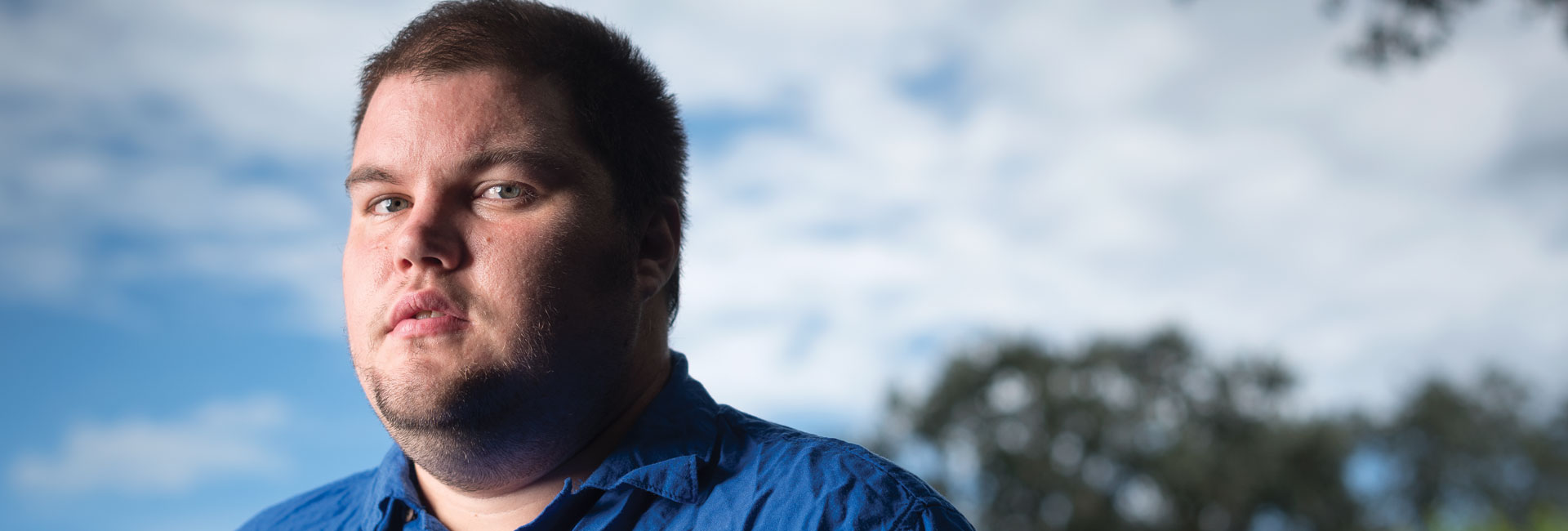
Michael Lincoln-McCreight
Michael Lincoln-McCreight. (Photo by Tom Sayler/ABA Journal)

Lincoln-McCreight says the court hearing was swift, and he wasn’t given a chance to speak on his own behalf. The court approved the plenary guardianship, and he says the next two years of his life became a living nightmare.

“I couldn’t see my friends, I couldn’t see my family, I couldn’t go for walks, I couldn’t do anything,” he says. “I was basically being held hostage.”

Lincoln-McCreight says he knew what was happening to him was wrong, but he was told there was no way out.

Then a friend’s mother told Lincoln-McCreight about an organization called Disability Rights Florida that might be able to help. Because his phone calls were being monitored, he hatched a plan: He asked his caseworker for money to buy a book, and when he got it, he used it to buy a burner phone instead. Then he hid in a closet and placed the call. Through that call, he connected with Tampa lawyer Amanda Heystek, and together they successfully challenged the guardianship, winning the restoration of Lincoln-McCreight’s rights in 2016.

Today, Lincoln-McCreight lives independently, holds a security officer license and a CPR certification and works full time in access control at a local country club.

He also has become a passionate disability rights advocate, working with I Decide Florida for guardianship reform, and he co-authored an op-ed for the Tallahassee Democrat in July called “What happened to Britney Spears also happened to me—in Florida.”

He follows Spears’s case intently. “I look at her story, and it’s a spit-image of what I went through,” he says.

Celebrity spotlight

Spears’s case—and the corresponding #FreeBritney social media movement—brought national attention to a sometimes sinister system that has escaped scrutiny for decades, despite efforts by advocacy organizations and the bar to create more oversight.

For most of the past 13 years, every aspect of Spears’ life was controlled by her father, along with a team of doctors, lawyers, managers and minders. But for years, dedicated fans were suspicious about the conditions of Spears’ conservatorship, and their ongoing efforts to call attention to her case eventually paid off.

It all started in 2008 when a Los Angeles Superior Court commissioner granted her father, Jamie Spears, a temporary emergency conservatorship over her person and property after apparent mental health crises. Two months before the conservatorship was set to expire, the court cemented its terms, allowing it to last indefinitely.

But in 2020, Spears began a series of court actions challenging her conservatorship. During a June hearing, she described her life in harrowing detail.

She couldn’t freely access her passport, credit cards or cellphone, she alleged.

She couldn’t change her clothes without supervision at times, couldn’t leave her house without permission, and she couldn’t say no to work, medications, treatment or even to a dance move.

Britney Spears at a concert wearing a snake across her shoulders
The #FreeBritney movement, including protests and a social media campaign, helped catalyze guardianship reform efforts by advocacy groups and legislators. Photos by Valerie Macon/AFP via Getty Images; Shannon Finney/Getty Images; KMazur/WireImage

“I just want my life back. And it’s been 13 years. And it’s enough,” she told the court. “I deserve to have a life.”

(Jamie Spears’ role as conservator of his daughter’s estate was suspended in late September, and a judge was scheduled to consider whether to terminate Britney’s conservatorship in November.)

Spears isn’t the only celebrity whose controversial guardianship is making the news.

Trailblazing African American actress Nichelle Nichols, known to generations of TV viewers as Lt. Nyota Uhura from Star Trek, sits at the center of a three-way struggle between her former manager, a friend and her son. Nichols was diagnosed with dementia, and in 2019, her son, Kyle Johnson, was appointed conservator of her estate and person. Since then, he has moved the 88-year-old to New Mexico to live with him and sold her LA home.

Nichols’ former manager Gilbert Bell and a friend, Angelique Fawcette, have separately objected to Johnson’s control, and Fawcette has claimed she has been denied visitation. “She’s not getting the life that she wished for,” Fawcette told the Los Angeles Times in August. “She’s getting the life other people have chosen for her.”

Overprotective and abusive guardianships don’t affect just celebrities; these conditions are playing out across the country on a regular basis, ensnaring people regardless of their financial resources and name recognition.

People such as Jenny Hatch, a woman in Virginia with Down syndrome who lived independently, had a job and a supportive base of friends until her parents obtained guardianship over her in 2012 and sent her against her will to live in a group home, ostensibly for her own safety.

Or Coenia Schaefer, an 86-year-old woman in Oregon who lived alone in her own home and cared for herself and a menagerie of pets. A judge granted her son guardianship in 2001 based on a finding of dementia contained in a fill-in-the-blank report that had been completed by a worker with no formal medical training or college degree who interviewed Schaefer for just 90 minutes.

Both women challenged their guardianships in court and eventually won their freedom. But advocates for guardianship reform say such success stories are rare. Reforms must be made, they say, to ensure every state system successfully balances protection with self-determination.

Renewing the calls for reform

Reform efforts date back to the late 1980s, when a groundbreaking series of articles published by the Associated Press in 1987 exposed egregious abuses nationwide. Lawmakers, lawyers and advocates stepped up, addressing the issue with working groups, new and revised state laws and improved model acts and standards.

In 1988, the National Guardianship Association was formed. Also that year, the ABA convened a meeting of the nation’s most noted subject matter experts to create recommendations for change. The meeting became known as the first National Guardianship Conference, and its efforts have been ongoing.

In 1997, the Uniform Guardianship and Protective Proceedings Act was updated to strengthen due process protections for people subjected to guardianship proceedings, and the Uniform Probate Code’s Article 5 was revised the following years to parallel provisions of the UGPPA. By 2012, nearly half the states had enacted all or a portion of the revised provisions. In 2017, the protections were further strengthened in the renamed Uniform Guardianship, Conservatorship and Other Protective Arrangements Act.

Between 2011 and 2020, “Many statutory changes have advanced guardianship reform: safeguarding rights, addressing abuse and promoting less restrictive options,” according to a December 2020 legislative summary from the ABA Commission on Law and Aging.

Progress is indeed happening, albeit slowly. “It’s like trying to push a cruise ship into a dock by nudging it in different directions,” says University of Missouri School of Law professor David English. He has been involved in reform efforts since 1987 and is the former chair of the ABA Commission on Law and Aging, the former drafting committee chair for the Uniform Guardianship, Conservatorship and Other Protective Arrangements Act, and the co-author of several treatises on estate planning and elder law.

Advocates for reform point to significant hurdles that still stand in the way of change. Guardianship remains under the purview of state law, with no federal standard, oversight or funding. In fact, the federal government doesn’t even know the scope of the guardianships that exist across the nation because there are no reliable statistics counting the number of guardianships, the amount of assets under guardianship or the number of guardianship challenges taking place across the country.

Undue influence

Help, however, seems to be on the way. Prompted by the Spears case, powerful lawmakers such as Sens. Elizabeth Warren, D-Mass., and Bob Casey, D-Pa., recently called on the Department of Health and Human Services and the Department of Justice for information necessary to begin making changes, and there are bills currently before the House and Senate that call for both fixes and funding.

In addition to the high-profile Spears conservatorship battle, the movie I Care a Lot helped raise public awareness about flaws in the guardianship system, advocates say. The thriller follows a con woman who uses the guardianship system to institutionalize older adults while she steals their assets. After its February 2021 release on Netflix, it became one of the most-watched movies that month on the streaming service; by April, Netflix estimated it had been watched by 56 million households.

Scene from the film I Care a Lot.
Advocates say the film I Care a Lot raised awareness about guardianship fraud. (Pictoral Press)

The COVID-19 pandemic also served to spark discussion about vulnerable populations, says Judge Lauren S. Holland of the Lane County Circuit Court in Eugene, Oregon. Holland, who was first elected to the bench in 1992, has been handling probate cases since 2001. Active in the ABA’s Commission on Law and Aging, she was a delegate to the Fourth National Guardianship Summit.

“Although people may not have been discussing guardianship specifically, the pandemic allowed the conversation about our elders and how we as a society and community treat our elders,” she says.

More generally, however, public opinion about people with disabilities has changed over time, as has the cultural expectation that people with disabilities must be protected, says Jonathan G. Martinis, senior director for law and policy with the Burton Blatt Institute at Syracuse University. He heads the BBI’s efforts to ensure the receipt of appropriate supports and services for the older adults and people with disabilities. He also helped represent Hatch in her guardianship battle with her parents.

“It wasn’t until the Americans with Disabilities Act of 1990, passed 214 years after the Declaration of Independence, that we say that people with disabilities have the same rights as other people,” Martinis says.

The need for numbers

One of the most significant reforms topping almost every guardianship reform wish list involves numbers—as in current, meaningful and comprehensive statistics involving all aspects of guardianship at the national level.

There were 1.3 million adults and $50 billion in assets under the care of guardians in the United States, according to a National State Courts estimate in 2016, but those figures were based on informed speculation.

This issue is now before Congress and government agencies in a number of ways, including a bipartisan bill called the Guardianship Accountability Act of 2021, in committee at press time, which calls for the creation of a National Online Resource Center on Guardianship and the development of state guardianship databases. The call from Sens. Warren and Casey seeks stepped-up data collection efforts, as does legislation introduced in July by Reps. Charlie Crist, D-Fla., and Nancy Mace, R-S.C., called the Freedom and Right to Emancipate from Exploitation Act, known as the FREE Act.

"If you want to understand a system, you have to be able to collect data." —Anthony Palmieri

Why is this data so important? Because it goes to the integrity of the entire system, says Anthony Palmieri, president-elect of the National Guardianship Association and a nationally recognized expert on guardianship fraud. Palmieri is the deputy inspector general and chief guardianship investigator for the clerk of the circuit court and comptroller of Palm Beach County, Florida.

“Any time you have a system without sufficient checks and balances and where one person doesn’t have all of their rights—they don’t have a voice and can’t defend themselves—it’s ripe for fraud,” Palmieri says.

“If you want to understand a system, you have to be able to collect data—data about the guardians, the attorneys, the petitioners—and give that data to the decision-makers so that they can make data-driven decisions, not knee-jerk decisions based on anecdotes,” he says. “The state needs to know this, or else how can we educate about guardianships and protect people under guardianships if there’s no empirical data to tell us what the problems are—and also to tell the story of those guardians who are doing honorable, ethical work?”

Data also affects resource allocation and the government’s ability to make policy decisions in response to outcomes and trends.

“When we go to the legislature to request resources to provide for necessary safeguards like audits, payment of court-appointed lawyers to represent protected persons, monitors for investigations and court oversight, the collection of data impacts that,” Holland says. “The legislators are certainly entitled to ask, ‘Well, how many cases are we talking about?’ And we are always in a better position to answer when we have more information.”

When less is more

Guardianships have been described as both a gulag and a godsend, but practitioners say the most effective protections exist in the space between those extremes.

“Guardianship is not one-size-fits-all,” Palmieri says. “It can make sense in some cases—like when a person has Alzheimer’s and there’s family conflict around the decision-making—but it doesn’t make sense for younger people with intellectual disabilities, developmental disabilities or addiction.”

Karen Campbell agrees. As the executive director of the North Florida Office of Public Guardians in Tallahassee, she supervises the guardianships of more than 200 people living in 22 counties across North Florida. “I believe that on the spectrum of decision-making, guardianships are sometimes necessary,” she says. “We serve some people who are completely unaware of their surroundings and even need assistance turning over in bed. Our job in every guardianship is to help communicate the person’s preferences and actualize their life choices.”

Advocates say courts must explore less restrictive alternatives to full guardianship, and the ABA adopted resolutions in 2017 and 2020 urging this approach. The National Center for State Courts’ Center for Elders and the Courts has defined guardianship as a legal tool of “last resort,” and the Uniform Guardianship, Conservatorship and Other Protective Arrangements Act calls for an appointment of a guardian only if the needs of the person subjected to the guardianships “cannot be met by a protective arrangement or other less restrictive alternative.”

Despite these acknowledged best practices, 11 states and the District of Columbia still lack any reference to least restrictive alternatives in their guardianship statutes, according to 2018 statistics from the ABA Commission on Law and Aging. While the flip side of this statistic is encouraging—suggesting that the majority of state laws do recognize alternatives in some way—advocates say judges aren’t necessarily following the letter of the law. “Frequently, the law on the books is pretty protective of people’s rights, but in practice, we find that doesn’t really play out,” says Morgan K. Whitlatch, legal director of Quality Trust for Individuals with Disabilities in Washington, D.C. Quality Trust provides legal services to D.C. residents with disabilities and their families to promote alternatives to guardianship and the right to self-determination. Whitlatch also co-represented Hatch.

“There’s always been a gap between what the statute requires and how guardianship law is actually practiced,” English says, noting that even if a judge determines that a full guardianship is deemed necessary, limitations could be added such as a sunset clause or a mandate that a hearing be held after a later, specific date whereby the guardianship would have to be proved up again.

Alternatives to guardianship, such as powers of attorney and medical proxies, have long existed and continue to successfully help people requiring assistance (while simultaneously keeping them out of the legal system). But one of the most innovative new formats gaining traction in both advocacy communities and the legal system is called supported decision-making.

SDM mirrors the process by which most people make decisions: They consult friends and family, social services or other sources of support, then use that information to weigh the pros and cons of a particular decision to arrive at a choice. In the context of guardianship alternatives, SDM can range from a loose network of go-to advisers to a formal written agreement setting forth specific terms including revocation and termination. This extrajudicial solution means no laws or regulations are needed to set up a plan, and no lawyers are needed to craft an agreement. But Whitlatch says legal recognition would be helpful to demystify and legitimize the concept.

“What SDM looks like can change depending on the circumstances,” Whitlatch explains. “One can imagine a situation where someone requires greater support at one time, like in a mental health crisis, but not others. SDM can be adapted to the decisions you need to make in the short term and long term, across disabilities and even in cognitive decline.”

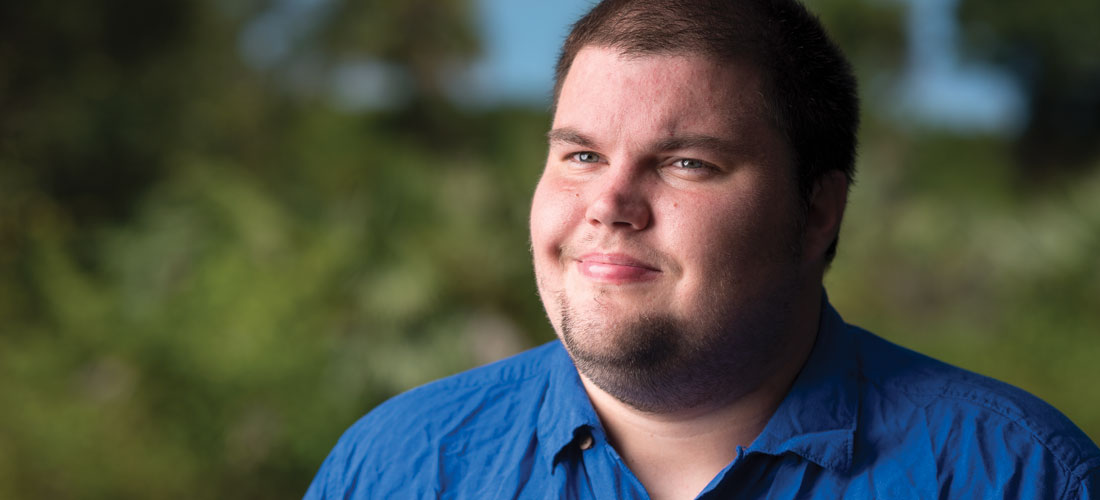
Michael Lincoln-McCreight
Michael Lincoln-McCreight became the first person in Florida to terminate his guardianship in favor of an SDM. (Photo by Tom Sayler/ABA Journal)

When Lincoln-McCreight successfully challenged his guardianship in 2016, he became the first person in Florida to terminate his guardianship in favor of an SDM. He says the arrangement was formalized via a written contract for the court; however, in practice, he says it’s more akin to “friends and family helping me out.”

Lincoln-McCreight’s lawyer says the arrangement is working. “He now makes his own decisions—some good, some not so good—but they are his, and he is happy,” says Heystek, a lawyer with Wenzel Fenton Cabassa in Tampa. When issues arise, she says, “he works through problems the way he should, by calling on his supports.”

Escaping the trap

Another critical component of guardianship reform involves making it easier—or at least possible—to challenge a guardianship and achieve a restoration of rights.

Laws that speak to these actions vary from state to state. For example, according to a 2019 report by the ABA Commission on Law and Aging, the guardianship laws in 13 states contain no mention of a right of appeal, either because the right doesn’t exist or because it’s assumed to be inherent as part of the Rules of Civil Procedure. Only eight states have statutes with specific procedures to appeal.

It’s also a mixed bag when it comes to the burden of proof. Some states put the burden of proof on the person seeking the guardianship, others on the person seeking relief, and the extent to which either must prove their case also varies.

But even meeting the lowest standard of proof can be problematic, lawyers say. For example, if a person under guardianship doesn’t have access to a phone or a computer, how can that individual contact a lawyer? If guardians control access to medical records, how can people under guardianship prove their medical or mental capacity? And if they’ve never been allowed to make decisions for themselves before, how can they show a court that they are capable?

“All in all, it’s like a spiral,” says Prianka Nair, assistant professor of clinical law and co-director of the Disability and Civil Rights Clinic at Brooklyn Law School. “Even with the best-meaning guardian, the system is coercive—it puts the person in the guardianship in a position where they may have to challenge family relationships, to challenge their own support.”

Mirroring the nightmare scenarios in Netflix’s I Care a Lot, Heystek says she once represented an older woman who didn’t even know she was subject to a guardianship “until the guardian showed up on her doorstep to come inventory her home and take her to an assisted living facility.”

Then there’s the problem of money. Statistically, people with disabilities are more likely to live in poverty and face barriers to finding and retaining employment, Nair says, making it difficult for them to hire a lawyer. And having money can be very necessary because some states require the person subject to the guardianship to pay the bills and fees—even if that person has received no notice of the proceeding or doesn’t hire a lawyer for themselves. “You can be forced to pay for the privilege of losing your rights,” Martinis explains.

One of the key barriers to challenging guardianship is knowing that it’s possible. That’s according to a study on the restoration of rights conducted by the ABA Commission on Law and Aging in 2013-2014. This happens because there’s no universal requirement for courts or guardians to regularly inform the people subject to their control that they have the right to seek restoration.

Ultimately, the hope is that everyone living under an unnecessary or repressive guardianship will have the opportunity to reclaim the right to live a fully actualized life to the fullest extent possible, and those who require support will receive it in a way that works best for them.

Thanks to a movie, a pop star, a pandemic and the passage of time, that hope—advanced by tireless efforts of visionary lawyers, lawmakers and advocates—may actually happen.

Jenny B. Davis, a former practicing lawyer, is a professor of practice at Southern Methodist University.

This article was originally published in the December 2021-January 2022 issue under the headline, “Legally Bound: Guardianship battles in the spotlight spark new calls for reform.”

Full Article & Source:

Monday, December 20, 2021

After Britney Spears battle and local scandals, Alabama advocates push alternatives to guardianship

Colby Spangler studies at the University of Alabama and promotes alternatives to legal guardianship, which strips people of independence.

By Amy Yurkanin

Colby Spangler, 22, may not seem to have much in common with singer Britney Spears.

The young man from Shelby County did play music in his high school band but now focuses on wildlife studies through a program offered by the University of Alabama for students with intellectual disabilities. Spangler, who is in his last year of study, works part-time, belongs to a fraternity and lives in an apartment.

But his mom, Kim Spangler, said her son was in “the school-to-guardianship pipeline” until he hit high school. Many well-meaning people involved in special education advised her to seek guardianship when he turned 19 so he could continue to receive services.

“Schools will tell you as soon as they turn 19, you need to become their guardian,” Kim Spangler said. “So we just kind of believed that. The more research we did, the more we realized it wasn’t absolutely necessary.”

Instead of entering a guardianship, like the one Spears recently had dissolved, Spangler and his family opted for an alternative that gives him more control. It’s called supported decision-making, and the system surrounds him with support from friends and family.

Spangler’s decision-making team consists of several people who can offer advice on everything from social life to finances. Kim Spangler said it took about a year and a half to build her son’s team. It has nine people who each cover specific areas such as independent living, safety and spiritual growth. They can advise and help guide Spangler, but ultimately he makes the decisions.

Courts can award guardianship to a family member or professional if an expert determines a person cannot make rational decisions. Some people need guardians, said James Tucker, director of the Alabama Disabilities Advocacy Program.

But the system also strips people of their rights and independence. The Britney Spears case, and the conservatorship case of Golden Flake heiress Joann Bashinksy in Alabama, also raised questions about whether a legal framework designed for protection can be used to exploit individuals, including the elderly and disabled. The default in Alabama has been for courts to award full guardianships in cases like Spangler’s when a more limited arrangement might be better, Tucker said.

“The neat thing about this support decision-making is that the child is a young adult learning to live independently like other young adults,” Tucker said.

Several states have passed laws recognizing supported decision-making as an alternative to guardianship, but not Alabama.

Kim Spangler wants other adults to know supported decision-making can work for families and people with disabilities. If she had become her son’s guardian when he turned 19, Spangler probably wouldn’t have been able to attend the University of Alabama and thrive in ways she never expected.

“I know COVID came around and messed everything up, but my adult life is really easy right now,” Spangler said.

One day, Spangler told his mother he wanted to join a fraternity. He pledged Beta Upsilon Chi, a Christian fraternity known as BYX. He recently traveled with them to Six Flags in Georgia.

“I went online and found fraternities and looked for one I would want to join,” Spangler said.

That caught his mother off guard. Kim Spangler said learning to let go and trust her son has been hard but rewarding.

“Colby has met or exceeded every single one of the challenges and has kind of demonstrated his capacity to us,” Spangler said. “We think he is ready for a more independent kind of life and we think he will do very well.”

Full Article & Source:

Sunday, July 26, 2020

Families call for change to visitor restrictions at state assisted living centers


by: Kevin Clark

AUSTIN (KXAN) — Stephanie Kirby remembers vividly the last time she visited her son at the state supported living center in Denton — it was March 12.

“I hugged him, kissed him goodbye, left him on the patio as he was drinking his chocolate milkshake,” she recalled. “Said, ‘See you later.’ And I didn’t see him later.”

As far as caregivers go, Kirby is as dedicated and involved as it gets.

But KXAN’s Investigative team has spoken with many families of residents in state institutions and nursing homes who are concerned for their loved ones’ well-being during the coronavirus pandemic.

Now, stories of isolation and mental deterioration fill a book mailed to Gov. Greg Abbott on Thursday.

The coalition of concerned families make up Texas Caregivers for Compromise, which is calling on the Governor to allow limited family visitation at these facilities, even if it’s just one designated family member.

The Governor’s executive order prohibiting visits also applies to the Denton State Supported Living Center, where Kirby drops off meals for her son at the front gate every Sunday.

She says she’s only been able to see him when he had to go to the hospital, twice this month. One of the trips was following a self-harming incident.

Petre Kirby, 28, has been living at the
 Denton State Supported Living Center
 for more than three years
(Courtesy of Stephanie Kirby)
“He’s lost weight, he looks stressed, he looks anxious,” Kirby said. “A mom can see.”

Petre Kirby is 28 years-old but functions mentally like a three-year old, his mom tells us.

She says Petre is nonverbal and has been known to harm himself.

He’s among the 3,000 or so Texans with intellectual disabilities who live at the state’s 13 state supported living centers. One of the locations is a sprawling, 95-acre campus in Austin.

Kirby has written one letter to Gov. Abbott every day calling for limited visits. Thursday is day 133.

“I said: ‘Let Petre see me in the middle of a wide open field, let him just see that I still exist, that mom hasn’t abandoned him,” she said.

The Associate Commissioner of all state supported living centers emailed Kirby and reiterated the decision was up to the Governor.

“It is my understanding our Regulatory Division has developed some guidelines for review by the Governor’s Office,” the email reads. “I hope we hear something soon.”

But that was a month ago.

“There’s no way anyone could explain to him what happened, and why his mom vanished off the face of the earth and has never returned,” she told us.

Legislators speak up


As our team investigated, we learned of a new letter signed by 55 Texas Senators and Representatives, highlights the concerns about isolation of the most vulnerable Texans who are in state-run institutions.

The letter, sent to Health and Human Services Commissioner Phil Wilson and obtained by KXAN Thursday, asks for an immediate plan to allow limited family visits at assisted living centers.

It predominately refers to residents with memory and mental deficiencies who don’t understand their lockdown status.

“Many cannot understand a virtual visit, and simply look down the hall for their loved one when they hear their voice on an electronic device,” the letter reads.

It adds: “The consequences, as we are sure that you are aware, can be deadly. Hopeless depression and anxiety are quickly leading to failing physical health among these precious and vulnerable people. We have already lost too many to these policies, and more are on the way.”

A spokesperson with Texas Health and Human Services tells us the agency would continue to explore ways to keep families in close contact with each other while the Governor’s order is in effect.

We understand the current policies have been difficult for many parents and guardians, as well as the people we serve, during this pandemic,” she said.

KXAN’s team has also reached out to Gov. Abbott’s office for the last three days, asking about visitation restrictions and when there could be any changes.

As of Thursday evening, KXAN has not heard back.

“COVID is not the only danger to our loved ones,” said Kirby. “There’s the mental damage, the emotional damage, the deterioration.”

“I’m not a visitor. I’m an essential part of his life. I’m his mom.”

KXAN’s Ben Friberg contributed to this report.

Full Article & Source:
Families call for change to visitor restrictions at state assisted living centers

Sunday, August 19, 2018

Man's death at group home illustrates challenges of meting out justice when suspect has intellectual disability

Click for Video
Herbert “Herbie” Rohloff wasn’t expected to live to 53 years old.

He was born with Down syndrome, and doctors said they did not think Rohloff would survive past his second birthday, according to relatives. As a teen, he wasn’t expected to make it to adulthood. As he reached middle age, his brother worried that the biggest threat to his life was the busy intersection outside his group home in the West Rogers Park neighborhood.

But his family never thought his life would end violently. Last October, a fight with another resident over Halloween candy turned physical, and two weeks later Herbert Rohloff was dead. Chicago police closed the homicide case by exception, meaning detectives know who committed the killing but aren’t pursuing charges because of the person’s mental capacity, said Anthony Guglielmi, spokesman for the department, in an email. The Cook County state’s attorney’s office declined to comment.

The homicide case, among hundreds in Chicago last year, was complicated from the start because of the suspect’s intellectual disabilities. The legal community has discussed for years how to mete out justice in such cases. Now an approach known as an individualized justice plan is gaining some traction as a way to hold people with intellectual disabilities accountable while providing alternatives to traditional forms of punishment. Last year, Illinois lawmakers agreed to create a task force to look at the issue.

Charging people with intellectual disabilities can be complex because it’s unclear whether they could formulate the intent to kill, said Hugh Mundy, an associate professor at the John Marshall Law School.

“Every criminal (offense), or virtually every criminal offense, required a mental state in order to prove the element,” Mundy said. “It’s not just the act itself.”

Rohloff’s brother, Michael, and his sister-in-law, Maria, have been grappling with who should be held accountable. They described him as someone who liked to eat fried chicken, listen to Prince and watch “Rocky” movies. They’ve filed a wrongful death lawsuit against Lutheran Social Services of Illinois, the organization that runs the group home where Herbert Rohloff spent his entire adult life.

“You know, I don’t think it serves a purpose for (the person of interest) to be put in jail because he will not understand,” Maria Rohloff said. “But he needs to be put where he can’t hurt anyone else.”

‘Killed over a candy bar’


Last November, Michael Rohloff got a call from his mother telling him Herbert Rohloff had been hospitalized in Evanston. He found his brother struggling to breathe, with a black eye and bruises to the head, Michael Rohloff recalled in an interview with the Tribune.

 
Michael Rohloff holds a childhood photo of his brother, Herbert, at his home in Indian Head Park. Michael said his brother "looked just like this except with a snowy white beard" when he was killed in 2017 by a fellow housemate at a group home. (Stacey Wescott/Chicago Tribune)

“He looked at me, his face lit up, like it always does, and he was like, ‘Michael,’” he said.

The last thing Herbert Rohloff told his brother was that his ribs hurt. He would spend the next few weeks at Presence St. Francis Hospital in Evanston, heavily sedated, before he died. He suffered his injuries Oct. 31 when another resident beat him up over Halloween candy, but he wasn’t taken to the hospital until the next day, according to the family and reports from Chicago police and the Cook County medical examiner’s office.

An autopsy determined Herbert Rohloff died Nov. 16 from complications of multiple injuries and from congestive heart failure, according to the Cook County medical examiner’s office. He had rib fractures and multiple injuries to his spine.

“You know, it’s ridiculous,” Michael Rohloff said. “Of all the things, I was sitting there worried about him living too close to Devon and Western because the traffic is hectic, and (there are) so many strangers in the area. And you essentially get killed over a candy bar.”

‘It’s not about pointing fingers’


There aren’t data on how many people with intellectual developmental disabilities have been charged with serious felonies, but The Arc, a national advocacy organization for people with disabilities, is trying to get funding to fill that void in research, said Leigh Ann Davis, director of its criminal justice initiatives.

There have been cases of those with intellectual disabilities being prosecuted for, and being victims of, serious crimes, Davis said. That’s why it’s important for police agencies and the courts to understand the needs of those with disabilities, she said.

“What we’ve seen happen is that law enforcement (officers) don’t decipher that there is a difference, necessarily, between people with mental illnesses and intellectual developmental disabilities, and how that’s important because they may need to provide different services for someone or they may need a different referral depending on what type of disability the person has,” Davis said. “And the more that they (officers) know about the person’s disability, the more likely they can de-escalate a situation.”

In Illinois, advocates for those with intellectual disabilities are working with local prosecutors to find a middle road that provides alternatives to traditional criminal punishment. Amy Newell, executive director for The Arc’s branch in Rockford, said the group is pushing for courts to use personal justice plans that lay out the person’s diagnosis, limitations and recommendations.

“It’s not about pointing fingers, shaming people or any of that,” Newell said. “It’s about having an open conversation and really doing what’s best and safest for everyone.”

Last year, lawmakers created a task force to examine how those with disabilities are confined in jails, how they are represented in criminal cases and how police interact with them.

 
Michael Rohloff said he was worried about his brother, Herbert, living near a busy Chicago intersection. His brother's fatal beating over Halloween candy was shocking. (Stacey Wescott/Chicago Tribune)

In Herbert Rohloff’s case, police believe a resident of the group home caused the injuries and the person was taken to a local psychiatric facility for treatment, said Guglielmi, the police spokesman. Police aren’t moving forward with any criminal charges because of the person of interest’s mental capacity, he said in an email.

Cook County State’s Attorney Kim Foxx’s office did not return multiple requests for comment.

Mark Heyrman, a clinical law professor at the University of Chicago Law School, said not pursuing charges in the case was probably a wise choice, because it would be difficult for prosecutors to secure a conviction if they couldn’t prove the person of interest comprehended what he did.

“He may have a limited understanding of what actually happened,” Heyrman said.

 
Herbert Rohloff, who had Down syndrome, was beaten during a dispute over candy by a fellow resident of their group home in Chicago's West Rogers Park neighborhood. (Stacey Wescott/Chicago Tribune)

A family seeks justice


The Rohloff family suspects a worker supervising the residents was preoccupied giving another resident a bath when the fight unfolded, said Craig Hoffman, an attorney representing the family. Even so, the family isn’t sure why Herbert wasn’t taken to the hospital the same day he was injured. In the lawsuit against the home, the family notes that Herbert Rohloff was taken to the hospital the next day and in a private vehicle by a worker rather than in an ambulance.

The home where Herbert Rohloff lived, in the 6200 block of North Artesian Avenue in West Rogers Park, remains open, according to a statement from Lutheran Social Services of Illinois. It opened in 1983, and many of the residents have lived there since then, according to the statement.

“At Lutheran Social Services of Illinois, we consider the people who live in our CILA (Community Integrated Living Arrangement) homes family, so of course we mourn the loss of any of these individuals as that of a family member,” the statement read. “Legally, the Illinois Mental Health and Developmental Disabilities Confidentiality Act precludes us from divulging any information on our residents.”

The civil case remains pending, and the family expects it could take years before it’s concluded.

Holidays and birthdays without Herbert Rohloff keep coming and going. This summer, Michael Rohloff had the words “my favorite” tattooed on his arm in the same font used in the “Rocky” movies.

Herbert Rohloff stopped intellectually developing when he was 5, and he couldn’t express himself beyond simple sentences. “My favorite” was something Michael Rohloff often heard his brother say, and “Rocky” was one of Herbert’s favorite movies.

Michael Rohloff also has found himself regularly wearing the T-shirt that he wore to the hospital the day his brother died.

“It’s odd what you connect and stay with,” he said as he teared up. “I was wearing this shirt when he passed, and I was just saying today, ‘I’m never going to get rid of this shirt.’”

Full Article & Source:
Man's death at group home illustrates challenges of meting out justice when suspect has intellectual disability

Wednesday, March 14, 2018

For Parents Around the Country, Having a Disability Can Mean Losing Custody of Their Kids

In 2012, Sara Gordon, a young mother with an intellectual disability, had her 2-day-old daughter taken by the state of Massachusetts and placed in foster care. Specifically, the state believed she was unable to care for her newborn because of her disability, based on difficulty officials said she displayed with feeding and diapering. While these are common challenges for most new mothers, for Gordon, it led to a battle involving the federal government. After more than two years, she regained custody of her daughter.

Gordon’s story is not unique. As people with disabilities become more integrated into their communities, a growing number are becoming parents. Researchers estimate that at least 4 million parents in the United States—roughly 6 percent of the parent population—have a disability. At the same time, disabled parents often contend with bias and speculation concerning their parenting ability, especially by the child welfare system.

More than two-thirds of state child welfare laws still allow for a parent’s disability to be considered for the purposes of terminating parental rights. And tellingly, a recent study found that 19 percent of children in foster care had been removed from their home at least in part because they had a disabled parent. According to the National Council on Disability, “The child welfare system is ill-equipped to support parents with disabilities and their families, resulting in disproportionately high rates of involvement with child welfare services and devastatingly high rates of parents with disabilities losing their parental rights.”

Now, however, legislatures across the country are considering changes to state laws that would ensure the rights of parents and prospective parents with disabilities, along with their families. This week, a committee in the Colorado House will vote on the Family Preservation for Parents With Disability Act (HB 18-1104). The bill, sponsored by Rep. Jessie Danielson (D-Wheat Ridge), establishes safeguards for parents and prospective parents with disabilities—which “are critical to family preservation and the best interests of the children of Colorado.”

HB 18-1104 is based on the idea that ensuring the rights of parents with disabilities is compatible with protecting the bests interests of children. To that end, the legislation establishes a number of protections: First, the bill prohibits a parent’s disability from serving as the basis for denying or restricting custody, visitation, adoption, foster care, or guardianship, when it is otherwise considered to be in the best interest of the child. Second, the legislation requires courts to consider the benefits of providing supportive parenting services, which may assist parents or prospective parents with disabilities in fulfilling parenting responsibilities, when determining custody, visitation, adoption, foster care, and guardianship. Finally, the bill requires the state’s child welfare agency to provide reasonable accommodations to parents with disabilities and their families based on individual need.

Last month, Carrie Ann Lucas, executive director of Disabled Parents Rights, along with several parents with disabilities, testified before the Colorado House Committee on Public Health Care and Human Services in support of HB 18-1104. “In my parent defense practice, between 75 and 80 percent of my clients in child protection cases had a disability. Oftentimes disabled parents are not receiving the accommodations they are entitled to. Too often decisions are made to prevent a child from going home, without providing parents a fair opportunity to parent,” Lucas told Rewire.News.

“This bill provides some checks and balances for families, ensuring parents have a fair chance to parent, and ensuring children are not denied the opportunity to live in the family of origin due to discrimination,” she continued.

Notably, there is opposition to the legislation. According to CBS Denver, “Some social workers are concerned the bill goes too far and one lawmaker suggested better training for social workers, in how to accommodate parents with disabilities, may be a better approach.”

According to the National Research Center for Parents with Disabilities (full disclosure: I am employed there as an attorney and researcher), 16 states have successfully passed similar legislation. Last year, for example, South Carolina Gov. Henry McMaster (R) signed the Persons with Disabilities Right to Parent Act (H 3538) into law. This legislation prohibits discrimination against parents and prospective parents with disabilities in matters of custody, visitation, child welfare, guardianship, and adoption. The bill also eliminates disability as grounds for termination of parental rights.

The legislatures in ten more states, including Colorado, are considering bills that would forbid discrimination in the child welfare, family law, and adoption systems based on parental disability.

Nonetheless, not all states have been successful. For example, advocates in Massachusetts have been pushing their legislature to pass an act prohibiting discrimination against adults with disabilities in family and juvenile court proceedings for nearly four years.

These policies can have devastating effects on families, especially for those who are already at higher risk of being targeted by the child welfare system.

Heather Watkins, a Black disabled woman, disability rights advocate, writer, and mother, is among those who have been steadfast in urging lawmakers in Massachusetts to pass legislation that would prevent discrimination against parents with disabilities. She told Rewire.News, “As a disabled parent of color, I am deeply concerned about protecting the rights of parents with disabilities. No one should have to worry that their disability will be used adversely to separate them from parenting their children.”

Jennifer, a mother who requested that Rewire.News use a pseudonym for her, has epilepsy and bipolar disorder; she is also a stroke survivor who lives in a state without legal protections for disabled parents. Recently, she told Rewire.News that she had a “bogus” call made to her state’s child welfare agency after women from her boyfriend’s church unexpectedly stopped by their home.

“We were unloading groceries [from the car and] it was cold and raining so I was dropping them in the living room,” she recounted. The women told her that her house was “deplorable” and days later a social worker showed up at her door. Jennifer continued, “I’m not the most organized but my kids weren’t in danger and now a child really needing help went unserved.”

“I was terrified I’d lose my kids,” she told Rewire. “I was scared [that] once I told them of my stroke and bipolar, it would be used against me.” Jennifer was equally worried about the wellbeing of her three children, all of whom also have disabilities. She was especially concerned that her son, who has physical, intellectual, and emotional disabilities, would be institutionalized because others would be unable to care for him. Luckily, upon meeting with Jennifer, the child welfare agency closed their report, finding no problems.

Others, however, face different consequences. Longstanding research has revealed the overrepresentation of certain racial and ethnic populations—including Black and Native people—in the child welfare system when compared to their numbers in the general population. In addition, disability rates are higher among Black and Native parents, meaning that many disabled parents face double discrimination because of their multiple marginalized identities. “As persons of color and parents, our abilities are often second-guessed, given a side-eye, and profiled in disproportionate ways,” Watkins said.

Amy Mulzer, instructor of clinical law in Brooklyn Law School’s Disability and Civil Rights Clinic, agrees. She told Rewire.News, “All parents with disabilities are at risk of discrimination as a result of societal assumptions about their ability to parent. But when you are a parent with a disability who is also a person of color or low-income or a member of the LGBTQ community, the risk is that much greater.”

Mulzer has represented many parents with disabilities who are also members of other vulnerable communities. “You face a real danger of losing your children to the child welfare system, and once your children have been removed, it’s almost impossible to get the accommodations you need to complete your court-ordered case plan and bring them back home,” she said.

Contrary to pervasive stereotypes about the capabilities of parents with disabilities, having a disability does not inherently make someone an unfit parent. In fact, research has consistently found that the majority of parents with disabilities and their children fare quite well when given the opportunity. Scholars are now beginning to take notice of the many ways in which children actually benefit from having a disabled parent, such as exhibiting increased empathy. Likewise, having a disability may be beneficial to parents. “Disability permeates every aspect of my lived experience and has factored in key quality of life decision-making and helped chart the course of my life’s trajectory. My parenting has benefited as I’ve had to consider how I would respond to challenges knowing that my child would be a direct recipient of how I internalized my disability,” Watkins told Rewire.News.

The right to raise a family is undeniably one of our most cherished in the United States. However, for people with disabilities, especially those from marginalized communities, it is often challenged solely because of bias and speculation. Changing state laws is an important first step to finally addressing this unjust treatment—in addition to shifting priorities toward creating stronger societal support for everyone, including those with disabilities.

As Watkins put it, “Though it hasn’t always been easy, I’m grateful for the dimension and experience that being a disabled parent has granted me. I know that adaptations, support networks, and eliminating access barriers—structural and attitudinal—are keys to greater quality of life.”

Full Article & Source:
For Parents Around the Country, Having a Disability Can Mean Losing Custody of Their Kids

Saturday, March 3, 2018

Intellectually disabled adults, teens gain new relationships through UNT group


A movie plays loudly over the large room of Infinite Capabilities, a Denton day center for adults with intellectual and developmental disabilities.

The 20 clients of the program sit around in plastic chairs with tennis balls covering the ends of the legs. Some speak loudly and freely, others are quiet as they look around.

Wearing high-waisted jeans and a Hawaiian shirt, 30-year-old Jacob Mills sweeps the floor repeatedly. Chris Sheffield, 32, who likes to go by the name "Legacy," makes jokes as he colors a picture of a koala bear. Jordyn Flores, the youngest of the group at 15 years old, smiles as she silently walks around the room.

It's just a normal day for the clients of Infinite Capabilities.

"We have lessons in the morning and we go on lots of outings to help them learn how to function in day-to-day life," said Amberly McNabb, a 27-year-old day habilitation technician at Infinite Capabilities.

The day program started in October 2009 as a place for adults and teens with disabilities to come for communal and social interaction. The program serves more than 100 clients and is open to adults and teens of all ages. In fact, a typical room of clients has people ranging in age from 15 to 80.

Infinite Capabilities also acts as the host site for Best Buddies of UNT — a University of North Texas chapter of Best Buddies International, an organization with the mission of creating one-on-one friendships between students on campus and disabled adults in the Denton community.

"The founder and CEO of Best Buddies designed it so that people with intellectual and developmental disabilities have someone to make them feel valued so that they don't feel neglected," said Susana Victor, 22, president of Best Buddies of UNT.

Victor decided to transition from Best Buddies' old host site to Infinite Capabilities this semester. The host site is where members of Best Buddies go to hang out with their designated "buddies" who have intellectual disabilities.

"Our host sites were out in Lewisville and Flower Mound, but that's really far," Victor said. "We transitioned to Infinite Capabilities so that way, [members] can have more of a bond and it's more easily accessible."

Although the organization is in the beginning stages of its relationship with Infinite Capabilities, the presence of UNT students has already made an impact on the lives of the clients.

"They came and made Valentine's cards with us — they loved that," McNabb said. "It just brightens their day that people are taking time out of their lives for them specifically."

Seeing past differences


Not many people come to hang out with adults who have disabilities, so every intentional interaction they have with their friends from Best Buddies is important to them.

The members of Best Buddies hope to create real friendships with the clients of Infinite Capabilities who make them feel accepted because they believe that's how everyone deserves to be treated.

"They don't get treated equally," McNabb said. "I think it's really important they have people who do treat them like they're just another person."

Taking a sip from her black water bottle, 38-year-old Amber Ethridge looks at her Bible-themed word search through the lenses of her purple glasses. She laughs as her friend from Best Buddies, Ivalis Guajardo, 19, helps her search for the next set of letters focused on the Book of Deuteronomy.

"Whenever I see Amber, she always lights up, and she's super excited to talk to anyone," Guajardo said.

Spending time with Ethridge and the other clients of Infinite Capabilities is something Guajardo is passionate about. For her, it's not just charity work as she enjoys spending time with other people, like Amber, despite their differences.

"You should just want to be friends with somebody because you want to be friends with them," Guajardo said. "I think it's important that we remember these people are people, too, so hanging out with them doesn't make you a better person."

The buddy relationship between Guajardo and Ethridge is just one example of what a genuine friendship between an adult with disabilities and member of Best Buddies looks like.

"I just think everyone needs a friend, and I feel like it's good for them to have that friend — that 'best buddy,'" McNabb said. "Just because they don't act the same way you act, doesn't mean they don't still have the same feelings you have."

Friendship futures


As Best Buddies' relationship with Infinite Capabilities continues, they hope to pair more student members with buddies. The end-goal is to help create more friendships that look beyond disability and differences.

"It's one thing knowing the challenges people who are different have, but it's another thing seeing past them," Victor said. "It's OK to see them as a person and not as someone who has a disability."

For many of the Infinite Capabilities clients, coming to the center is their favorite way to spend their day. At the day program, they are accepted and get to socialize comfortably, which isn't always the case when they go somewhere else in public.

"I've personally seen, with my clients, that when you go out in public, people don't look at you like you're another normal person," McNabb said. "I'm hoping that's how Best Buddies will be with them — that they're not just coming here to be with adults with disabilities, but to form actual relationships as friends."

As the organization continues its aim to pair students with buddies, it also hopes to have a positive impact on its clients' lives and continue to achieve its mission of inclusion on and off campus.

"It's really important we have a club like this because it isn't natural yet," Guajardo said. "When it stops having to become a club is when it will be fully successful, because you shouldn't have to have a club to hang out with people who have disabilities."

Until naturally socializing with people like Amber and all of the other clients at Infinite Capabilities becomes normal, Best Buddies will continue to focus on genuine, intentional buddy relationships.

"This is beneficial for both parts in the aspect of you're both gaining friends," Guajardo said. "We want this to be a non-incentivized, intrinsically motivated thing because everybody wants a friend, and everybody deserves a friend."

FEATURED PHOTO: University of North Texas student Ivalis Guajardo, right, talks to Amber Ethridge at Infinite Capabilities in Denton. Guajardo is a recruitment officer and member of Best Buddies of UNT. Omar Gonzalez/North Texas Daily

Full Article & Source:
Intellectually disabled adults, teens gain new relationships through UNT group